Why Do Humpback Whales Breach in Samaná Bay?
Seeing a humpback whale leap out of the ocean is one of the most unforgettable moments possible during a Samaná whale-watching excursion. The whale rises above the surface, exposes much of its enormous body, and crashes back into the water with a spectacular splash.
This behavior is called breaching. It is one of the most recognizable displays in humpback whale behavior and a sight that many visitors hope to witness when exploring Samaná Bay in the Dominican Republic.
However, a breach is more than an impressive photograph. Scientists have proposed several explanations for why humpback whales breach, although the exact reason for an individual leap is not always clear.
Understanding this behavior can help visitors appreciate humpback whales beyond their appearance and enjoy a more informative whale-watching experience.
What Is Humpback Whale Breaching?
Breaching occurs when a whale propels a substantial portion of its body out of the water before falling back onto the surface.
Humpback whales are particularly famous for this behavior because of their large bodies, powerful movements, and ability to launch themselves dramatically above the ocean.
A breach may involve the whale rising at an angle, rotating slightly, or landing on its side or back. The movement often creates a large splash that can be visible from a whale-watching boat at a suitable distance.
Not every leap looks the same. Some whales emerge almost vertically, while others appear to roll or twist during the movement.
A breach is different from ordinary surfacing, when a whale comes to the surface to breathe. It is also distinct from a tail slap, during which the whale strikes the water with its tail flukes.
Why Do Humpback Whales Breach?
Researchers have identified several possible explanations for breaching. These explanations are not mutually exclusive, and a whale may breach for different reasons at different times.
1. Communication With Other Whales
One possibility is that breaching helps whales communicate across distances.
The impact of a whale landing on the water produces a substantial sound that may travel through the surrounding environment. Other whales may detect aspects of this sound, depending on conditions and distance.
Breaching can occur when other whales are nearby, leading scientists to investigate whether the behavior plays a role in social communication.
However, observing a breach does not prove that a whale is deliberately sending a message. The precise function of the behavior remains uncertain.
2. Social Interaction
Humpback whales sometimes gather in groups, particularly during breeding-season activities. Their interactions can involve swimming near one another, changing direction, vocalizing, and displaying different surface behaviors.
A breach may occur during these social encounters.
Researchers study the timing of breaches and the positions of nearby whales to understand whether these leaps are associated with particular social situations.
Still, not every breach happens in a group. A whale may leap when no other whale is immediately visible.
3. Removing Parasites or Irritants
Humpback whales can carry barnacles, whale lice, and other organisms on or around their bodies. Researchers have considered whether some vigorous surface behaviors could help whales reduce irritation or dislodge unwanted material.
The water's impact during a breach may contribute to physical contact with the whale's skin.
Nevertheless, it would be inaccurate to assume that a whale is breaching specifically to remove parasites every time it leaps. This is one possible explanation rather than a confirmed interpretation of every event.
4. Physical Activity
Breaching requires considerable muscular effort. A humpback whale must generate enough force to propel a large portion of its body above the surface.
Some researchers have considered whether breaching can be associated with physical activity, play-like behavior, or energetic displays.
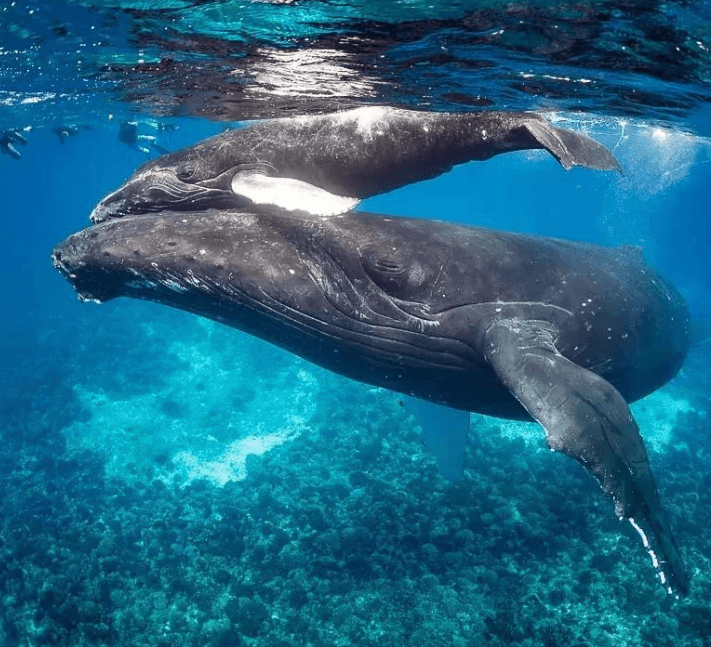
Young whales may be particularly interesting to observe because their behavior can include repeated movements and active interactions. However, age alone does not establish why an individual whale breaches.
A whale's movement may have several functions, and the same behavior can occur in different contexts.
5. Signaling During Breeding Season
Samaná Bay is associated with the seasonal migration of humpback whales to warm breeding waters. During this period, whales engage in a variety of social behaviors.
Breaching may form part of a broader display that other whales can see or hear. Researchers have investigated how surface activity relates to group interactions and reproductive behavior.
However, a breach does not necessarily indicate courtship, competition, or the presence of a particular type of whale group.
The best interpretation depends on the surrounding behavior and what researchers can observe.
6. A Behavior With More Than One Purpose
Animal behaviors rarely have to serve only one function. Breaching may provide different benefits under different circumstances, and some leaps may occur without an obvious explanation to a human observer.
For this reason, scientists avoid assigning a single definite meaning to every breach.
When watching whales in Samaná Bay, it is useful to distinguish between what you can directly observe—the leap, splash, direction, and nearby activity—and what you can only infer about the whale's motivation.
Can You See Breaching During Whale Watching in Samaná?
Yes, breaching is possible during the Samaná whale-watching season, but it is never guaranteed.
Humpback whales migrate to Dominican Republic waters during the winter breeding season. Whale-watching trips commonly operate during the core season from January through March, although sightings and activity vary.
Some excursions may encounter whales that surface quietly or dive for extended periods. Others may witness tail slaps, pectoral-fin movements, or more dramatic activity.
The behavior of wild whales cannot be scheduled. Even when a boat encounters several whales, they may not breach during the observation period.
A successful excursion should therefore be judged by the opportunity to observe whales responsibly, rather than by whether one particular behavior occurs.
What Does a Breach Look Like From a Whale-Watching Boat?
The experience depends on the whale's distance, the sea conditions, visibility, and the position of the boat.
A breach may begin with a sudden upward movement. The whale's body rises above the surface, sometimes revealing its pale underside or long pectoral fins, before it falls back into the water.
The splash may be large, but the entire event can happen quickly.
If a breach occurs farther away, binoculars may help you see details. At closer viewing distances permitted by applicable rules, the movement may be easier to recognize without magnification.
Do not assume that a whale is about to breach simply because it surfaces repeatedly. Breaching is unpredictable, and ordinary surfacing or diving does not reliably announce an upcoming leap.
How to Photograph a Humpback Whale Breach
Breaching can be challenging to photograph because it happens quickly and often without warning.
If you want to capture the behavior during a Samaná whale-watching excursion, consider the following tips.
Keep Your Camera Ready
Set up your camera before the boat reaches the main viewing area. Familiarize yourself with the controls so you can respond without searching through menus.
A fast shutter speed can help freeze the movement, while continuous shooting may increase the chance of capturing a useful frame.
Watch the Whale, Not Just the Screen
Look for the whale's movement and listen to the guide. Although there is no reliable signal that guarantees a breach, paying attention to the animal's behavior may help you notice sudden activity.
Do not spend the entire excursion looking through your camera. Some of the most memorable details are easier to appreciate directly.
Protect Your Equipment
Sea spray, sudden movement, and crowded viewing areas can create risks for cameras and phones. Use a secure strap and protect equipment when it is not being used.
Follow all crew instructions about where you can stand or move while photographing wildlife.
Respect Other Passengers
Avoid blocking other visitors or moving into unsafe positions to obtain a better view. A photograph is never worth ignoring the captain's instructions or disturbing a whale.
Does Breaching Mean a Whale Is Happy?
It is tempting to interpret a dramatic leap as a sign that a whale is happy or excited. However, scientists cannot reliably determine an animal's precise emotional state from one behavior alone.
Breaching may occur in several contexts, and the same visible action can have different explanations.
Instead of assigning an emotion to every leap, observe the behavior objectively. Notice whether the whale is alone or near other whales, whether the behavior is repeated, and what happens before and after the breach.
These observations can be interesting, but they do not replace scientific research or establish the whale's motivation with certainty.
Is Breaching a Sign of Aggression?
Not necessarily. A breach is not, by itself, reliable evidence that a whale is aggressive.
The behavior may occur in social settings or as an individual surface display. Interpreting it requires more information than the leap alone provides.
Regardless of the apparent reason for the behavior, passengers should never ask a captain to move closer in order to provoke a reaction.
The safest and most responsible approach is to allow the crew to manage the encounter according to applicable wildlife-viewing rules.
How Responsible Whale Watching Helps Protect Breaching Whales
Responsible whale watching allows visitors to observe natural behavior without placing unnecessary pressure on marine animals.
During a Samaná excursion, follow the captain's instructions and respect the required viewing distances. Avoid encouraging the boat to chase whales, separate animals, or maneuver aggressively around a group.
Do not attempt to enter the water with wild whales or interact physically with them.
Choose an operator that explains its wildlife-viewing practices and prioritizes safety. If whales move away or change direction, their movement should be respected rather than treated as an invitation to pursue them.
Responsible observation also means understanding that a whale may spend much of the trip underwater or show no dramatic surface behavior at all.
What to Observe Besides Breaching
Even if no whale breaches, several other behaviors can make your trip worthwhile.
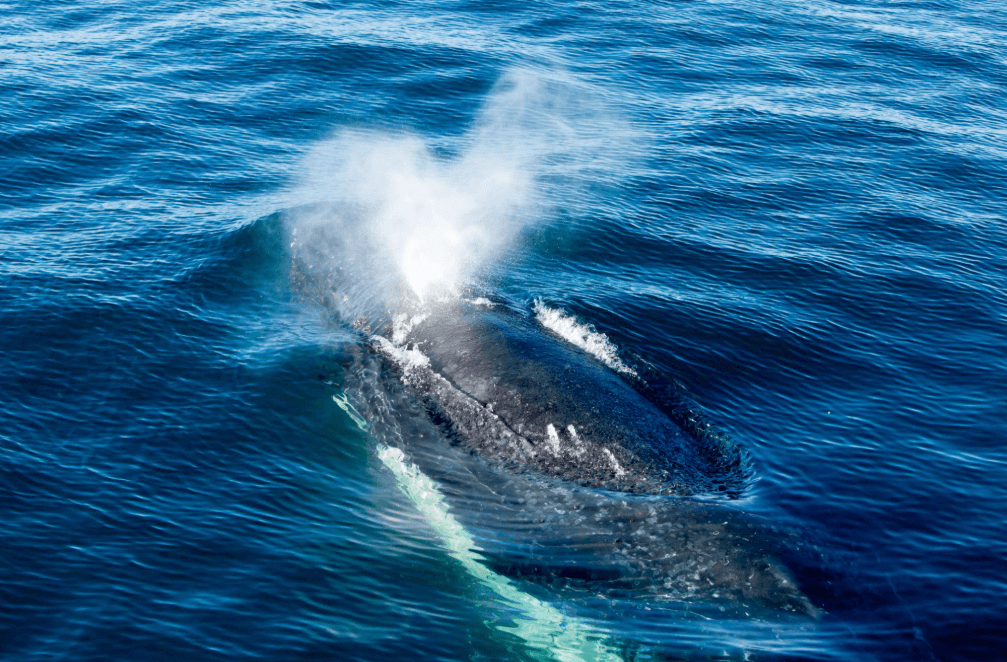
- Blowing: A whale exhales at the surface, producing a visible plume.
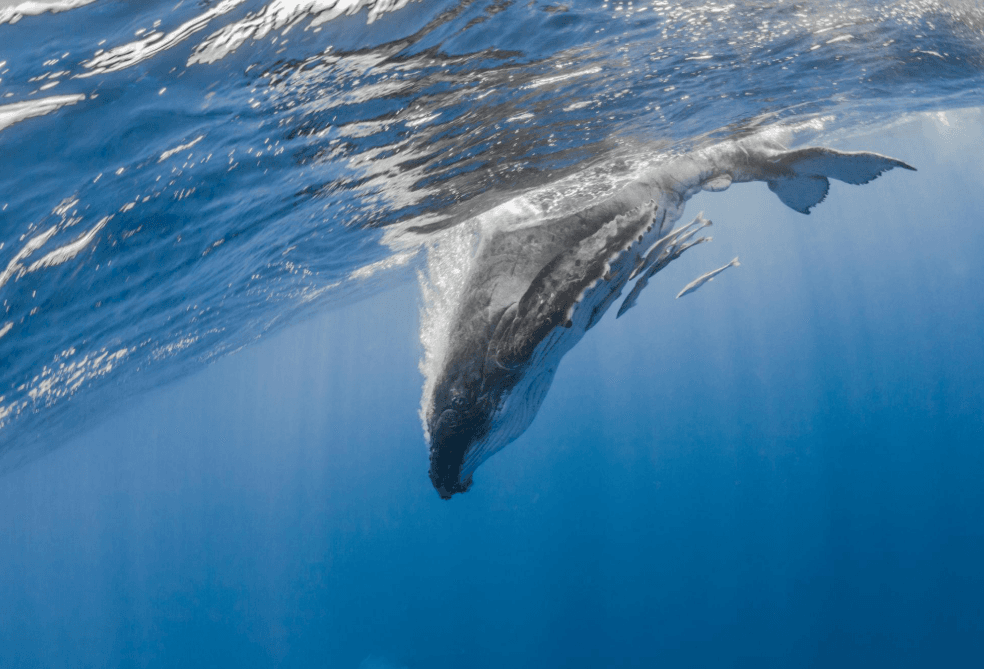
- Diving: The whale submerges, sometimes raising its tail flukes.
- Tail slapping: The whale strikes the surface with its tail.
- Pectoral-fin movements: The whale raises or moves one of its long fins at the surface.
- Traveling: A whale swims steadily through the water.
- Repeated surfacing: A whale returns to the surface to breathe.
These behaviors offer different opportunities to learn about humpback whales. Your guide may help explain what is visible and which interpretations remain uncertain.
Final Thoughts
Humpback whale breaching is one of the most spectacular behaviors visitors may witness during whale watching in Samaná Bay. The leap is easy to recognize, but its purpose is more complicated than it may first appear.
Researchers have explored several possible explanations, including communication, social interaction, physical activity, and other functions. No single explanation accounts for every breach.
During your excursion, enjoy the sight if it occurs, listen to your guide, and remember that every whale behaves differently. By observing patiently and respecting wildlife-viewing rules, you can appreciate the natural behavior of humpback whales without expecting them to perform on demand.
Frequently Asked Questions
Why do humpback whales jump out of the water?
The behavior is called breaching. Researchers have proposed several possible functions, including communication, social interaction, and physical activity, but the reason for a particular leap is not always known.
Can I see a whale breach in Samaná Bay?
It is possible during the seasonal whale-watching period, but no operator can guarantee a breach. Sightings and whale behavior vary naturally.
Do humpback whales breach to communicate?
Breaching may produce sounds that other whales can detect, and communication is one possible explanation. However, not every breach is confirmed to serve a communication purpose.
Are whale breaches dangerous for tour boats?
A breach can produce a substantial splash, but its significance depends on the whale's location and the surrounding conditions. Passengers should remain in designated areas and follow the captain's instructions.
What is the difference between breaching and tail slapping?
Breaching involves a whale propelling much of its body above the water and falling back onto the surface. Tail slapping involves striking the water with the tail flukes.
When is the best time to see humpback whales in Samaná?
The main whale-watching season is generally January through March. The chance of seeing particular behaviors, including breaching, varies and cannot be guaranteed.

Local explorer & expert guide in Whales of Samaná.