Humpback Whale Skin: How Whales Renew Their Skin
Humpback whales spend their lives in saltwater, traveling across vast ocean regions and diving beneath the surface for long periods. Their skin is constantly exposed to seawater, sunlight near the surface, microorganisms, and physical contact with the marine environment.
Like other mammals, humpback whales maintain and renew their skin as part of normal biological processes. Although they do not shed their entire outer covering in one dramatic event, old skin cells are continually replaced, and small amounts of skin may be released into the surrounding water.
Understanding this process helps explain how humpback whales maintain their protective outer covering and how researchers use skin samples to investigate whale health, genetics, and ecology.
For visitors interested in whale watching in Samaná Bay, this topic offers another fascinating look at the biology of these seasonal marine visitors.
Do Humpback Whales Shed Their Skin?
Yes. Humpback whales shed skin cells as part of normal skin maintenance, much as other mammals do. However, their skin renewal is not usually visible as a large, continuous sheet peeling away from the body.
Skin is a living tissue with several functions. It helps protect the body, forms a barrier between internal tissues and the ocean, and contains structures involved in sensation and other biological processes.
As surface cells age, they can be lost and replaced through ongoing cellular renewal. Small fragments of skin may also become detached through ordinary movement and contact with the environment.
Researchers studying cetaceans have documented skin shedding and changes in skin condition, although the exact rates and patterns can vary with species, individual condition, and environmental circumstances.
It is important to distinguish normal skin turnover from visible skin damage. Peeling, lesions, unusual discoloration, or extensive sloughing cannot automatically be attributed to healthy renewal.
Why Is Skin Renewal Important for Humpback Whales?
Skin renewal helps maintain the body's outer protective barrier. Without regular replacement and repair, damaged surface cells could interfere with normal skin function.
For humpback whales, skin must operate in a demanding environment. The animal moves through saltwater, experiences changing temperatures, encounters marine organisms, and may sustain minor abrasions during its life.
Normal renewal is one component of maintaining healthy tissue. The skin also relies on other processes, including cellular repair and immune defenses.
Scientists investigate whale skin because changes in its appearance or condition may provide useful information. However, skin appearance alone cannot reveal every aspect of a whale's health.
A whale with smooth-looking skin is not necessarily healthier than one with visible markings, and a small patch of unusual skin does not automatically indicate a serious problem.
What Makes Humpback Whale Skin Different From Human Skin?
Humpback whales and humans are both mammals, so their skin shares basic biological characteristics. However, whale skin is adapted to an aquatic lifestyle.
Several differences are especially interesting.
1. Adaptation to life in water
Whale skin functions in constant contact with seawater. Its structure, surface properties, and renewal processes are adapted to the physical demands of aquatic life.
2. A distinctive outer appearance
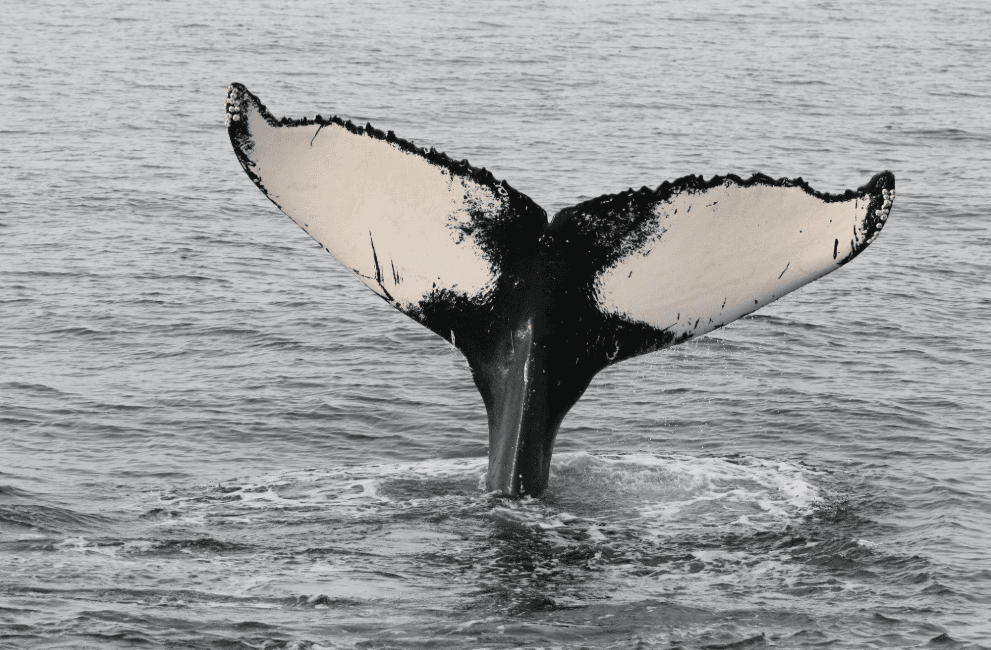
Humpback whales have dark skin with individual variations in coloration, markings, scars, and other visible features. Their skin may look smooth from a distance but can reveal considerable detail in close photographs.
3. Specialized body structures
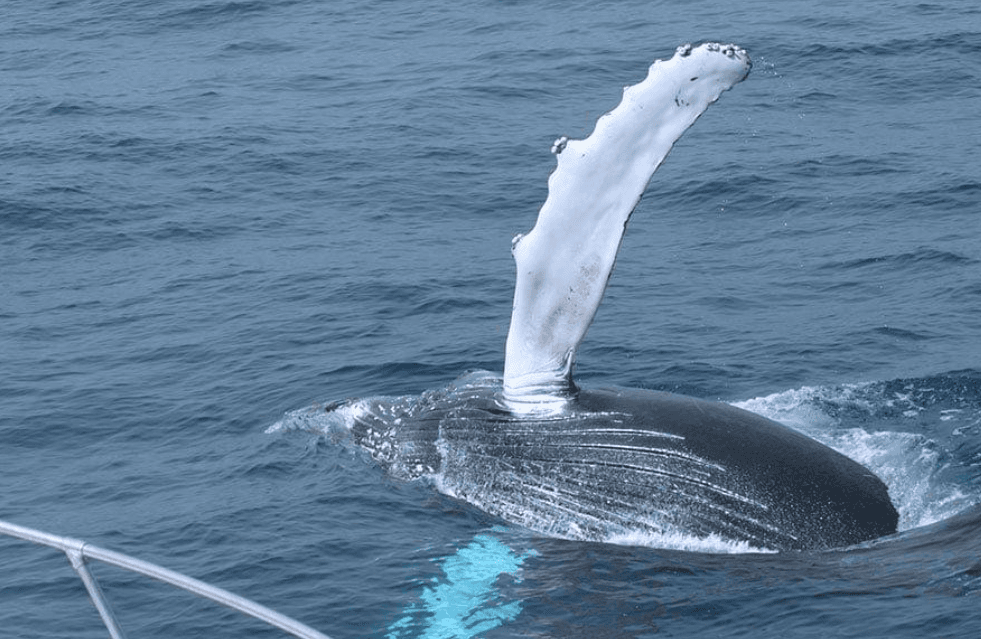
Humpback whales possess features such as tubercles on the head and jaws. These structures are part of the whale's anatomy and should not be confused with areas of damaged or shedding skin.
4. Natural markings
Scars, pigmentation patterns, and other persistent features can help researchers distinguish individual whales. Some markings remain visible over time, although their appearance may change as injuries heal or the skin changes.
Does a Humpback Whale's Skin Change During Migration?
Humpback whales migrate between feeding grounds at higher latitudes and breeding areas in warmer tropical or subtropical waters.
During these journeys, whales experience changes in water temperature, feeding opportunities, and environmental conditions. These changes can influence their overall physiology and condition.
However, it would be inaccurate to claim that humpback whales undergo a specific, dramatic skin-shedding event every time they migrate between cold and warm waters.
Skin renewal is a normal biological process. Researchers may investigate whether environmental conditions, nutritional state, and other factors influence skin characteristics, but migration alone does not prove that a whale is shedding more skin.
Scientists use observations and biological samples to investigate these questions rather than relying solely on the whale's appearance.
Can Scientists Study Humpback Whales Through Their Skin?
Yes. Skin can provide valuable biological information, especially when researchers collect samples using appropriate scientific methods.
Genetic research
Skin samples contain DNA that can help scientists study population structure, genetic diversity, and relationships among individual whales.
Population research
When combined with other evidence, genetic information may help researchers investigate whether whales observed in different regions belong to the same population or have connections to other groups.
Health and environmental studies
Researchers can investigate skin condition, tissue characteristics, and selected biological indicators to better understand whale biology. The usefulness of a sample depends on how it is collected, preserved, and analyzed.
Long-term scientific monitoring
Repeated observations and carefully managed sample collections can contribute to broader studies of whale populations and their changing environments.
Not every piece of shed skin contains enough suitable material for every type of analysis. Sample quality, contamination, and the research question all influence what scientists can learn.
Can Scientists Collect Naturally Shed Whale Skin?
Sometimes. Small amounts of skin released naturally by whales may be recovered from the water under suitable circumstances.
Researchers can also collect samples using specialized, non-lethal methods when authorized and appropriate. These approaches are designed to obtain biological material while minimizing harm and disturbance.
Naturally shed skin can be useful, but it may be difficult to find, identify, or collect before it breaks down or becomes mixed with other material in the ocean.
Scientists must also take care not to confuse whale skin with other floating biological debris.
The collection and handling of whale samples should follow applicable research permits, animal-welfare standards, and local regulations.
What Does Healthy Humpback Whale Skin Look Like?
There is no single surface appearance that guarantees a humpback whale is healthy.
A whale may have scars, pale patches, rough areas, barnacles, or other visible features without necessarily being seriously ill. Some markings reflect past injuries, natural pigmentation, or ordinary interactions with the marine environment.
Scientists assess health by considering multiple types of evidence, including:
- Overall body condition.
- Swimming and surfacing behavior.
- Visible injuries or abnormal skin changes.
- Photographs taken over time.
- Biological samples and other research findings, when available.
Even trained observers may not be able to determine the cause of a skin change from a single sighting.
Visitors should therefore avoid diagnosing a whale based on one photograph or a brief view from a boat.
Can You See Skin Renewal During Whale Watching in Samaná Bay?
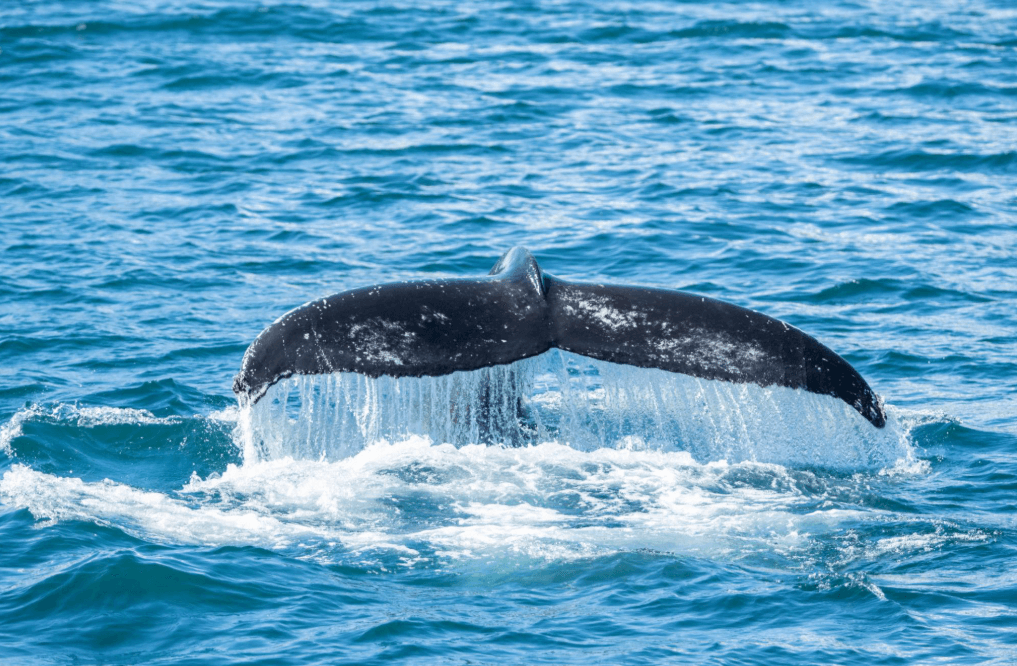
Samaná Bay in the Dominican Republic is an important seasonal destination for observing North Atlantic humpback whales. During the breeding season, visitors may see whales surfacing, raising their flukes, swimming near one another, and displaying other natural behaviors.
A whale's skin may be visible when it surfaces or rolls near the waterline. Photographs sometimes reveal texture, scars, pigmentation, and attached marine organisms.
However, ordinary whale-watching trips rarely allow visitors to observe the microscopic process of skin renewal directly. A pale patch or rough-looking area is not enough to establish that a whale is shedding skin.
The most useful approach is to appreciate the animal's visible characteristics without assuming that every mark has the same explanation.
If you are planning a trip, choose a responsible whale-watching operator and follow the crew's instructions. Respectful observation helps protect the whales while allowing visitors to learn about their natural history.
How to Photograph Humpback Whale Skin Responsibly
Photographs can help you appreciate details that are difficult to see during a brief sighting.
Try these practical tips:
- Use optical zoom when available. This can help capture visible skin details without requiring a closer approach to the whale.
- Keep your camera ready. Humpback whales may surface briefly before diving again.
- Use a fast shutter speed. This helps reduce motion blur when the whale or boat is moving.
- Take several photographs. A series of images may reveal markings more clearly than a single shot.
- Describe features cautiously. Label visible scars or patches without claiming they are evidence of disease or active shedding unless that conclusion is supported by reliable evidence.
Never ask a captain to approach a whale too closely for a photograph. Follow local regulations and wildlife-viewing guidelines throughout your trip.
Frequently Asked Questions
Do humpback whales shed their skin like snakes?
No. Humpback whales do not normally shed their entire outer skin in one piece like a snake. They continually replace surface cells, and small amounts of skin may be released during ordinary biological processes.
How often do humpback whales renew their skin?
A precise, universal skin-renewal interval should not be assumed. Rates can vary with biological and environmental factors, and the process is not usually observable directly during whale watching.
Does shedding skin mean a humpback whale is sick?
Not necessarily. Ordinary loss of surface cells is part of normal skin maintenance. Extensive peeling, lesions, or unusual changes may have other explanations and cannot be diagnosed from appearance alone.
Can whale skin reveal DNA?
Yes. Suitable skin tissue can contain DNA that researchers use in genetic studies. The amount and quality of useful material depend on the sample and how it is collected and preserved.
Can visitors collect whale skin in Samaná Bay?
Visitors should not attempt to approach, touch, or disturb whales to collect skin. Any scientific sampling should be conducted by authorized researchers under applicable permits and regulations.
Are scars part of skin renewal?
Scars usually reflect previous tissue injury and repair, rather than being a direct sign of routine surface-cell shedding. Some scars remain visible for long periods and may help researchers recognize individual whales.
Final Thoughts
Humpback whale skin is a living protective tissue that continually maintains and renews itself. Although this process is less dramatic than a breach or tail slap, it is an important part of the whale's biology.
Skin also gives researchers opportunities to investigate genetics, population connections, and aspects of whale health. Those studies require careful sampling and interpretation because appearance alone rarely tells the complete story.
When observing humpback whales in Samaná Bay, remember that every visible mark has a possible explanation, but not every explanation can be confirmed from a boat. Responsible whale watching combines curiosity with respect for the animals and the limits of what can be observed.

Local explorer & expert guide in Whales of Samaná.