Humpback Whale Entanglement: Causes, Risks and Rescue
Humpback whales are powerful ocean travelers, capable of migrating thousands of miles between feeding and breeding areas. Yet even these large marine mammals can face serious dangers from human activities. One of the most concerning is entanglement in fishing gear.
Ropes, nets, lines, and other equipment can become wrapped around a whale's body, fins, or tail. An entangled animal may struggle to swim normally, feed efficiently, or complete its migration. Some whales survive these encounters, while others suffer severe injuries or die.
For visitors interested in Samaná whale watching in the Dominican Republic, learning about entanglement offers a valuable perspective on the challenges humpback whales face beyond the moments when they appear at the ocean surface.
This guide explains how entanglement happens, why it can be dangerous, how trained response teams help, and what travelers can do to support safer oceans.
What Is Humpback Whale Entanglement?
Humpback whale entanglement occurs when fishing gear or other human-made materials become caught around a whale. The equipment may include fishing lines, ropes, nets, or components attached to traps and buoys.
Because whales move through different marine environments during their lives, they can encounter fishing equipment in coastal waters and offshore areas. Gear may remain in the water even when it is no longer being actively used.
Entanglement can range from a loose line that causes limited interference to a complicated situation involving several sections of rope or netting. The severity depends on where the material is caught, how tightly it is wrapped, whether it restricts movement, and how long the animal remains entangled.
A whale may not always show obvious signs of distress from a distance. For that reason, suspected entanglement should be reported to appropriate wildlife authorities or trained responders rather than assessed through a close approach.
How Do Humpback Whales Become Entangled?
1. Encounters with fishing lines and ropes
Fishing operations use lines and ropes to connect equipment, secure traps, and mark locations. When whales swim through areas where this gear is present, a line can become caught around a fin, tail, or other part of the body.
Even a relatively thin rope can cause serious problems if it tightens under repeated movement or remains attached to heavy equipment.
2. Abandoned or lost fishing gear
Fishing gear can sometimes be lost during storms, equipment failures, or routine operations. Discarded or lost equipment may continue to pose risks to marine animals.
This type of debris is often called ghost gear. It can remain in the water and continue trapping or entangling wildlife even when no one is actively fishing with it.
Recovering lost equipment safely, improving gear management, and preventing waste from entering the ocean are important ways to reduce this hazard.
3. Movement through fishing areas
Humpback whales migrate between different regions and may travel through waters used by commercial or small-scale fisheries.
Their large size does not make them immune to fishing equipment. A whale may encounter gear while traveling, feeding, or moving through coastal habitats.
The risk varies according to the location, type of fishing activity, season, and equipment used. It is therefore important not to assume that every whale population faces the same level of entanglement risk.
Why Is Entanglement Dangerous for Humpback Whales?
Restricted swimming and movement
Ropes caught around a whale's pectoral fins or tail can interfere with normal movement. If equipment drags behind the animal, it may create additional resistance as the whale swims.
Extra drag can make movement more difficult and may increase the energy needed for travel.
Cuts, abrasions, and deeper injuries
Repeated friction from rope or netting can damage the skin. If the material tightens or cuts into tissue, the injury can become more severe.
Injuries may worsen as the whale continues to move. The seriousness depends on the location and pressure of the entanglement and whether the animal can escape it.
Feeding difficulties
A whale that must use extra energy to swim or that has restricted movement may find normal activities more difficult. Depending on the entanglement, feeding can also be affected.
This can be particularly concerning when an animal needs to maintain its energy reserves for migration, reproduction, or nursing a calf.
Long-term effects
Some whales survive entanglement but may carry scars from previous encounters. Others may experience prolonged stress, reduced mobility, or injuries that interfere with normal behavior.
Not every entanglement results in the same outcome. Some animals shed equipment, while others require intervention or may never fully recover.
Can Humpback Whales Free Themselves?
In some cases, a whale may escape from fishing gear through its own movements. However, this is not guaranteed.
Equipment can become more tightly wrapped as an animal struggles. A line may also remain attached to a heavy object or become caught around multiple parts of the body.
Observers should never assume that an entangled whale will recover without assistance. Equally, they should not attempt to free it themselves.
An entangled whale is a powerful, unpredictable animal that may move suddenly. Approaching it or trying to cut away ropes without specialized training can endanger both people and the whale.
How Do Trained Responders Help Entangled Whales?
Responding to an entangled whale requires specialist training, appropriate equipment, careful planning, and coordination with the responsible authorities.
Step 1: Report and assess the sighting
The first step is often gathering reliable information about the animal's location and apparent condition.
Observers may be asked to describe the whale's direction of travel, visible equipment, and any obvious injuries. Photographs taken safely from a permitted distance may help trained teams assess the situation.
Step 2: Evaluate the risks
Responders must consider the whale's behavior, sea conditions, the type of gear involved, and the safety of everyone nearby.
Not every case can be approached in the same way. The response plan must account for the possibility that the whale could move unexpectedly or that the equipment could shift.
Step 3: Develop a specialist response plan
Where intervention is appropriate, trained personnel determine how to proceed using approved methods and suitable equipment.
The objective is to reduce the danger to the whale while minimizing risk to responders. This can be complex, especially when the gear is tightly wrapped or the animal is moving quickly.
Step 4: Monitor the whale when necessary
After an intervention, teams may try to document the outcome and determine whether additional monitoring is possible.
Even when some equipment is removed, the whale may still have injuries or remaining material attached. A successful response therefore depends on careful assessment rather than simply cutting away a visible rope.
Important: Members of the public should not attempt these steps themselves. Report suspected entanglement through the appropriate local authorities, marine wildlife organizations, or trained response networks.
How Can Fishing Practices Reduce Entanglement Risks?
Reducing entanglement requires cooperation among fisheries, regulators, researchers, and coastal communities.
Depending on the fishery and local conditions, potential approaches include:
- Improving the strength, maintenance, and visibility of fishing equipment where appropriate.
- Recovering lost gear through safe, authorized programs.
- Developing and evaluating fishing technologies designed to reduce risks to large marine animals.
- Providing reporting systems for lost equipment and wildlife incidents.
- Using locally appropriate fishing regulations and seasonal management measures.
- Supporting research into where and how entanglements occur.
No single measure eliminates every risk. Different fishing methods require different solutions, and measures should be evaluated to ensure they protect wildlife without creating unintended consequences for other species or fishing communities.
What Does Entanglement Mean for Humpback Whales in Samaná?
Samaná is widely known for seasonal humpback whale activity, particularly during the breeding period when visitors travel to observe these animals in their natural environment.
The fact that whales use a region does not mean that every animal has experienced entanglement, nor does it establish how frequently incidents occur there. Reliable conclusions about local entanglement rates require appropriate monitoring data.
Nevertheless, entanglement is a relevant conservation issue wherever whales and fishing equipment share marine space. Protecting whale habitats, managing human activities responsibly, and reporting wildlife emergencies can all contribute to broader conservation efforts.
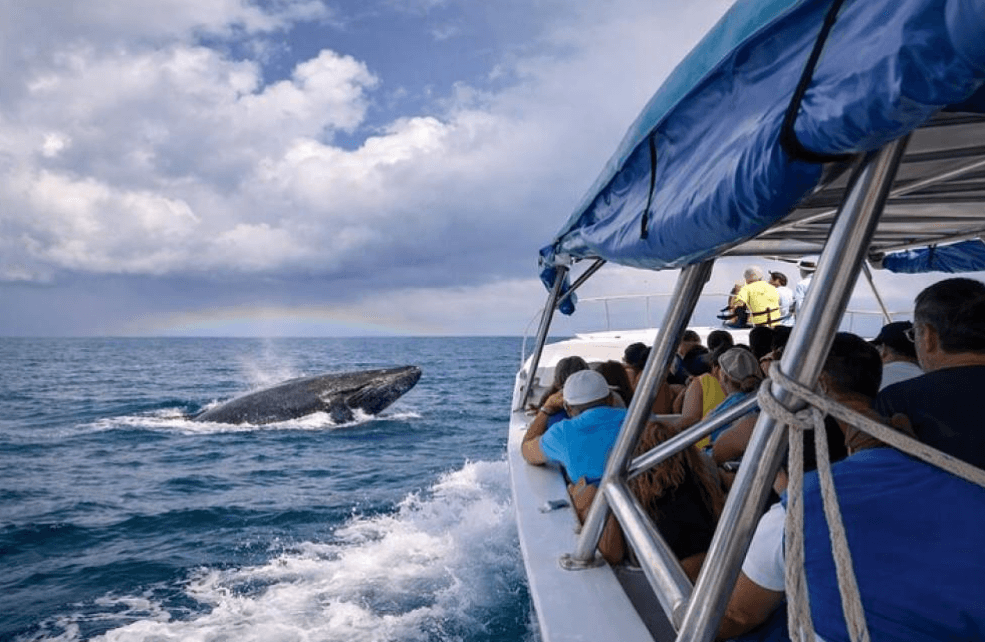
Visitors should follow local guidance, choose responsible tour operators, and avoid approaching any whale that appears injured or entangled.
How Travelers Can Help Prevent Harm
Travelers cannot control every hazard whales encounter, but they can make practical choices that support marine protection.
Keep rubbish out of the sea
Never throw ropes, plastic packaging, fishing line, or other waste into the ocean. Dispose of rubbish properly and participate in suitable cleanup activities when they are organized safely.
Report suspected entanglement
If you see a whale with rope, netting, or other equipment attached, tell your guide or captain as soon as it is safe. Provide a clear description and follow their advice about contacting the appropriate authorities.
Do not chase the whale to obtain better photographs, and never try to remove the equipment.
Choose responsible marine-tourism businesses
Look for tour operators that take wildlife safety seriously, brief passengers clearly, and follow applicable viewing requirements. Ask how they handle reports of injured or entangled animals.
Share accurate information
Explain why lost fishing gear can be dangerous and why trained responders are needed. Avoid sharing unverified stories, graphic images without context, or instructions that encourage untrained rescue attempts.
Support credible conservation work
Consider supporting organizations that conduct marine research, promote responsible fishing practices, remove marine debris safely, or help coordinate wildlife responses. Check their work and transparency before donating.
Frequently Asked Questions
What causes humpback whale entanglement?
Entanglement commonly occurs when fishing lines, ropes, nets, or other equipment become caught around a whale's body. Lost or abandoned fishing gear can also remain in the water and pose a continuing risk.
Can a humpback whale survive entanglement?
Yes, some whales survive and may escape the gear, but outcomes vary. Entanglement can cause injuries, increase swimming effort, interfere with feeding, and sometimes lead to death.
Should I approach an entangled whale?
No. Keep a safe distance, follow your tour crew's instructions, and report the sighting to the appropriate authorities or trained responders. Do not attempt a rescue yourself.
How can fishing gear be made safer for whales?
Potential measures include improving gear management, recovering lost equipment safely, researching alternative technologies, and applying suitable local fishing practices and regulations. The most effective measures depend on the fishery and environment.
Does whale entanglement happen in Samaná?
Entanglement is a recognized threat to whales in various parts of the world, but the frequency of incidents in Samaná should be assessed using reliable local monitoring data. Do not infer local rates from global examples.
What should I do if I see rope attached to a whale during a tour?
Notify the captain or guide immediately. Share the location and what you observed if possible, and let trained personnel decide how to respond. Never follow the animal closely or try to cut the rope yourself.
Conclusion
Fishing-gear entanglement is a serious potential hazard for humpback whales. Ropes, nets, and other equipment can restrict movement, cause injuries, and make essential activities more difficult.
Reducing this threat requires responsible fishing practices, effective gear management, reliable reporting, and trained wildlife responders. Travelers can contribute by preventing waste, choosing responsible operators, and reporting suspected entanglements without approaching the animal.
During a Samaná whale-watching trip, remember that seeing a whale is a privilege, not an invitation to interfere with its behavior. Observing respectfully and supporting credible conservation work can help promote safer interactions between people and marine wildlife.

Local explorer & expert guide in Whales of Samaná.