How to Identify a Humpback Whale During a Samaná Boat Trip
Seeing a whale in the wild can be an unforgettable moment. During whale-watching season in Samaná, Dominican Republic, visitors may have the opportunity to observe North Atlantic humpback whales as they surface, breathe, dive, and move through the waters of Samaná Bay.
But how can you recognize a humpback whale when you see one?
Learning a few distinctive features before your excursion can make the experience more interesting. You can look for the whale's blow, body shape, long pectoral fins, tail flukes, and characteristic surface behaviors.
This guide explains how to identify humpback whales during a Samaná boat trip and what their visible features can tell you about these remarkable marine mammals.
What Does a Humpback Whale Look Like?
The humpback whale (Megaptera novaeangliae) is a large baleen whale known for its robust body, unusually long pectoral fins, and distinctive tail.
Adults are generally dark gray to black on the upper body, although the amount of white on the underside of the body and flippers varies between individuals.
From a boat, you may not see the entire animal at once. Often, identification depends on observing several features during a brief encounter.
Look for these characteristics:
- A broad, rounded body.
- A relatively small dorsal fin positioned toward the rear half of the back.
- Long pectoral fins that may be visible when the whale rolls or turns.
- A broad tail, known as the flukes, which may appear above the surface before a dive.
- A visible blow when the whale exhales at the surface.
Not every feature will be visible on every sighting. The whale's position, distance, sea conditions, and lighting all affect what you can observe.
1. Look for the Whale's Blow
One of the first signs of a surfacing whale may be a plume of spray above the water.
Humpback whales breathe air through blowholes located on top of their heads. When a whale surfaces to breathe, its exhalation can produce a visible blow.
From a distance, the blow may look like a brief white or misty plume above the ocean.
However, a blow alone is not enough to identify a humpback whale with certainty. Other whale species also produce visible blows, and sea spray can sometimes be confusing.
Use the blow as an initial clue, then look for the animal's body shape and other features.
2. Examine the Shape of the Back
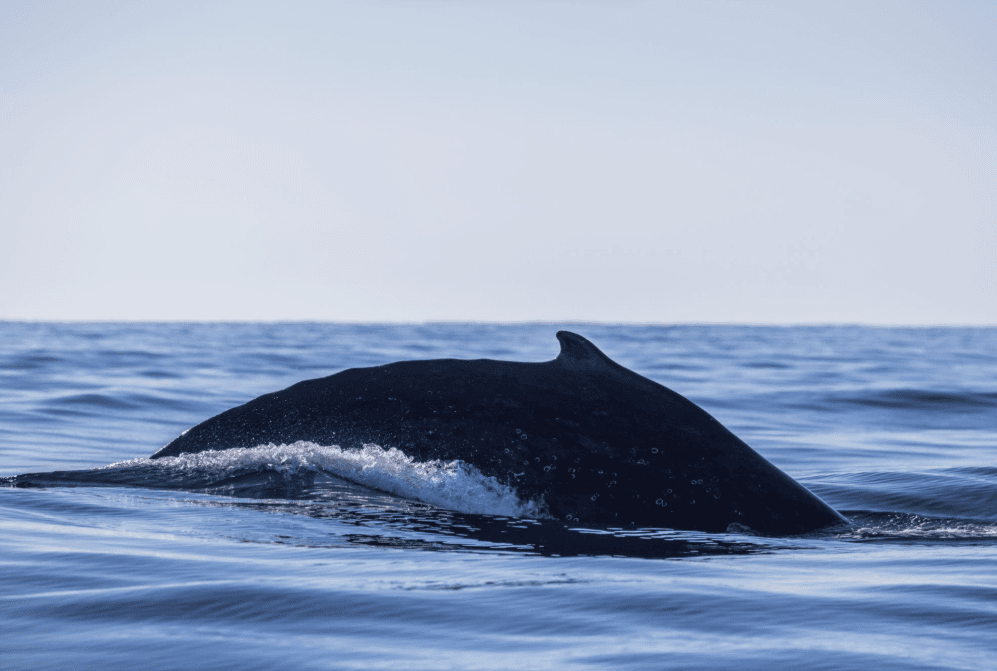
When a humpback whale surfaces, its broad back may appear above the water.
The dorsal fin is relatively small compared with the animal's large body. Its shape can vary among individuals, and it may be difficult to see clearly during a short encounter.
Watch how the back rises and disappears as the whale moves. A humpback may surface to breathe several times before making a deeper dive.
Avoid assuming that every large, dark shape in the water is a humpback whale. If the view is brief or distant, it is better to treat the identification as uncertain.
3. Watch for the Long Pectoral Fins
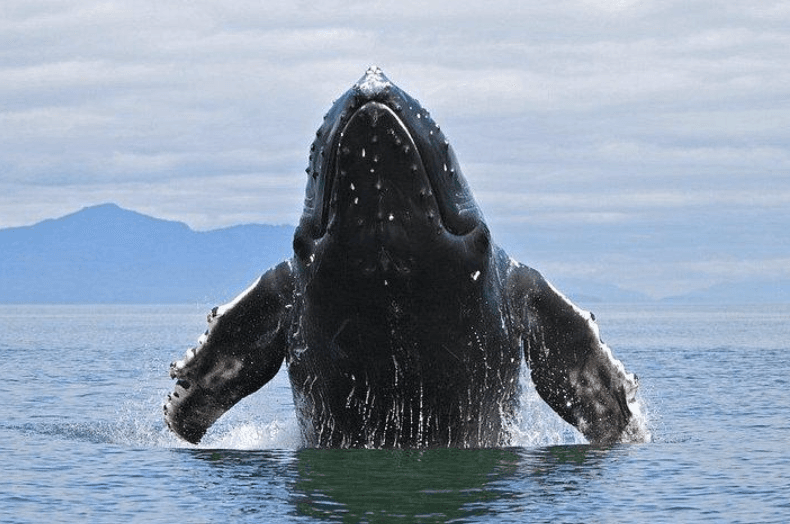
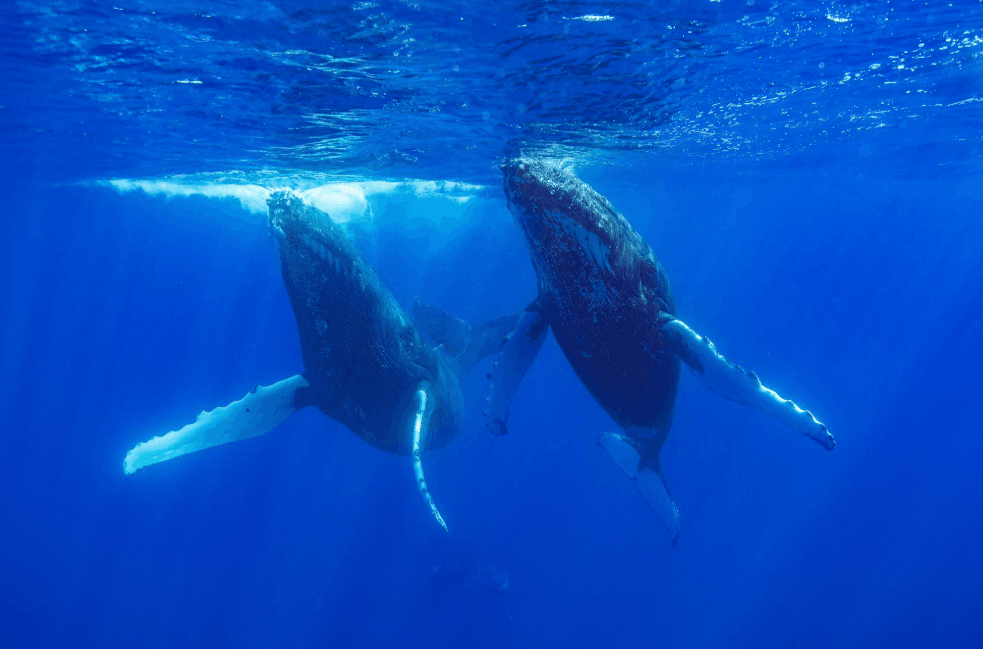
Humpback whales are famous for their exceptionally long pectoral fins. These large side fins can be especially noticeable when a whale turns, rolls, or raises a fin above the water.
The fins may show a contrasting pattern of dark and pale coloration. Their appearance varies from one individual to another.
If you see a long fin extending from the side of a large whale, it may help support a humpback identification.
Do not expect to see the fins on every excursion. They are often below the surface, and the angle of the whale can make them difficult to observe.
4. Recognize the Tail Flukes
The tail flukes are among the most distinctive features of a humpback whale.
Before a deeper dive, a whale may lift its tail above the water, revealing the underside of the flukes. This underside can display a combination of dark and light markings.
Researchers use photographs of humpback whale flukes, along with other identifying features, to help distinguish individuals. The patterns and shapes can be distinctive enough to support photo-identification research.
For visitors, a raised tail is also a useful clue that a whale may be preparing to dive.
If you photograph the flukes, keep your camera secure and follow the crew's instructions. Never lean over the boat's edge or move to an unsafe position to get a better picture.
5. Notice How the Whale Moves
Behavior can provide additional clues to a whale's identity, although no single behavior proves that the animal is a humpback.
During a Samaná whale-watching trip, you may observe a whale:
- Surfacing to breathe.
- Moving forward with its back visible.
- Raising its tail before diving.
- Rolling near the surface.
- Slapping a fin or tail against the water.
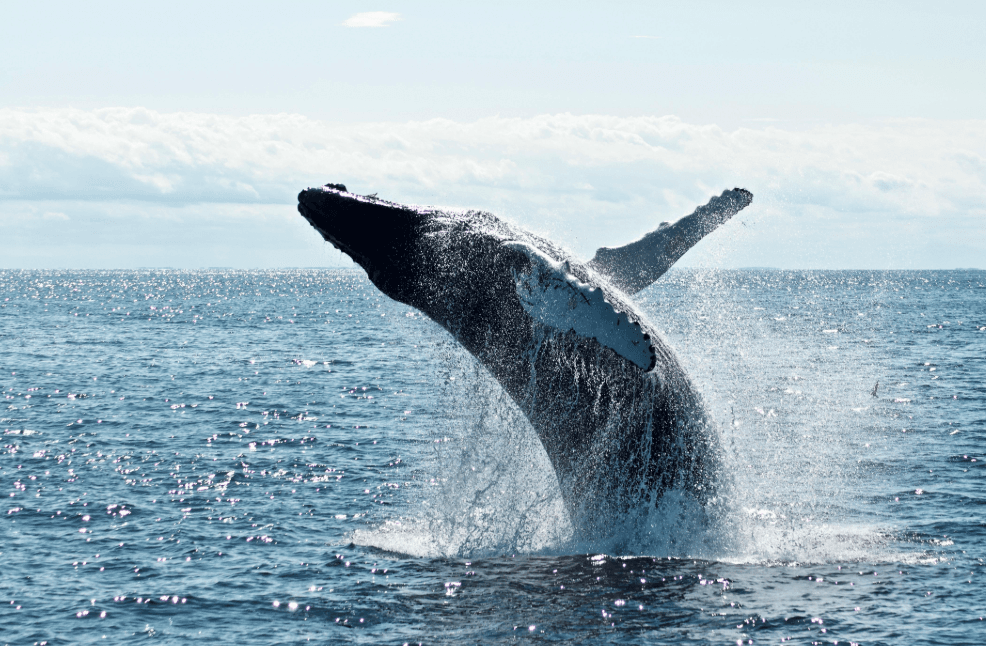
- Leaping partly or almost entirely out of the water.
These behaviors are not guaranteed. A whale may remain relatively calm at the surface or spend much of the encounter underwater.
Breaching, tail slapping, and other dramatic displays can occur, but they should be treated as natural behaviors rather than performances arranged for visitors.
6. Can You Identify a Mother and Calf?
Samaná's seasonal whale habitat is important for humpback whale reproduction, and visitors may sometimes encounter mothers with calves.
A calf is much smaller than an adult, so the difference in body size can be a helpful clue. However, the distance between animals and the angle of observation may make size difficult to judge.
When a mother and calf are present, they may surface near each other, but their movements can vary.
Follow the captain's instructions and applicable wildlife-viewing rules. Do not encourage the boat to approach too closely just to obtain a photograph.
The presence of a calf is not guaranteed on any particular trip, even during the main whale-watching season.
7. What Can a Whale's Tail Tell You?
A humpback whale's tail can provide useful information for identification and observation.
Researchers may examine the shape of the tail flukes and the pattern of markings on their undersides. These features can help match photographs of the same whale across different sightings.
For visitors, the tail can also provide clues about the animal's movement. A whale raising its flukes may be preparing for a deeper dive, although behavior varies.
Remember that a whale does not always lift its tail when diving. You may see only the back disappear beneath the surface.
If the tail is visible, take note of its overall shape and markings without assuming that you can identify an individual whale without proper comparison data.
8. How to Distinguish Humpback Whales from Other Marine Animals
The sea can present confusing sights, especially when waves, reflections, and distance limit visibility.
A few practical rules can help:
Look at the whole animal. A single dark shape or splash is rarely enough for confident identification.
Observe multiple features. Body shape, the dorsal fin, pectoral fins, blow, and tail can provide clues when considered together.
Listen to the guide. A knowledgeable guide can explain which characteristics are visible and whether the identification is certain.
Accept uncertainty. If the animal is too far away or remains underwater, it may not be possible to identify it confidently.
Avoid identifying a whale solely from the size of a splash or the appearance of a distant fin. Reliable identification requires enough visible evidence.
9. What to Bring for Better Whale-Watching Observations
You do not need professional equipment to enjoy whale watching. Careful observation can be just as rewarding as photography.
Consider bringing:
- Binoculars, if permitted and practical.
- A camera or phone with a secure strap.
- A small notebook for recording observations.
- Sun protection suitable for the conditions.
- A waterproof bag for personal belongings.
If you use binoculars, keep your balance and remain in the position permitted by the crew. Avoid walking around while looking through them.
A notebook can be useful for recording the date, approximate location if provided, visible features, and behaviors you observed. These notes are for personal learning and should not be treated as scientific identification unless supported by appropriate research methods.
10. Why Responsible Observation Matters
Humpback whales are wild animals, and their welfare should always come before getting a close view.
Choose an operator that follows applicable wildlife-viewing regulations and maintains appropriate distances. Do not attempt to touch, feed, or attract whales.
Keep noise and movement under control when instructed, and follow all safety directions from the captain and crew.
If a whale is distant, remain patient. Trying to force a closer encounter can create risks for both passengers and animals.
Responsible whale watching allows visitors to learn about marine wildlife while helping protect the natural environment that makes Samaná special.
Frequently Asked Questions
What is the easiest way to identify a humpback whale?
Look for several features together, including a broad body, relatively small dorsal fin, long pectoral fins, visible blow, and distinctive tail flukes. A single feature may not be enough for confident identification.
Can I identify an individual humpback whale by its tail?
The underside of a humpback's tail can have distinctive markings that researchers use for photo identification. Identifying a particular individual usually requires a clear photograph and comparison with reliable identification records.
Do humpback whales always raise their tails before diving?
No. A humpback may raise its tail before some dives, but it does not always do so. The behavior depends on the circumstances and the animal's movement.
Will I see a breaching whale in Samaná?
Breaching is possible, but it is unpredictable. A whale may surface quietly, dive, or remain at a distance instead.
Can children learn to identify whales during a boat trip?
Yes. Children can look for visible features such as the blow, back, fins, and tail, provided they follow the crew's instructions and remain safely supervised.
When can I observe humpback whales in Samaná?
The region's main whale-watching season is commonly associated with January through March, with activity potentially extending into April. Confirm current tour dates and local conditions before planning your visit.
Final Thoughts
Learning how to identify humpback whales can make a boat trip in Samaná more engaging. The blow, broad back, long pectoral fins, tail flukes, and surface behaviors all offer clues to what you are observing.
The key is to look carefully, consider multiple features, and recognize when the available evidence is limited. Every encounter is different, and some whales may remain too distant or submerged for a confident identification.
During your next Samaná whale-watching trip, take your time, listen to your guide, and enjoy observing these remarkable animals responsibly.

Local explorer & expert guide in Whales of Samaná.