How Marine Protected Areas Help Humpback Whales
Every year, humpback whales travel across vast ocean distances between feeding and breeding grounds. During their migrations, they depend on suitable marine habitats where they can find food, reproduce, give birth, and care for their young. Protecting these environments is an important part of conserving whale populations for future generations.
Marine protected areas can help by managing human activities in ecologically important parts of the ocean. For visitors planning a whale-watching trip to Samaná, Dominican Republic, understanding these protected areas offers a deeper appreciation of the connection between marine conservation and responsible tourism.
In this guide, we explore what marine protected areas are, how they can benefit humpback whales, and how travelers can contribute to ocean conservation.
What Are Marine Protected Areas?
Marine protected areas, commonly called MPAs, are ocean or coastal regions designated for the conservation of marine ecosystems, wildlife, habitats, or cultural resources. Their rules and management objectives vary according to the location and the needs of the environment.
Some protected areas restrict certain fishing methods or other extractive activities. Others permit sustainable fishing, boating, recreation, and tourism under specific conditions. Therefore, the term “marine protected area” does not automatically mean that every human activity is prohibited.
Effective protection depends on appropriate rules, responsible management, monitoring, and compliance.
For humpback whales, protected areas can be particularly valuable when they include important breeding grounds, coastal habitats, migration corridors, or areas used by mothers and calves.
Why Humpback Whales Need Protected Habitats
Humpback whales depend on different marine environments throughout their lives. Many populations feed in colder, productive waters and migrate to warmer regions to breed and give birth.
These journeys expose whales to different human activities and environmental pressures. Depending on the location, risks can include vessel collisions, entanglement in fishing gear, underwater noise, pollution, and disturbance from boats.
A well-managed marine protected area can reduce some of these risks within its boundaries. Although no single protected area can safeguard whales throughout their entire migration, protecting important locations can contribute to a broader conservation strategy.
1. Protecting Breeding and Calving Areas
Warm tropical waters provide important breeding and calving habitat for many humpback whale populations. Samaná Bay is widely known as a seasonal destination for humpback whales during the winter breeding period.
Female whales give birth to calves and nurse them in their breeding grounds. Young calves must develop strength and coordination while remaining close to their mothers.
When important coastal habitats receive effective protection, management measures can help reduce disruptive human activities. Depending on the rules in place, these measures may include restrictions on certain vessel movements, controls on tourism activities, or safeguards for sensitive areas.
The benefit is not that whales become completely free from danger, but that some avoidable pressures can be reduced where protection is implemented effectively.
2. Reducing Disturbance From Boats
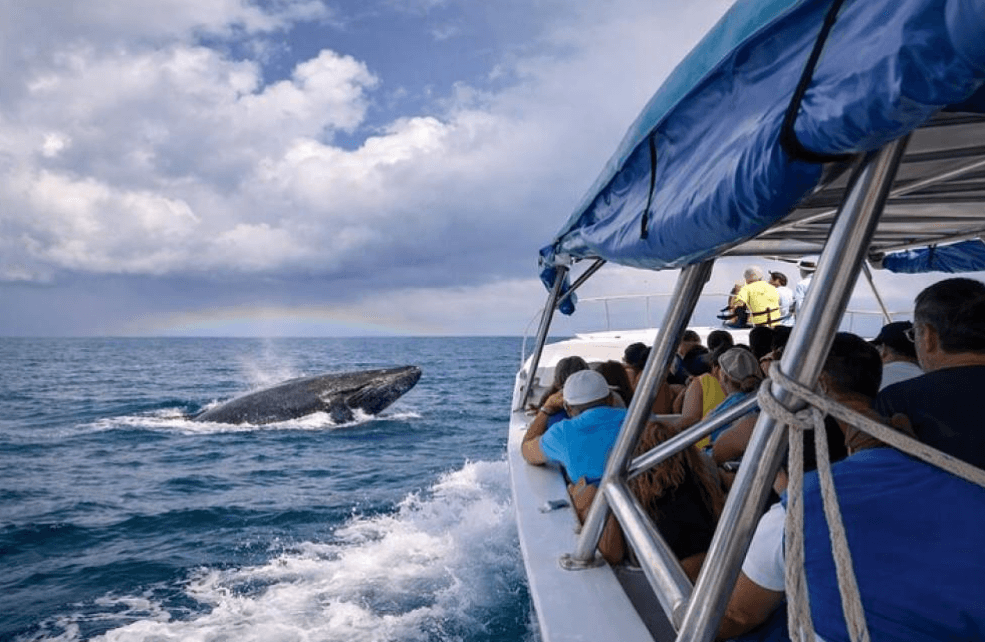
Whale watching gives travelers an opportunity to observe humpback whales in their natural environment. However, poorly managed vessel traffic can interfere with whale behavior and create safety risks.
Boats approaching too closely, changing direction suddenly, or crowding an animal may disturb its natural movements. Multiple vessels around a mother and calf can be especially concerning because the animals need space to move freely.
Marine protected areas may establish or support boating rules designed to reduce these pressures. Depending on local regulations, management can involve approach distances, speed restrictions, limits on vessel numbers, designated routes, or seasonal measures.
Travelers should follow the instructions of their licensed tour operator and local authorities. Responsible whale watching means observing wildlife without attempting to force an encounter.
3. Supporting Mothers and Calves
Mother humpback whales invest considerable energy in producing milk and helping their calves develop. A calf needs time to rest, nurse, swim, and gradually build the abilities required for a long migration.
Reducing unnecessary disturbance in important nursery areas can help create more favorable conditions for these activities.
Protected-area management may contribute by limiting harmful activities in sensitive habitats. However, the degree of protection depends on the specific rules, how well they are enforced, and whether the protected area includes the places whales actually use.
Visitors can also help by choosing operators that prioritize wildlife welfare, respect official viewing guidance, and do not chase or surround whales.
4. Protecting the Wider Marine Ecosystem
Humpback whales are part of a complex marine ecosystem. Their survival is connected to the health of the ocean, including water quality, prey availability, and the condition of coastal and offshore habitats.
Marine protected areas can help conserve habitats and species that contribute to ecosystem health. Depending on their design, they may protect seagrass beds, coral communities, reefs, mangroves, or other important environments.
Not every habitat supports humpback whales in the same way, and the benefits vary from one region to another. Nevertheless, maintaining healthy marine ecosystems can strengthen the environmental conditions on which wildlife depends.
Protected areas work best when their boundaries and management plans reflect ecological needs rather than simply drawing a line on a map.
5. Helping Scientists Monitor Whale Populations
Conservation requires reliable information about wildlife and the environment. Scientists may study whale sightings, distribution, movement patterns, behavior, and changes in habitat use to understand how populations respond to different pressures.
Marine protected areas can provide useful settings for monitoring marine ecosystems and evaluating conservation measures. Researchers may compare observations over time or examine whether particular management actions are associated with changes in wildlife activity.
Monitoring can also identify problems that need additional attention. For example, repeated observations of vessel interactions or changes in where whales are sighted may help researchers and managers assess whether existing measures are effective.
Protected status alone does not guarantee successful conservation. Ongoing research, transparent reporting, and adaptive management are important for understanding what is working and what needs improvement.
6. Encouraging Responsible Whale-Watching Tourism
Whale watching can create economic opportunities for coastal communities. Tour operators, guides, boat crews, accommodation providers, restaurants, and other local businesses may benefit when visitors travel to see humpback whales.
Marine conservation and tourism can complement each other when activities are carefully managed. Healthy whale populations can attract visitors, while responsible tourism can increase public awareness of marine wildlife and the importance of protecting its habitat.
However, tourism must not be treated as automatically sustainable. Too many boats, poor wildlife-viewing practices, or inadequate waste management can create additional pressures.
Travelers can make more responsible choices by asking operators about their wildlife-viewing practices, avoiding tours that promise guaranteed close encounters, and following all safety instructions.
Are Samaná's Humpback Whales Protected?
Samaná is an internationally recognized destination for seasonal humpback whale watching, and whale conservation depends on responsible management of marine activities in the region.
However, visitors should not assume that every part of Samaná Bay has the same protection status or that all activities are governed by identical rules. Protected-area boundaries, permitted uses, and applicable regulations must be confirmed through current official Dominican Republic sources.
Before your trip, consult relevant local authorities or reputable tour operators for current information about whale-watching requirements and any restrictions that apply to your planned activity.
Even when a particular location has formal protections, visitors should continue to follow the operator's safety briefing, avoid disturbing wildlife, and comply with local regulations.
How Travelers Can Support Marine Conservation
You do not need to be a marine biologist to help protect humpback whales. Small, informed decisions can support responsible tourism and broader conservation efforts.
Choose a responsible tour operator
Look for operators who explain whale-viewing guidelines, brief passengers before departure, and give whales space to move naturally. Be cautious of companies that advertise touching whales, chasing them, or guaranteeing a close approach.
Follow wildlife-viewing instructions
Stay seated or in designated areas when instructed, avoid shouting at the animals, and do not encourage the captain to approach closer than permitted. Keep your attention on the guide's safety and conservation guidance.
Reduce waste
Bring reusable items where practical and take all your rubbish back to shore. Never throw plastic, food packaging, or other waste into the sea.
Learn before you travel
Read about humpback whale migration, breeding behavior, and the marine environment around Samaná. Understanding what you see can make the experience more meaningful and encourage lasting respect for wildlife.
Support credible conservation efforts
Consider supporting established marine research or conservation organizations that clearly explain their activities, funding, and results. You can also share accurate educational resources with other travelers.
Respect local communities
Local residents and marine professionals have important knowledge of the region. Choose tourism services that operate responsibly and treat local people, wildlife, and the environment with respect.
What Marine Protected Areas Cannot Do Alone
Marine protected areas are valuable, but they are not a complete solution to every threat facing humpback whales.
Whales travel across large distances and may pass through waters with different management systems. Risks outside a protected area can include entanglement, vessel strikes, marine pollution, and changes in ocean conditions.
Effective conservation therefore requires cooperation among governments, scientists, coastal communities, fishing industries, tourism operators, and international conservation partners.
Other measures may include safer fishing practices, appropriate vessel-management rules, pollution reduction, scientific monitoring, public education, and protection of habitats beyond designated areas.
The strongest results come from combining practical management with continued research and public participation.
Frequently Asked Questions
What is a marine protected area?
A marine protected area is a designated ocean or coastal region managed to conserve marine ecosystems, wildlife, habitats, or other important resources. The activities allowed within it depend on its specific rules.
How do marine protected areas help humpback whales?
They can help protect important habitats and reduce certain human pressures, such as disturbance from boats or harmful activities in sensitive locations. Their effectiveness depends on the area's design, regulations, monitoring, and enforcement.
Are all marine protected areas completely closed to fishing and boats?
No. Some areas have strict restrictions, while others allow certain activities under management rules. Visitors should check the regulations for the specific location they plan to visit.
Why is marine conservation important in Samaná?
Samaná is a well-known seasonal destination for humpback whales. Responsible management helps support whale watching while reducing avoidable disturbance to the animals and their marine environment.
Can tourists help protect humpback whales?
Yes. Travelers can choose responsible tour operators, follow wildlife-viewing guidance, reduce waste, learn about conservation, and support credible marine protection initiatives.
Does a protected area guarantee that whales are safe?
No. Protected areas can reduce certain risks but cannot eliminate every threat, especially when whales migrate through multiple regions. Continued management and cooperation are essential.
Final Thoughts
Marine protected areas can play an important role in conserving humpback whales by safeguarding significant habitats, reducing some human pressures, and supporting research and responsible tourism.
For visitors to Samaná, learning about marine conservation adds meaning to a whale-watching trip. The experience is not only about seeing a whale surface or watching a calf swim beside its mother. It is also an opportunity to understand why healthy marine environments matter and how human choices influence wildlife.
Choose responsible whale watching, respect local rules, and share accurate conservation information. Together with effective management and scientific research, these actions can contribute to a future in which humpback whales continue to visit the waters of Samaná.
Plan your Samaná whale-watching trip with conservation in mind: choose a responsible operator, follow the crew's guidance, and give these remarkable animals the space they need.

Local explorer & expert guide in Whales of Samaná.