Samaná vs. Punta Cana Whale Watching: Which Destination Is Better?
Planning a whale-watching trip in the Dominican Republic Two destinations you may be considering are Samaná and Punta Cana. Both are popular travel bases, but they offer different experiences when it comes to seeing humpback whales, organizing excursions, and fitting wildlife activities into your holiday.
For travelers whose main goal is to see humpback whales, Samaná is generally the more practical destination during whale season. Samaná Bay is a well-known seasonal breeding and calving area for North Atlantic humpback whales. Punta Cana, meanwhile, is better known as a resort destination, so visitors staying there may need to arrange a longer transfer to reach a suitable whale-watching departure point.
The best choice depends on when you visit, where you are staying, how much travel you are willing to do, and whether whale watching is your main priority or just one activity on a wider Dominican Republic vacation.
Quick Comparison: Samaná vs. Punta Cana
FeatureSamanáPunta CanaMain attractionWhale watching and nature-based excursionsBeaches, resorts, and varied excursionsWhale-watching seasonGenerally January through March, sometimes extending into AprilUsually requires travel to a whale-watching destination such as SamanáBest forTravelers prioritizing humpback whalesResort guests combining a beach holiday with day tripsTrip planningEasier to organize around local whale-watching departuresRequires careful planning for transport and excursion timingSurrounding experiencesCoastal scenery, beaches, waterfalls, and nature excursionsResort activities, beaches, water sports, and island excursionsRecommended staySeveral nights if exploring the peninsulaFlexible resort stay, with extra time needed for a distant excursion
Actual departure points, travel times, excursion schedules, and inclusions vary by operator and season. Confirm details before booking.
1. Where Are Your Chances of Seeing Humpback Whales Better?
Samaná has a major advantage for visitors specifically interested in humpback whales. North Atlantic humpbacks migrate to Caribbean breeding grounds during winter, and the waters around Samaná Bay are among the region's best-known places to observe them.
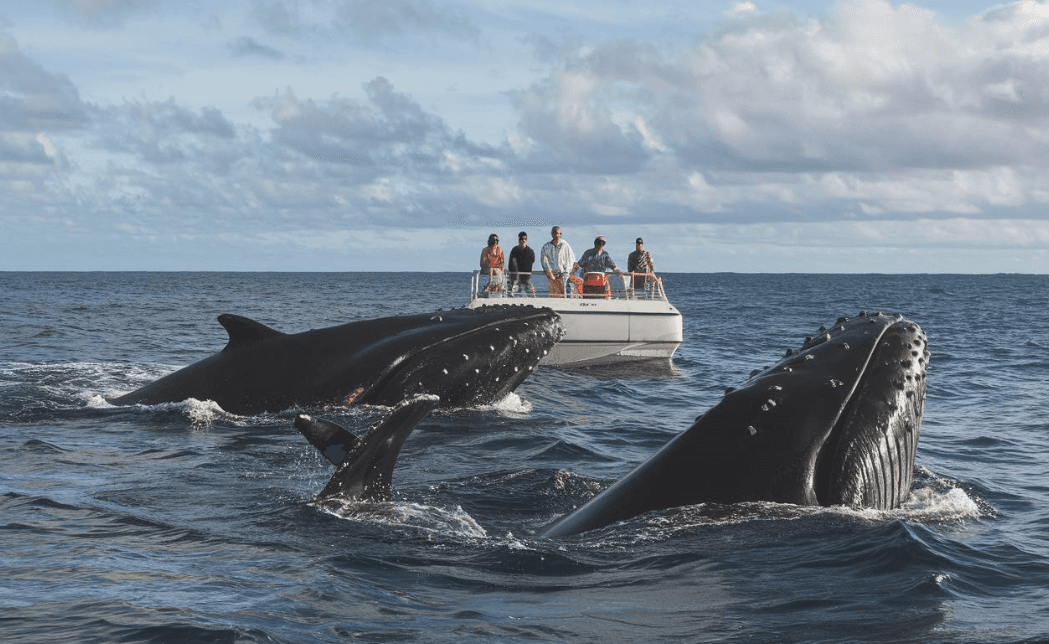
The whales come to these tropical waters to breed and give birth. During the season, visitors may see whales surfacing, raising their flukes, breaching, or swimming with calves.
Punta Cana is not the primary location to choose if your sole purpose is a local humpback whale-watching trip. Travelers based there should check whether an excursion actually visits Samaná or another authorized whale-watching area. Do not assume that a boat trip departing from a Punta Cana resort will reach the whale-watching grounds.
Remember that wildlife sightings are never guaranteed. Even during peak season, sightings depend on whale activity, sea conditions, weather, and the location visited.
2. When Is the Best Time to Visit?
The main whale-watching season around Samaná is generally from January through March, with activity sometimes continuing into April. Exact timing and whale numbers vary from year to year.
If whale watching is the primary purpose of your trip, plan your dates around this seasonal window and confirm current local guidance before making nonrefundable arrangements.
If you are visiting Punta Cana outside whale season, its beaches and resort activities may still make it an excellent vacation destination. However, a trip outside the main migration period is not the best plan if seeing humpback whales is essential.
Planning tip: If your travel dates are flexible, consider building your Dominican Republic itinerary around the whale season first, then choosing your beach stay and other activities around it.
3. Which Destination Is Easier to Reach for Whale Watching?
Your starting point can make a substantial difference.
Staying in Samaná
If you stay in Samaná or nearby, you can plan your accommodation around the departure location of your chosen excursion. Depending on where you stay, you may have a shorter transfer to the marina or meeting point.
This can make it easier to schedule a morning excursion, avoid a very long day on the road, and enjoy other local attractions during the remainder of your stay.
Staying in Punta Cana
Punta Cana is on the eastern side of the Dominican Republic, while Samaná is farther northeast. Traveling between the two areas can involve several hours on the road, depending on the route, traffic, departure point, and destination.
Before booking a whale-watching excursion from Punta Cana, ask the operator:
- Where does the excursion actually depart?
- Is ground transportation included?
- How long is the complete journey?
- What time will you leave and return to your hotel?
- Is the boat trip itself included in the advertised price?
- What happens if weather affects the trip?
A low advertised tour price may not represent the total cost if transportation or other essential services are charged separately.
4. Which Destination Offers More Things to Do?
The answer depends on the kind of vacation you want.
Reasons to choose Samaná
Samaná works well for travelers who enjoy wildlife, coastal landscapes, and nature-focused excursions. Depending on the season and local conditions, you can combine whale watching with beach visits, waterfalls, boat excursions, and trips to other parts of the peninsula.
Staying locally also gives you more flexibility if you want to explore without rushing back to a distant resort.
Reasons to choose Punta Cana
Punta Cana is a strong option for visitors who want a resort-centered holiday. Many travelers choose it for its beaches, swimming pools, restaurants, water sports, and organized excursions.
If you already have a hotel booked in Punta Cana, you do not necessarily need to move your entire vacation. You can compare the cost and time involved in a dedicated day trip with the option of spending a night or two closer to Samaná.
5. Is a Day Trip from Punta Cana Worth It?
A day trip may be possible, depending on the tour's route and transportation arrangements, but it can be tiring if the itinerary includes a long road transfer followed by a boat excursion.
Consider the total experience rather than the number of activities advertised. An early departure, several hours of driving, a boat trip, and the return journey can make for a very long day.
A day trip is more reasonable when the itinerary is transparent, transport is coordinated, and you understand the expected return time. If you prefer a slower pace, consider spending at least one night near your chosen departure point.
For families, older travelers, or anyone who dislikes long transfers, an overnight stay can offer a more relaxed alternative.
6. Which Destination Is Better for Families?
Both destinations can suit families, but the right choice depends on children's ages, comfort with boat travel, and tolerance for long journeys.
Samaná may be more convenient for a family whose main goal is whale watching because the family can stay closer to the excursion departure point. Punta Cana may suit families who prefer resort facilities and want to keep most activities close to their accommodation.
Before booking a boat trip, check the operator's minimum age requirements, life-jacket availability, safety procedures, toilet facilities, trip duration, and weather-related cancellation policy. Ask whether the boat and itinerary are suitable for your particular family.
Never choose a tour based only on promotional photographs. A clear explanation of the actual trip and safety arrangements is more useful.
7. What Should You Budget For?
There is no single price that applies to every Samaná or Punta Cana whale-watching trip. Total costs depend on accommodation, transport, tour type, group size, food, and what the operator includes.
When comparing options, calculate the full cost:
- Round-trip ground transportation, if required
- Whale-watching excursion
- Transfers between your accommodation and meeting point
- Meals and drinks
- Any additional activities or entrance fees
- Accommodation if you stay overnight
Compare like with like. A locally based excursion and a full-day package with transport from Punta Cana may have very different prices because they include different services.
Ask for written confirmation of inclusions, departure times, cancellation conditions, and the policy if whales are not sighted.
8. How to Choose the Right Destination for Your Trip
Use these simple guidelines when making your decision.
Choose Samaná if:
- Seeing humpback whales is one of your main vacation goals.
- You are visiting during the main whale season.
- You want to combine wildlife viewing with nature-based excursions.
- You prefer to stay closer to the boat departure point.
Choose Punta Cana if:
- Your priority is a beach or resort holiday.
- You have already booked accommodation there.
- You want access to resort amenities and a wide variety of activities.
- You are comfortable researching the additional travel required for a whale-watching excursion.
Consider combining both destinations if you have enough time. A multi-stop itinerary can provide a resort holiday as well as a dedicated Samaná wildlife experience, without trying to fit everything into one exhausting day.
Frequently Asked Questions
Is Samaná better than Punta Cana for whale watching?
For a trip focused on North Atlantic humpback whales, Samaná is generally the more convenient choice because Samaná Bay is a recognized seasonal breeding area. Punta Cana is a resort base, and visitors may need to arrange transport to a whale-watching destination.
Can you see humpback whales directly from Punta Cana?
Do not plan on seeing the seasonal concentrations of humpback whales from a typical Punta Cana beach or ordinary local boat excursion. Check the actual destination of any advertised whale-watching tour before booking.
What month is best for whale watching in Samaná?
The main season is generally January through March, with activity sometimes extending into April. Conditions and sightings vary, so check current local information for your travel dates.
Can I visit Samaná from Punta Cana in one day?
Some itineraries may offer a day trip, but the journey can be long. Confirm the departure point, total travel time, return time, transportation arrangements, and what is included before paying.
Should I stay in Samaná or Punta Cana during whale season?
If whale watching is your priority, staying in or near Samaná is often more convenient. If your priority is a resort holiday, Punta Cana may be a better base, with a separate trip to Samaná if your schedule allows.
Is whale watching guaranteed during the season?
No. The season improves your opportunity to see whales, but wild animals move freely. Weather, sea conditions, and whale behavior can affect sightings.
Final Verdict: Samaná or Punta Cana?
For travelers whose main goal is to see humpback whales, Samaná is usually the better base during whale season. Its location near the seasonal whale-watching grounds makes it a practical choice for planning a dedicated wildlife excursion.
Punta Cana remains an excellent option for a resort-focused holiday, especially if beaches and hotel amenities are your main priorities. If you want both experiences, compare the total travel time and cost of adding Samaná to your itinerary rather than assuming a whale-watching excursion will depart nearby.
Whichever destination you choose, select a responsible operator, confirm the exact itinerary, and treat whale sightings as a privilege rather than a guarantee.

Local explorer & expert guide in Whales of Samaná.