How Humpback Whales Store Energy for Their Long Migration
Humpback whales travel thousands of kilometers between productive feeding grounds and warmer breeding areas. These remarkable journeys require energy for swimming, maintaining body temperature, and supporting essential biological activities.
So how can a whale weighing many tons sustain itself during a long migration when food may be limited?
The answer lies partly in its ability to build energy reserves during feeding periods. Humpback whales accumulate fat in a specialized tissue called blubber, which helps insulate their bodies and provides stored energy that can be used when food is less available.
For visitors exploring Samaná Bay in the Dominican Republic, understanding how humpback whales manage their energy reveals another fascinating part of their seasonal journey.
Why Do Humpback Whales Need Energy Reserves?
Migration is physically demanding. Humpback whales must travel between distant ocean regions while maintaining the body functions necessary for survival.
Their energy requirements include several major activities:
- Swimming over long distances between feeding and breeding areas.
- Maintaining body temperature in different water conditions.
- Supporting growth, tissue maintenance, and other normal biological processes.
- Reproducing and, for females, producing milk to feed their calves.
These demands change throughout the year. A whale feeding in a productive ocean region may have access to abundant prey, while a whale in a breeding area may have fewer opportunities to obtain food.
Energy reserves help the animal cope with these changing conditions.
What Is Blubber?
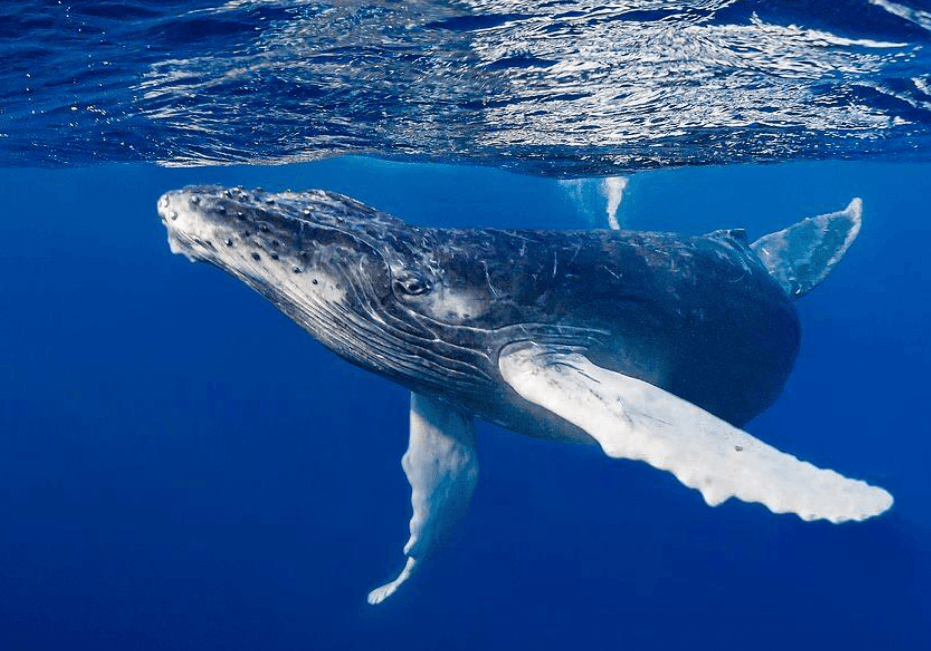
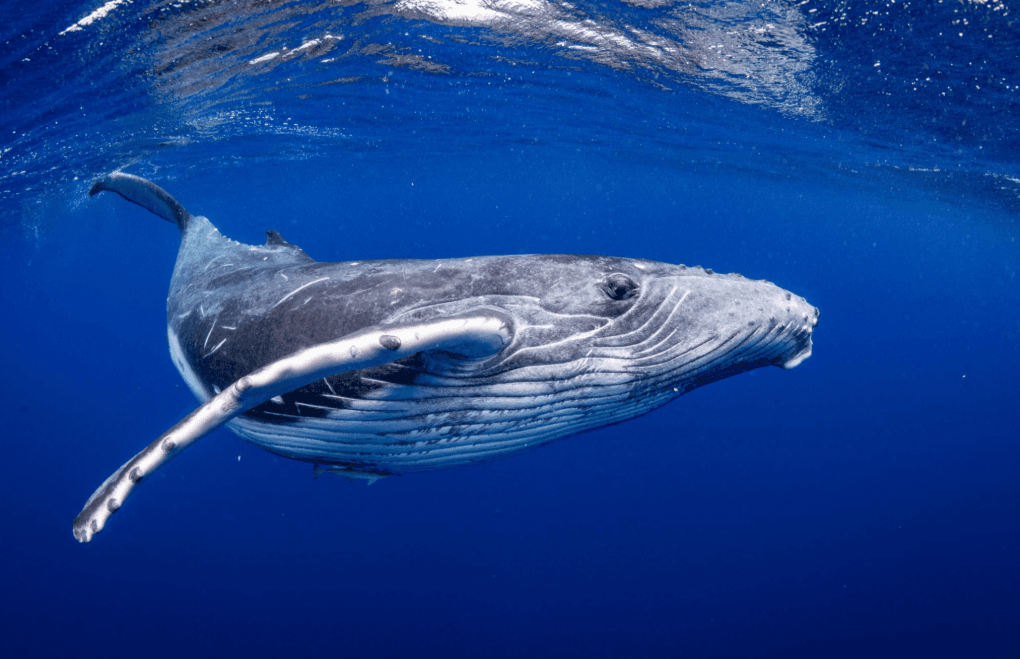
Blubber is a thick layer of fatty tissue beneath a whale's skin. It differs from ordinary body fat in its structure and its role in the whale's physiology.
Blubber has three important functions.
1. Storing energy
Fat contains a large amount of energy relative to its weight. By accumulating fat when food is available, a humpback whale builds reserves that can be used later.
These reserves are particularly important during periods when the whale feeds less frequently.
2. Providing insulation
Water can remove body heat more efficiently than air under many conditions. Blubber helps reduce heat loss and supports the whale's ability to maintain a stable internal temperature.
This is especially important for whales spending time in cold feeding waters.
3. Supporting body condition
Blubber contributes to the whale's overall body shape and condition. Its thickness can change as the animal gains or uses stored fat.
Scientists can study body condition to learn more about a whale's health and energy balance, although estimating these factors accurately requires appropriate observations and research methods.
How Do Humpback Whales Build Their Energy Reserves?
Humpback whales typically feed intensively during periods when prey is abundant. Their feeding grounds often include productive waters at higher latitudes, where krill and small fish can provide substantial food resources.
As they consume prey, the energy obtained supports immediate biological needs, and some is stored as fat.
The process can be understood in three stages.
Stage one: Finding productive feeding areas
Whales feed in locations where suitable prey is available in sufficient quantities. Ocean conditions, prey distribution, and seasonal changes influence where feeding occurs.
A productive feeding area allows a whale to obtain more energy than it would in a location with sparse prey.
Stage two: Consuming enough food
Humpback whales use baleen to capture small prey from the water. Depending on the feeding strategy and prey type, they may consume large quantities of krill or fish.
The energy gained supports swimming, normal body functions, and the accumulation of reserves.
Stage three: Carrying stored energy into the next phase
When whales leave their feeding grounds, they carry their accumulated fat reserves with them.
These reserves help support the migration and subsequent activities, including time spent in breeding and calving areas where feeding may be reduced.
The amount of energy available varies among individual whales and depends on factors such as food availability, reproductive status, and body condition.
Why Is Migration Between Feeding and Breeding Grounds So Important?
North Atlantic humpback whales undertake seasonal movements between feeding areas and warmer breeding regions.
Samaná Bay is an important seasonal breeding and calving area. Whales visiting the region are part of a wider population whose annual cycle connects distant ocean habitats.
These regions provide different benefits.
Feeding grounds offer access to prey that helps whales build energy reserves.
Breeding grounds provide the seasonal setting for mating, calving, and other reproductive activities.
The journey between them requires energy, but the seasonal pattern supports the whales' broader life cycle.
Migration timing and individual movements can vary. Not every whale follows an identical schedule, and researchers continue to investigate how environmental conditions influence these patterns.
Do Humpback Whales Eat During Migration?
Humpback whales may feed opportunistically while traveling if suitable prey is available. However, feeding opportunities vary by location, and whales often rely substantially on energy accumulated in their feeding grounds.
During the breeding season in tropical areas such as Samaná, feeding is generally reduced compared with feeding in productive high-latitude waters.
This does not mean that every humpback whale completely stops feeding whenever it enters a breeding area. Feeding behavior can vary with local conditions and individual circumstances.
The important point is that stored energy allows these whales to continue meeting their needs when abundant food is unavailable.
How Do Mother Humpback Whales Support Their Calves?
Reproduction creates additional energy demands, particularly for female humpback whales that give birth and nurse their calves.
A newborn calf needs energy to grow, develop, and maintain its body temperature. Its mother supplies much of that energy through milk that is rich in fat.
Producing milk requires energy, so the mother's stored reserves can be especially important during the nursing period.
Mother and calf also need to coordinate their movements as they travel through the breeding region and eventually begin their migration.
The amount of energy available to the mother, the calf's growth, and environmental conditions can all influence the challenges they face.
Observing a mother and calf in Samaná Bay therefore provides an opportunity to appreciate not only their relationship but also the biological resources needed to support early development.
How Does Blubber Help a Whale Survive When Food Is Scarce?
Blubber acts as an energy reserve, but it is not an unlimited supply.
When a whale uses stored fat, its energy reserves decrease. If food remains scarce for an extended period, the animal may lose body condition.
This is one reason that feeding success matters throughout the annual cycle. A whale that obtains sufficient food during productive periods may be better positioned to meet later demands.
Energy reserves also support other functions beyond migration, including reproduction and maintenance of normal body processes.
A whale's condition reflects several interacting factors rather than simply how much fat it carries.
What Happens When Ocean Conditions Affect Food Availability?
Humpback whales depend on marine food webs that can change over time.
Water temperature, ocean currents, and other environmental processes influence where prey is found and how abundant it becomes. Changes in prey distribution may affect how easily whales can obtain food.
If suitable prey becomes less available in a feeding area, whales may need to adjust their movements or feeding behavior. Reduced feeding opportunities can make it more difficult to build or maintain adequate energy reserves.
Scientists study relationships among ocean conditions, prey populations, and whale body condition to understand how environmental change may affect humpback whales.
These relationships are complex, and the effect of a particular environmental change can vary by region and season.
Can Scientists Tell Whether a Humpback Whale Has Enough Energy?
Researchers can assess aspects of whale body condition using several scientific methods, including photographs and specialized measurement techniques.
For example, researchers may examine the shape of a whale's body in suitable images to estimate changes in body condition over time. More detailed studies can combine observations with other data to investigate health, reproduction, and energy use.
However, a whale's appearance alone cannot reveal its exact energy reserves. Lighting, viewing angle, body position, and individual differences can affect what an observer sees.
A whale that looks large is not necessarily in better condition than another whale. Reliable conclusions require appropriate methods and careful interpretation.
Why Energy Reserves Matter for Whale Conservation
Protecting humpback whales requires understanding the habitats they depend on throughout their annual cycle.
Breeding areas such as Samaná Bay are important, but so are the feeding grounds where whales accumulate energy reserves.
Conservation efforts that focus only on one part of a whale's range may overlook other important stages of its life cycle.
Maintaining healthy marine ecosystems, monitoring prey availability, reducing harmful human impacts, and supporting responsible whale-watching practices can all contribute to broader conservation goals.
For visitors, learning about these connections helps explain why whales should be viewed as animals that depend on an interconnected ocean environment, rather than as wildlife found in one destination alone.
What Can Visitors Learn During Whale Watching in Samaná?
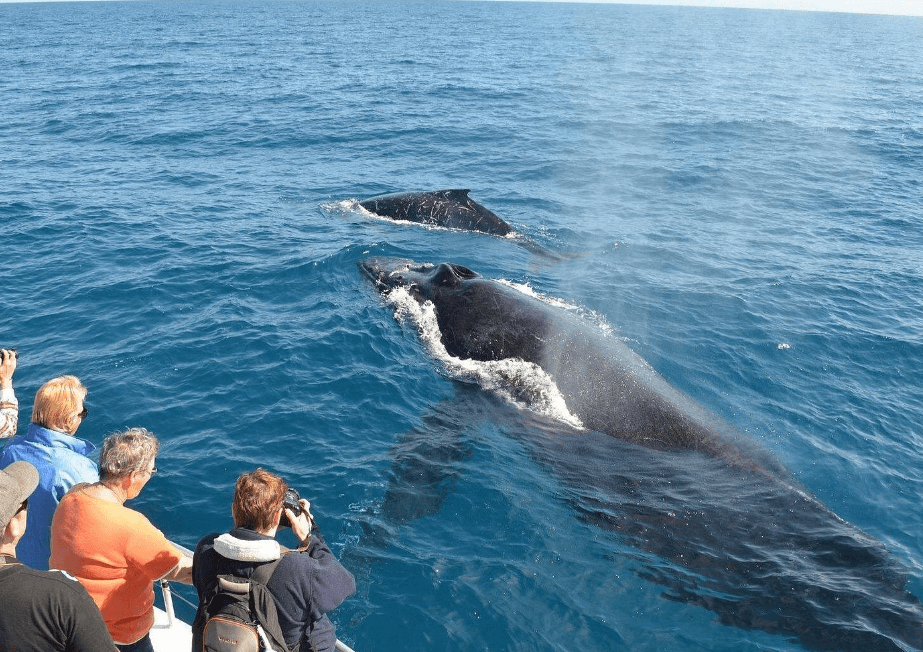
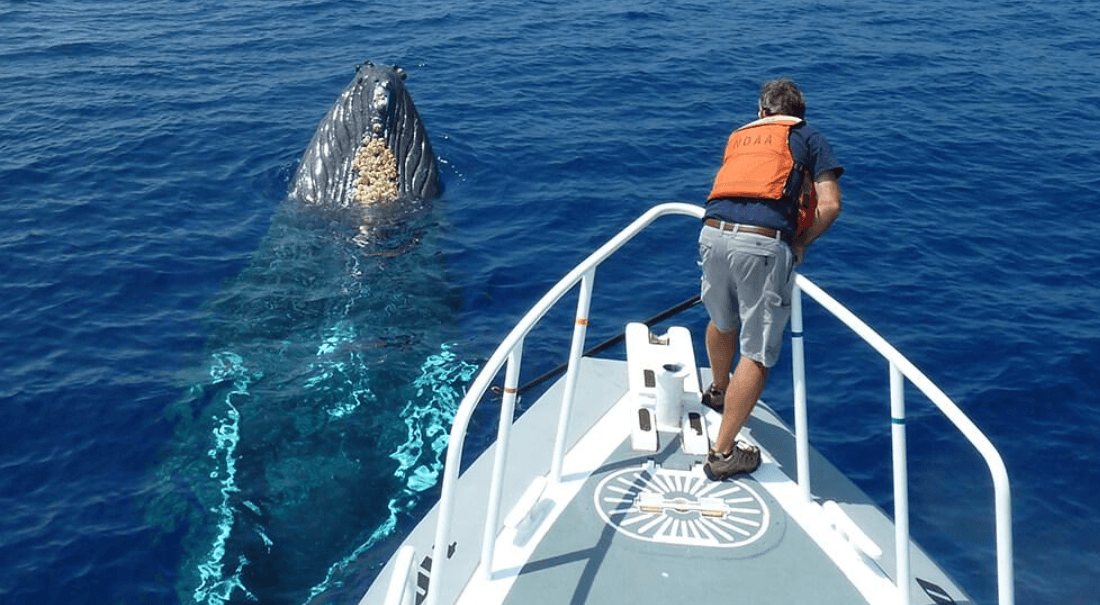
During the whale-watching season, visitors may observe humpback whales surfacing, swimming, raising their tails, or moving alongside their calves.
These encounters cannot reveal the exact amount of stored energy an individual whale carries. However, they provide an opportunity to learn about the animal's annual cycle.
A knowledgeable guide may explain why the whales visit the region, how their migration connects distant habitats, and why mothers and calves have particular energy requirements.
You can deepen your understanding by asking questions about feeding grounds, seasonal movements, and the importance of healthy marine ecosystems.
Remember that whale sightings and behaviors cannot be guaranteed. The value of a responsible excursion also lies in learning about the animals and the environment they inhabit.
Final Thoughts
Humpback whales depend on energy reserves to help them travel between feeding and breeding areas. By consuming prey when it is available and storing some of the resulting energy as fat in their blubber, they can meet many of the demands associated with migration and reproduction.
These reserves are especially important during periods when feeding opportunities are limited and for females supporting the growth of their calves.
Samaná Bay is one part of this much larger seasonal journey. The whales seen in its waters rely on resources and habitats spread across the North Atlantic.
Understanding how humpback whales store and use energy makes their seasonal arrival even more remarkable. It also highlights why protecting the ocean habitats they depend on is essential to their long-term survival.
Frequently Asked Questions
How do humpback whales store energy?
They accumulate fat in their blubber when they have access to sufficient food. This stored energy can be used during migration and periods of reduced feeding.
What is blubber used for?
Blubber provides insulation, stores energy, and contributes to a whale's body condition.
Do humpback whales eat while migrating?
They may feed when suitable prey is available, but they often rely substantially on reserves accumulated in productive feeding areas.
Why do mother humpback whales need extra energy?
Producing milk for a growing calf requires energy. Stored reserves can help mothers meet these demands when feeding opportunities are limited.
Does every humpback whale have the same energy reserves?
No. Reserves vary according to factors such as food availability, reproductive status, individual condition, and recent energy use.
Why are feeding grounds important for whales visiting Samaná?
Feeding grounds help whales obtain the energy needed for migration, reproduction, and other biological activities. Samaná is an important seasonal breeding and calving area within their wider annual cycle.

Local explorer & expert guide in Whales of Samaná.