Humpback Whale vs. Blue Whale: 7 Key Differences
Whales are among the most fascinating animals in the ocean, but not all whale species look or behave alike. Two of the most remarkable are the humpback whale and the blue whale. Both are baleen whales, meaning they filter small prey from seawater instead of catching food with teeth. However, they differ considerably in size, body shape, feeding habits, movement, and the places where visitors are most likely to encounter them.
If you are researching marine wildlife or planning a whale-watching trip to Samaná Bay in the Dominican Republic, understanding these differences can make your experience even more interesting.
In this guide, we compare humpback whales and blue whales and explain what makes each species unique.
1. Humpback Whale vs. Blue Whale: Which Is Bigger?
The most obvious difference is size. Blue whales are the largest animals known to have lived on Earth, while humpback whales are considerably smaller.
Humpback whale size
Adult humpback whales commonly reach around 12–16 meters (39–52 feet) in length. Their weight varies, but large adults can weigh several tens of tonnes. Females are often larger than males.
Blue whale size
Blue whales can reach approximately 24–30 meters (79–98 feet) in length, with some individuals growing even longer. Large adults may weigh well over 100 tonnes, and exceptionally large individuals can weigh substantially more.
These ranges are approximate. Measurements vary by individual, population, sex, and the methods researchers use.
Winner for size: Blue whale. A blue whale can be nearly twice the length of a typical humpback whale and many times heavier.
2. How Do They Look Different?
Although both species have streamlined bodies and broad tails, their physical features are quite distinct.
Humpback whale appearance
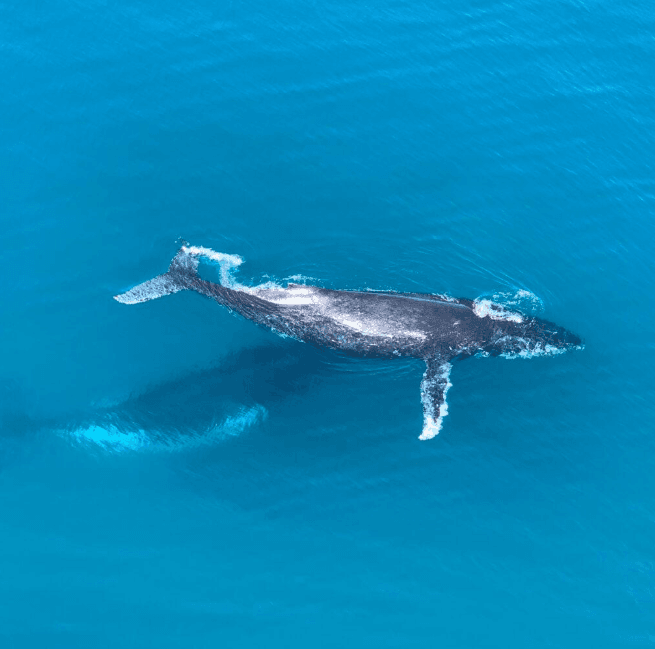
Humpback whales are known for their long pectoral fins, which can be remarkably large compared with their body length. They also have a stockier appearance, a broad head covered in small rounded bumps, and a dorsal fin that sits on a raised area of the back.
Their underside and tail flukes often have distinctive black-and-white patterns. Researchers can use the unique markings on the underside of a whale's tail to identify individual humpbacks.
Blue whale appearance
Blue whales have long, relatively slender bodies with a broad, flat head. Their coloration is generally blue-gray, sometimes with mottled patches that appear different depending on lighting and viewing conditions.
Their pectoral fins are proportionally shorter than those of humpback whales. A small dorsal fin is located far back on the body, close to the tail.
Identification tip: Long pectoral fins, a stockier body, and dramatic surface displays may suggest a humpback. A very long, streamlined blue-gray body is more characteristic of a blue whale.
However, sightings from a moving boat can be brief, and identifying a whale from a single glimpse is not always easy.
3. What Do Humpback Whales and Blue Whales Eat?
Both species are baleen whales, but their feeding patterns and prey preferences differ.
Humpback whale diet
Humpback whales eat small schooling fish, such as herring and sand lance, as well as krill in some feeding areas. Their diet depends on where they live and what prey is available.
They use baleen plates in their mouths to filter food from seawater. Some humpbacks also cooperate during feeding. One well-known example is bubble-net feeding, in which whales release bubbles that help concentrate prey. This behavior occurs in certain populations and is not used by every humpback whale.
Blue whale diet
Blue whales primarily feed on krill, tiny shrimp-like crustaceans that can gather in enormous concentrations. A blue whale may take in large quantities of krill during feeding by engulfing prey-rich water and filtering it through its baleen.
Despite their enormous size, blue whales depend on small animals for food. Their survival therefore relies on healthy marine ecosystems that support abundant krill populations.
Key difference: Humpback whales have a more varied diet in many regions, while blue whales are especially specialized krill feeders.
4. Do They Behave Differently at the Surface?
One of the most exciting differences for wildlife watchers is how these whales may appear at the water's surface.
Humpback whales are famous for behaviors that can be visible from a boat, including:
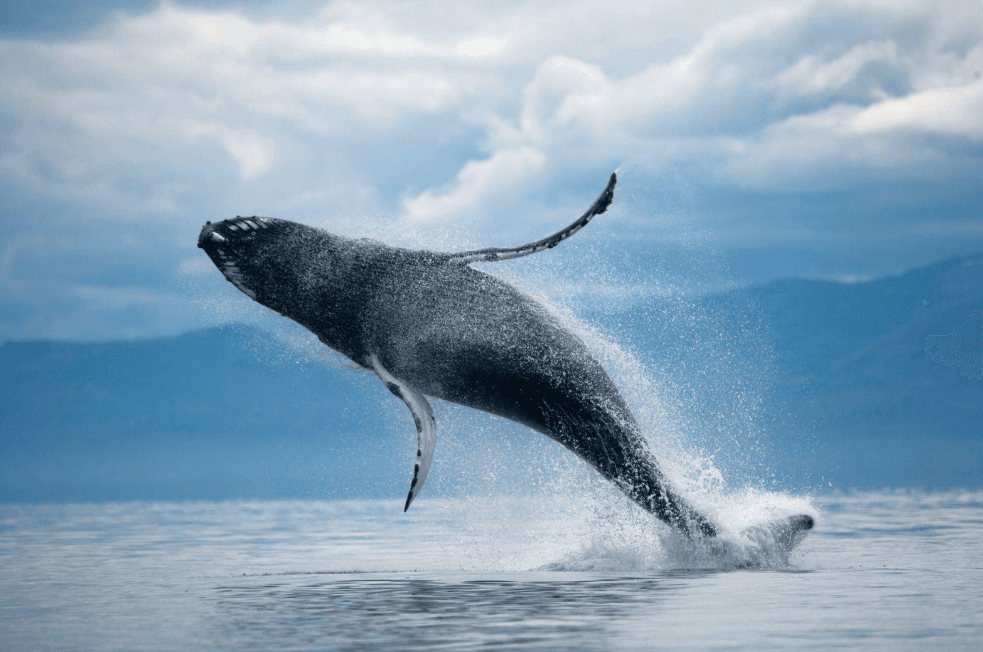
- Breaching: Launching much of the body out of the water.
- Tail slapping: Striking the surface with the tail flukes.
- Pectoral-fin slapping: Raising and striking the water with a long pectoral fin.
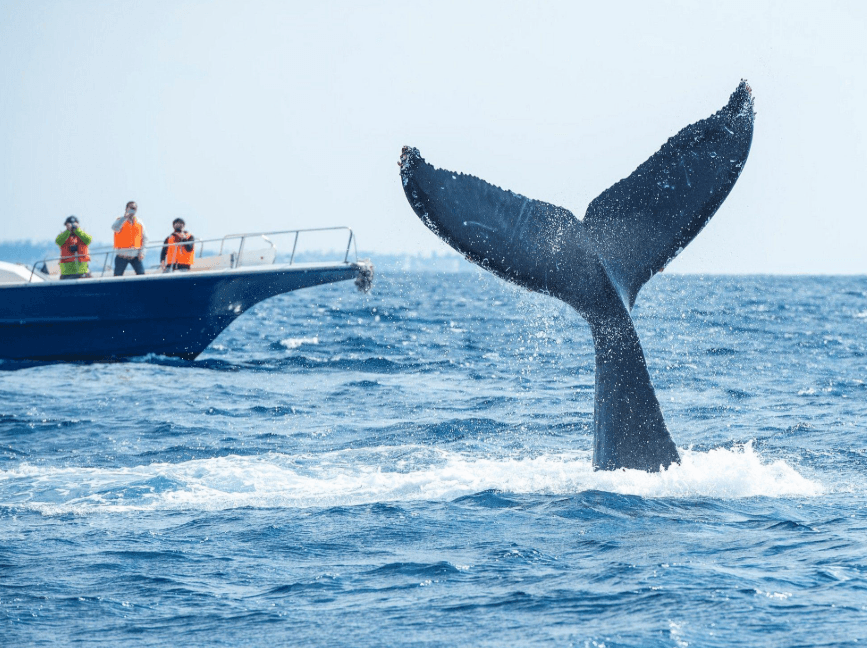
- Fluke displays: Lifting the tail before a dive.
Scientists study these behaviors to understand whale activity, social interactions, and possible communication. The meaning of a particular display is not always clear.
Blue whales can also be seen surfacing, breathing, and diving. However, they are not as well known for the frequent, conspicuous acrobatic displays associated with humpbacks. Their long backs may roll into view before a dive, and some individuals raise their tail flukes.
Neither species follows a guaranteed surface routine. Even in areas where whales are regularly observed, visitors should not expect a specific behavior.
5. Where Do Humpback Whales and Blue Whales Live?
Both species occur in oceans around the world, but their seasonal movements and preferred feeding areas differ.
Humpback whale habitat
Humpback whales migrate between productive feeding grounds in cooler waters and breeding or calving areas in warmer regions. Different populations follow different routes.
Samaná Bay in the Dominican Republic is an important seasonal destination for North Atlantic humpback whales. During the winter breeding season, whales travel to the wider region to mate, give birth, and care for calves.
This makes Samaná a well-known location for observing humpback whales from authorized whale-watching boats during the appropriate season.
Blue whale habitat
Blue whales are found in several ocean basins, including the North Atlantic, North Pacific, Southern Ocean, and parts of the Indian Ocean. Their seasonal movements are linked to feeding opportunities and reproductive needs.
They are often associated with areas where krill is abundant. Their distribution varies by population, and some groups are endangered or remain difficult to study because of their wide-ranging movements.
Blue whales are not the species that Samaná's seasonal whale-watching industry is principally known for. Visitors planning a trip there should expect the possibility of seeing North Atlantic humpbacks, not assume that blue whales will be present.
6. Which Whale Can You See in Samaná Bay?
For travelers interested in whale watching in the Dominican Republic, the humpback whale is the main species to know.
Every year, North Atlantic humpback whales migrate to the Caribbean, including waters around the Samaná Peninsula. The main viewing season is generally January through March, although the precise timing of whale presence and individual sightings varies.
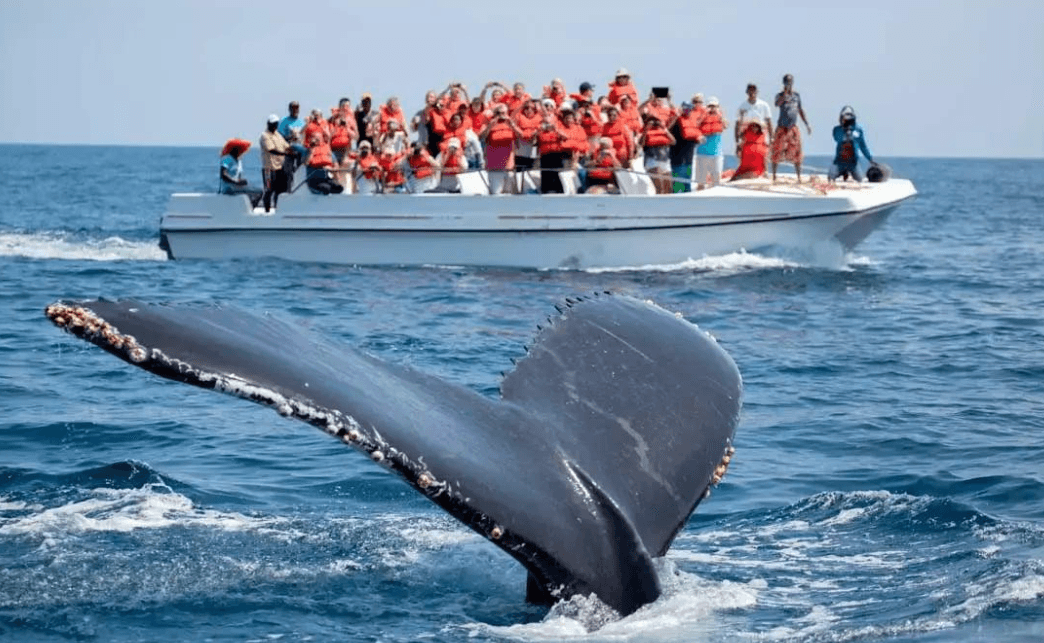
During a trip, visitors may see a whale surfacing to breathe, a tail fluke rising before a dive, or a mother swimming near her calf. Breaching and other dramatic behaviors sometimes occur, but they are never guaranteed.
Blue whales are not the usual target of whale-watching trips in Samaná Bay. If seeing a particular species is important to you, check reliable local information before booking and remember that wildlife sightings can never be guaranteed.
To enjoy the experience responsibly, choose an authorized operator that follows applicable whale-watching rules and gives the animals space. Avoid encouraging boats to approach too closely or interrupting the movement of a mother and calf.
7. Which Species Is More Endangered?
Both humpback whales and blue whales have experienced serious historical pressure from commercial whaling. Their recovery has differed by population, and conservation status should be considered at both the species and population levels.
Humpback whales
Many humpback populations have recovered substantially since commercial whaling restrictions were introduced. However, recovery is not uniform everywhere, and some populations continue to face significant risks.
Potential threats include entanglement in fishing gear, collisions with vessels, underwater noise, habitat changes, and changes in food availability.
Blue whales
Blue whales were severely depleted by commercial whaling. Some populations have recovered, but the species remains at conservation risk, and the status of individual populations varies.
Modern threats include ship strikes, entanglement, underwater noise, and changes in ocean conditions that may affect prey availability.
Protecting both species requires effective conservation measures, responsible maritime activity, scientific monitoring, and healthy ocean habitats.
Humpback Whale vs. Blue Whale: Quick Comparison
FeatureHumpback whaleBlue whaleTypical adult lengthAbout 12–16 mAbout 24–30 mBody shapeStockier, with a raised area near the dorsal finVery long and streamlinedPectoral finsExceptionally longProportionally shorterMain foodSmall fish and krill, depending on regionPrimarily krillNotable behaviorsBreaching, tail slapping, fin slappingSurfacing, rolling, and divingSeasonal movementOften migrates between feeding and breeding groundsMovements vary by population and food availabilitySamaná Bay viewingWell-known seasonal speciesNot the usual species seen on local whale-watching trips
Size ranges are approximate, and behavior and distribution vary among individuals and populations.
Frequently Asked Questions
Is a blue whale bigger than a humpback whale?
Yes. Blue whales are substantially larger. They can reach around 30 meters in length, while adult humpback whales commonly measure about 12–16 meters.
Are humpback whales and blue whales both baleen whales?
Yes. Both have baleen plates that filter prey from seawater. Neither species has the same type of teeth used by toothed whales to capture prey.
Which whale is more likely to breach?
Humpback whales are especially well known for breaching and other conspicuous surface behaviors. Blue whales can also display at the surface, but dramatic acrobatics are less characteristic of them.
Can you see blue whales in Samaná Bay?
Blue whales are not the species that Samaná Bay is known for during its whale-watching season. The area's best-known seasonal visitors are North Atlantic humpback whales. Wildlife distribution can change, so consult reliable local sources if you need current species information.
When is the best time to see humpback whales in Samaná?
The main seasonal viewing period is generally January through March. Exact timing and sightings vary from year to year, and seeing whales is never guaranteed.
Are humpback whales and blue whales dangerous to people?
They are wild animals and should always be treated with respect. They do not typically seek out people, but their immense size and unpredictable movement can create serious risks when boats approach too closely. Follow the crew's instructions and all applicable wildlife-viewing regulations.
Final Thoughts
The humpback whale and the blue whale are both extraordinary marine mammals, but they stand out for different reasons. The blue whale is the largest animal known to have lived on Earth, while the humpback is famous for its long pectoral fins and spectacular surface behaviors.
For visitors planning a whale-watching trip to Samaná Bay, humpback whales are the species to learn about first. Understanding how these animals differ helps you recognize what you may see and appreciate the importance of observing them responsibly.
Whether a whale surfaces briefly or performs a dramatic breach, the most important part of the experience is allowing the animal to behave naturally in its ocean habitat.

Local explorer & expert guide in Whales of Samaná.