Humpback Whale Baleen: How These Giants Filter Food
Humpback whales are enormous marine mammals, yet much of their food consists of relatively small animals, including krill and small schooling fish. Instead of using teeth to chew their meals, these whales rely on a specialized filtering system inside their mouths.
This system uses baleen, a flexible, comb-like material that allows humpback whales to capture prey while releasing much of the surrounding seawater.
For visitors interested in Samaná whale watching in the Dominican Republic, learning about baleen reveals an important part of humpback whale biology. It explains how these large animals obtain food, why their mouths are adapted for filter feeding, and how their feeding needs connect them to healthy marine ecosystems.
What Is Baleen in a Humpback Whale?
Baleen is a specialized material made primarily of keratin, the same general type of protein found in human hair and fingernails. Instead of having teeth, humpback whales have rows of baleen plates attached to the upper jaw.
The plates hang down into the mouth, forming a filtering surface. Each plate has a fringed inner edge that helps retain small prey while water passes through.
Baleen is not a set of teeth, and it does not chew food. Its main function is to separate prey from seawater.
The number, size, and arrangement of baleen plates vary among whale species. In humpback whales, the structure is suited to capturing small fish and crustaceans from large amounts of water.
How Does Baleen Filtering Work?
Humpback whales use their mouths to collect prey and seawater, then use their baleen to retain the food as water exits.
The exact sequence varies with the feeding method, but the basic process can be understood in several stages.
1. Finding a concentration of prey
Humpback whales feed in areas where suitable prey is available. Depending on the location and season, their diet may include krill, small schooling fish, and other small marine animals.
The distribution of prey can influence where and how whales feed.
2. Taking in prey and seawater
During some feeding events, a humpback whale opens its mouth and moves into a concentration of prey. This may involve a rapid maneuver known as lunge feeding.
The whale takes in a large volume of water along with the prey. Its expandable throat grooves allow the lower jaw and throat region to accommodate substantial amounts of water during feeding.
3. Filtering the water
After collecting prey and water, the whale uses movements of its mouth and tongue to help expel the water through the baleen.
The baleen plates and their fringed edges retain many of the small animals inside the mouth.
4. Swallowing the food
Once much of the water has been expelled, the whale gathers the retained prey and swallows it.
The process allows the whale to obtain food without chewing each individual animal.
Why Don't Humpback Whales Need Teeth?
Humpback whales belong to a group known as baleen whales, or mysticetes. Their feeding system differs from that of toothed whales, which use teeth for capturing or handling prey.
Humpbacks do not need teeth to chew their food because their prey is generally swallowed rather than ground up in the mouth.
Baleen offers a different advantage: it allows a whale to capture many small prey animals in a feeding event. This is especially useful when prey occurs in dense groups.
The absence of functional adult teeth is therefore part of a feeding adaptation that has evolved over a long period.
What Do Humpback Whales Eat?
Humpback whales are not limited to a single prey species. Their diet varies according to where they feed and what is available.
Common food sources include:
- Krill: Small, shrimp-like crustaceans that can form dense concentrations in the ocean.
- Small schooling fish: Depending on the region, humpbacks may feed on fish that gather in large groups.
- Other small prey: The exact composition of a whale's diet depends on the local marine ecosystem.
Humpback whales generally obtain much of their food in colder, productive feeding areas. During their seasonal breeding period in tropical waters such as those around Samaná, they typically feed much less than they do in their main feeding grounds.
Their migration connects areas with different ecological functions: productive waters provide feeding opportunities, while warmer tropical waters are important for breeding and calving.
How Is Baleen Different From a Human Comb?
Baleen is sometimes compared to a comb because its plates and fringed edges form a structure through which water can pass while food is retained.
However, baleen is a biological filtering system, not simply a row of rigid teeth.
Its material, arrangement, and interaction with water are adapted to the whale's feeding needs. The plates work together to filter prey from a large volume of water, and their structure differs across baleen whale species.
A household comb separates and arranges hair. Baleen helps a whale separate food from seawater.
The comparison is useful for understanding the general idea, but it does not capture the full complexity of how a whale feeds.
What Makes Humpback Whale Baleen Special?
Baleen allows humpback whales to exploit food resources that would be difficult to capture efficiently by picking up individual prey animals one at a time.
Several features are important.
A large filtering surface
Numerous plates create an extensive filtering area inside the mouth. This helps the whale retain prey as water flows out.
Flexible, fringed edges
The inner edges of the plates have fine, hair-like fringes. These help form a filtering surface suited to retaining small prey.
Adaptation to different prey
Humpback whales can use different feeding strategies depending on prey type, distribution, and local conditions. Their baleen is part of a wider feeding system that includes the mouth, throat grooves, tongue, and swimming movements.
These features help humpbacks obtain food efficiently when suitable prey is available.
Do Humpback Whales Filter Food Every Time They Open Their Mouths?
No. Opening the mouth does not automatically mean a whale is feeding.
A whale may open its mouth during a feeding maneuver, but an observer needs additional context to interpret the behavior. Some feeding events happen underwater, where they may be difficult to see from a boat.
During a whale-watching excursion, a guide may explain a behavior that appears consistent with feeding. However, not every surface movement provides enough evidence to establish exactly what the whale is doing.
This distinction matters because responsible wildlife interpretation avoids treating every visible movement as a confirmed feeding event.
How Does Baleen Support a Humpback Whale's Energy Needs?
Humpback whales need substantial energy to support their large bodies, swimming, reproduction, and migration.
In productive feeding areas, they can consume large quantities of prey and build energy reserves. These reserves help support their seasonal movements and reproductive activities.
Baleen contributes to this process by allowing whales to capture small prey efficiently when it is abundant.
Food availability is therefore important to the wider life cycle of humpback whales. Changes in prey abundance or distribution can affect where whales feed and how much energy they can obtain.
The relationship between baleen and energy intake illustrates how a specialized anatomical feature can influence an animal's ecology.
What Is the Connection Between Baleen and Samaná Bay?
Samaná Bay is well known as a seasonal breeding and calving area for North Atlantic humpback whales. During the breeding season, whales gather in the wider region, and visitors may observe them from licensed whale-watching excursions.
However, Samaná's importance to humpbacks should not be confused with their primary feeding grounds. These whales generally rely on productive feeding areas elsewhere during the year to obtain much of the food that supports their migration and reproduction.
Learning about baleen helps visitors understand this connection between feeding habitats and breeding habitats.
A whale observed in Samaná is part of a much larger ecological story that extends across the North Atlantic.
Why Healthy Marine Ecosystems Matter to Filter Feeders
Baleen works only when suitable prey is available. The health of marine food webs is therefore important to humpback whales.
Ocean conditions influence the distribution and abundance of krill and fish. Changes in water temperature, currents, and broader environmental conditions can affect where prey gathers.
Researchers study these relationships to understand how whale populations respond to environmental change.
Protecting marine habitats, reducing harmful pollution, and supporting responsible wildlife tourism are all parts of broader efforts to maintain healthy ocean ecosystems.
No single action can solve every conservation challenge, but understanding the link between prey, feeding adaptations, and habitat health helps explain why marine conservation matters.
Can You See Baleen During a Whale-Watching Tour?
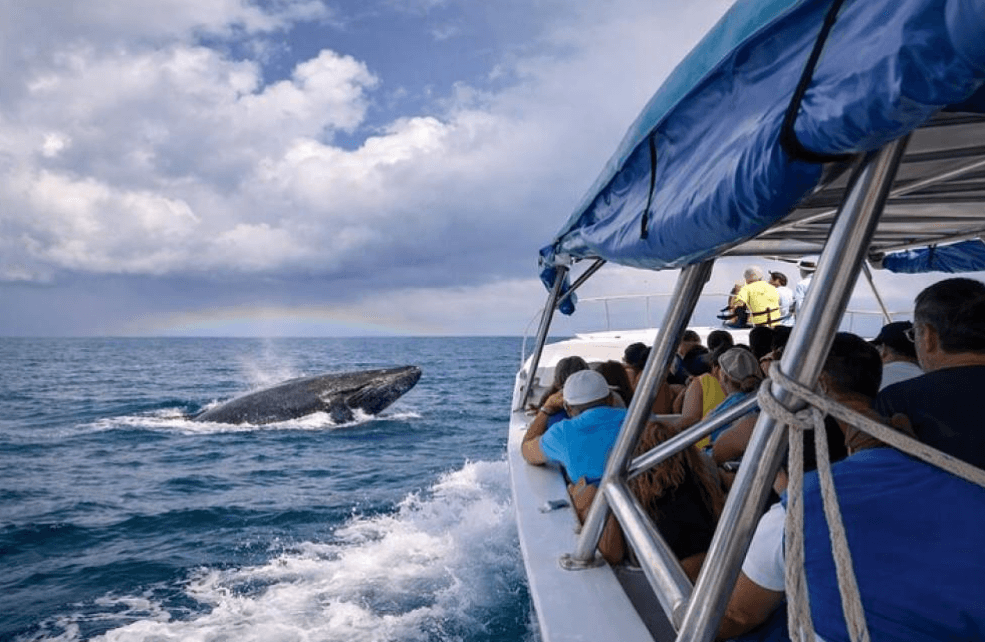
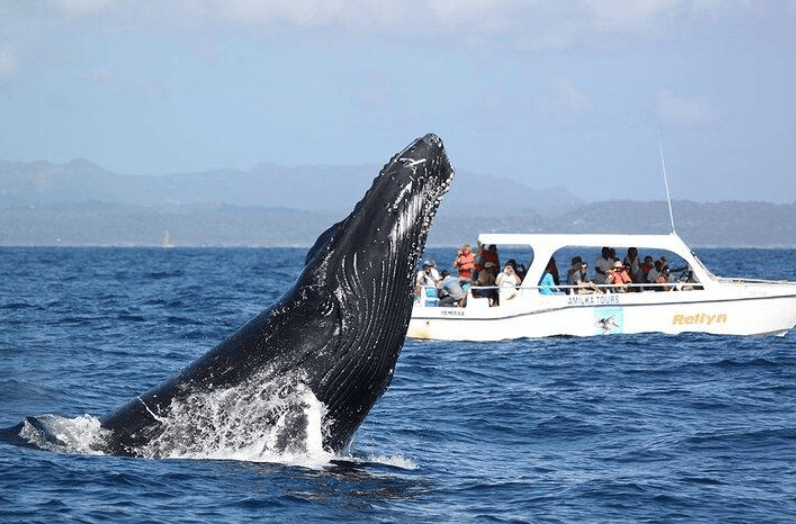
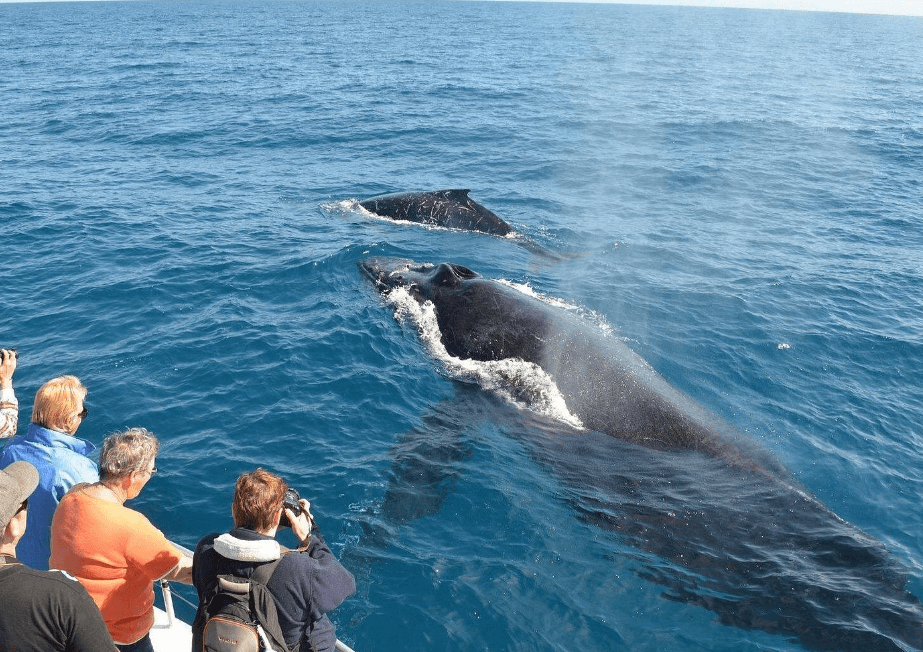
Usually, visitors cannot see the baleen plates clearly during an ordinary whale-watching excursion. The plates are inside the whale's mouth and are difficult to observe from a boat.
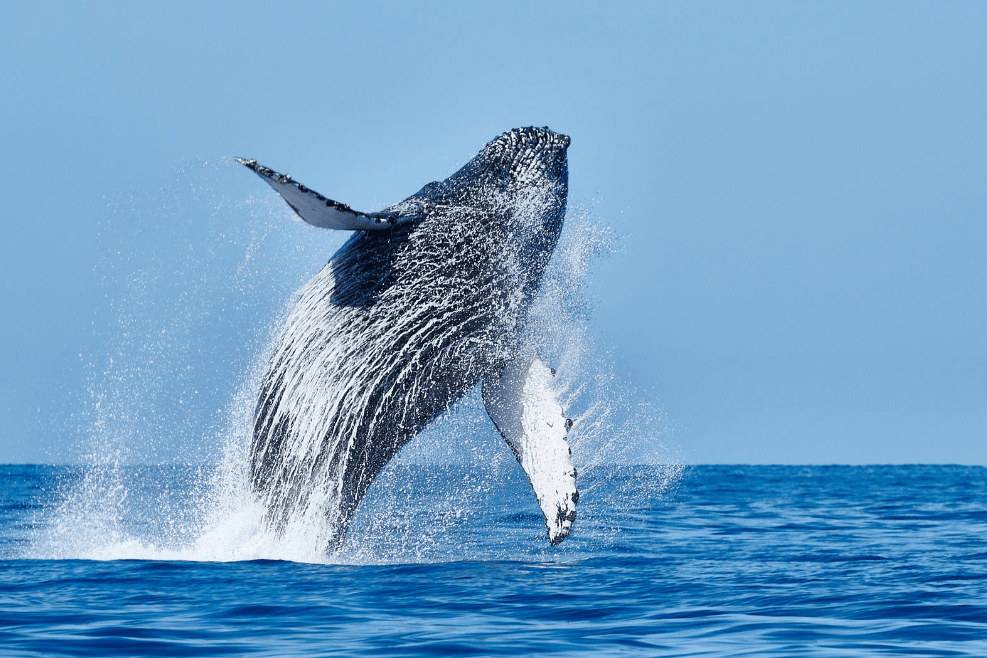
You may see a humpback whale surface, dive, or perform a movement associated with feeding. These observations can provide an opportunity to learn about its feeding adaptations, but they do not normally offer a direct view of the baleen itself.
Photographs, scientific illustrations, museum displays, and educational resources can provide a closer look at the structure.
If your guide discusses baleen, consider asking how the whale's filtering system works and what kinds of prey humpbacks eat in their feeding grounds.
Final Thoughts
Humpback whale baleen is a remarkable adaptation that allows these large marine mammals to feed on small prey without teeth. Its plates and fringed edges retain food while water flows out, helping the whale make use of concentrations of krill and small fish.
This filtering system is connected to much more than anatomy. It supports the whale's energy needs, links the animal to productive feeding ecosystems, and helps explain why healthy marine habitats are important throughout its annual migration.
When you visit Samaná Bay to observe humpback whales, understanding baleen can deepen your appreciation of the animals beyond what you can see at the surface. Even when their feeding structures remain hidden, they are an essential part of the biology that makes these ocean giants possible.
Frequently Asked Questions
What is humpback whale baleen made of?
Baleen is made primarily of keratin, a structural protein also found in hair and fingernails.
How does baleen help a humpback whale eat?
The whale collects prey and water in its mouth, then expels much of the water through the baleen. The plates and fringed edges retain prey that can then be swallowed.
Do humpback whales have teeth?
Adult humpback whales use baleen rather than functional teeth for feeding. They belong to the baleen whale group.
What do humpback whales eat?
Their diet can include krill and small schooling fish. The exact prey depends on the feeding location and availability.
Do humpback whales feed heavily in Samaná Bay?
Samaná is primarily known as a seasonal breeding and calving area. Humpbacks generally obtain much of their food in productive feeding grounds elsewhere during the year.
Can visitors see baleen while whale watching?
Baleen is inside the whale's mouth, so it is not usually visible during a standard excursion. Educational illustrations and scientific photographs are better ways to examine it closely.

Local explorer & expert guide in Whales of Samaná.