Why Do Humpback Whales Slap Their Tails in Samaná Bay?
A loud splash breaks the surface of Samaná Bay. Moments later, a massive whale's tail rises above the water and strikes the ocean with impressive force. For visitors on a whale-watching excursion, this can be one of the most memorable behaviors they witness.
Known as tail slapping, this behavior occurs when a whale brings its tail flukes forcefully against the water. Humpback whales are famous for their powerful tails, and their surface movements can provide fascinating insights into how these marine mammals interact with their environment.
Samaná Bay, in the Dominican Republic, is an important seasonal destination for observing migrating humpback whales. During whale-watching season, visitors may have opportunities to see different types of surface behavior, including tail movements.
But why do humpback whales slap their tails Is it a form of communication, a warning, or simply another movement they make while swimming?
Scientists recognize several possible explanations. Understanding them can help you appreciate humpback whale tail slapping without assuming that every movement has the same meaning.
What Is Humpback Whale Tail Slapping?
Tail slapping, sometimes called a tail slap or lobtailing, occurs when a whale strikes the water with its tail flukes.
The tail flukes are the two broad lobes at the end of the whale's body. They help generate propulsion, allowing the animal to move through the ocean.
During a tail slap, a humpback whale may raise its tail above the surface and bring it down forcefully. The impact can produce a loud sound and a visible splash.
The movement can occur once or be repeated several times. The whale's position and the amount of its body visible above the surface may vary.
Tail slapping is different from breaching, when a whale propels much of its body out of the water. It is also different from a tail-up dive, when the flukes rise above the surface as the whale prepares to descend.
Recognizing these differences helps whale watchers describe what they observe more accurately.
1. Tail Slapping May Help Whales Communicate
One possible function of tail slapping is communication.
When a whale strikes the water, the impact creates sound and surface disturbance. These signals may be detectable by other whales, depending on the surrounding conditions.
Humpback whales live in an environment where visibility can be limited, especially underwater. Sound is important in their lives, so researchers study whether certain surface behaviors help individuals communicate with nearby animals.
A powerful tail slap may be noticeable beyond the immediate location of the whale. However, observing a slap does not establish exactly what the whale is communicating, or even whether communication is its primary purpose at that moment.
During a Samaná whale-watching excursion, your guide may be able to describe the surrounding behavior, but the precise meaning of an individual tail slap often remains uncertain.
2. Tail Slapping May Occur During Social Interactions
Humpback whales interact with one another in several ways. Their behavior can include changes in swimming direction, close approaches, vocalizations, and movements at the surface.
Tail slapping sometimes occurs when multiple whales are nearby. This has encouraged researchers to investigate whether the behavior is associated with social interaction.
For example, a whale may slap its tail while traveling near another whale or during a period of increased activity.
Nevertheless, the presence of another whale does not prove that the slap is directed toward it. Researchers must consider the broader context before drawing conclusions.
If you see multiple whales during a tour in Samaná Bay, pay attention to their relative positions and movements. These observations can be interesting, even when the animals' motivations cannot be determined with certainty.
3. It May Be Associated With Agitation or Warning Signals
Tail slapping can occur in situations involving heightened activity or possible social tension.
Because the movement is forceful and produces a noticeable sound, researchers have considered whether it can function as a warning or signal in particular contexts.
However, a tail slap should not automatically be interpreted as anger or aggression. The same behavior may occur under different circumstances, and its meaning depends on the wider pattern of activity.
Visitors should avoid assuming that a whale is angry simply because it strikes the water.
Regardless of the whale's motivation, passengers should remain in their designated areas and follow the captain's instructions. Never encourage a boat operator to move closer or provoke a reaction to obtain a better view.
4. Tail Slapping May Be Part of Repeated Surface Activity
Sometimes a humpback whale performs a movement repeatedly, striking the water several times within a short period.
Repeated tail slapping can create a series of splashes and sounds that are particularly noticeable from a boat.
Researchers examine how often the behavior occurs, whether other whales are present, and what happens before and after the movements.
Repetition alone does not reveal the whale's purpose. A sequence of tail slaps may have a different context from a single movement, but additional observations are needed to understand why it occurs.
For whale watchers, repeated movements provide an opportunity to observe the whale's behavior carefully rather than focusing only on the splash.
5. The Tail Is Essential for Powerful Movement
A humpback whale's tail is a major part of its locomotion. The flukes move up and down to generate thrust, helping the whale travel through the water.
A tail slap uses the same powerful body structures but produces a distinct surface impact.
The tail's size and muscular support allow a humpback whale to generate substantial force. When the flukes strike the water, the resulting splash can make the animal's strength especially apparent.
It is important, however, to distinguish normal swimming movements from a deliberate tail slap. A whale moving its tail underwater is not necessarily performing a surface display.
6. Do Humpback Whales Slap Their Tails During Breeding Season?
Samaná Bay is associated with the seasonal migration of humpback whales to warm breeding waters. The main whale-watching period is generally January through March, although activity varies naturally.
During this period, whales may engage in a range of social and surface behaviors.
Tail slapping can be observed during whale-watching trips, but it should not automatically be interpreted as a courtship display or a sign of competition.
A whale's behavior may be influenced by several factors, and its purpose cannot reliably be determined from the season alone.
The best approach is to observe what happens and listen to explanations from knowledgeable guides without assuming that every action has a single, definite meaning.
7. What Does a Tail Slap Sound Like?
A powerful tail slap can create a sharp impact and a noticeable splash. The sound may be audible from a whale-watching boat, although its intensity depends on the distance, wind, background noise, and other conditions.
The impact can be particularly striking when a whale repeatedly strikes the water.
However, sound alone is not enough to identify every whale behavior. Waves, other surface movements, and the boat itself can produce noise.
If you hear a sudden splash, look toward the area indicated by your guide rather than immediately assuming a tail slap has occurred.
8. Can You See Tail Slapping During Whale Watching in Samaná?
Yes, humpback whale tail slapping may be observed during the Samaná whale-watching season, but it is not guaranteed.
Whales vary in how frequently they perform surface behaviors. Some excursions may encounter animals that mostly surface to breathe and then dive. Others may provide opportunities to observe a variety of movements.
The likelihood of seeing a particular behavior depends on natural circumstances, including the animals present and their activity during the observation period.
No responsible tour operator can promise that a whale will slap its tail on demand.
Choose an excursion that prioritizes safe, responsible viewing rather than one that advertises guaranteed dramatic behavior.
9. How to Recognize a Tail Slap From a Boat
Recognizing a tail slap becomes easier when you know what to look for.
Watch for these features:
- Raised flukes: The whale lifts its broad tail above the surface.
- A forceful downward movement: The tail strikes the water.
- A visible splash: Water spreads around the point of impact.
- A possible sound: The strike may create an audible impact.
- Repeated movements: The whale may perform more than one slap.
Not every tail movement is a tail slap. A whale may raise its flukes while diving, and that movement does not necessarily involve striking the water.
If you are unsure what you saw, ask your guide to explain the difference between the behaviors.
10. Photographing a Tail Slap in Samaná Bay
Tail slapping can be difficult to photograph because the movement may happen suddenly.
If you want to capture the behavior, prepare your camera before the boat reaches the main viewing area. Familiarize yourself with the controls and use a secure strap.
A fast shutter speed may help freeze the movement, while continuous shooting can increase your chances of capturing the moment.
Try to keep the whale within your field of view without constantly looking through the camera. Observing the animal directly may help you notice changes in its position before the next movement.
Protect your equipment from water and follow all instructions about where you can stand or move. Never lean over the boat or obstruct another passenger to take a photograph.
Remember that an ordinary sighting can still be rewarding, even if you do not capture the perfect image.
11. How Tail Slapping Differs From Other Whale Behaviors
Humpback whales display several recognizable behaviors at the surface. Knowing the differences makes your wildlife observations more informative.
Tail slapping: The tail flukes strike the water, producing a splash.
Breaching: The whale propels much of its body out of the water before falling back.
Pectoral-fin slapping: One of the long pectoral fins strikes the surface.
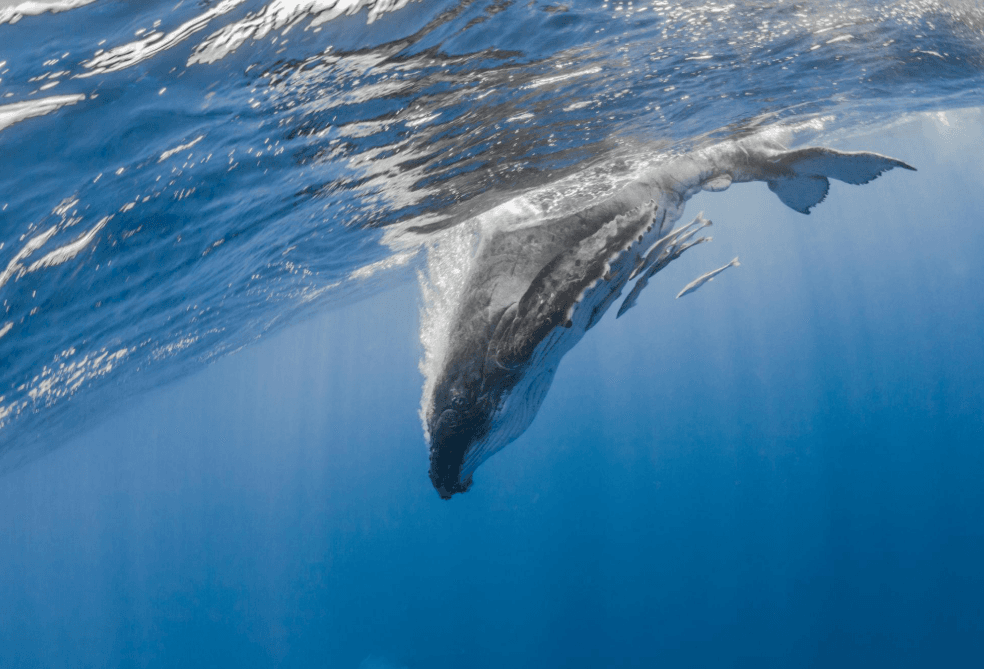
Fluke-up diving: The whale raises its tail flukes as it prepares to dive, without necessarily striking the water.
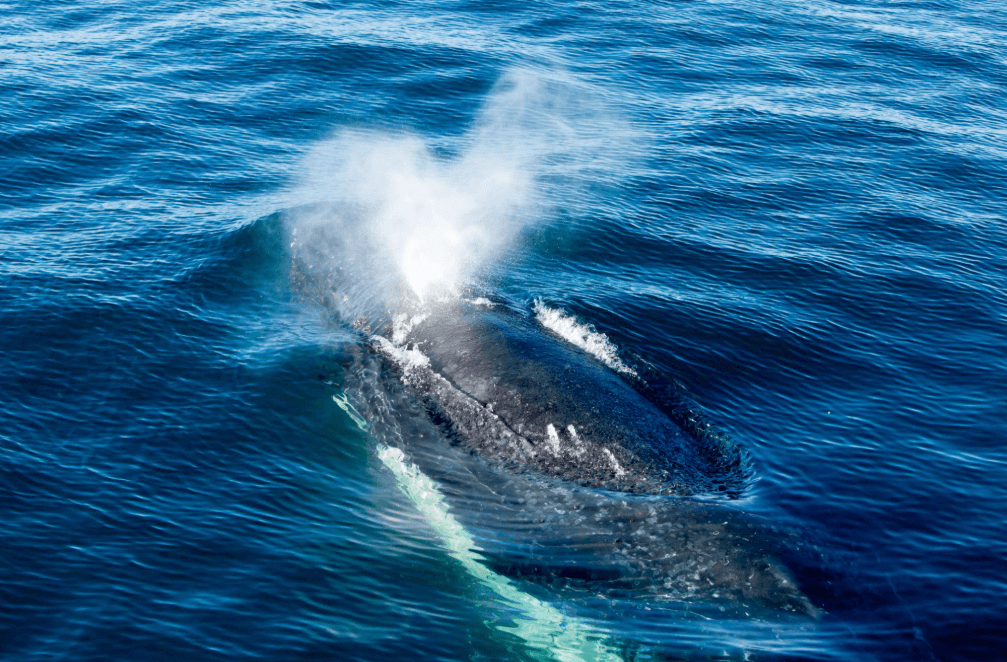
Blowing: The whale exhales at the surface, producing a visible plume.
These behaviors can look dramatic from a boat, but each involves different movements. Learning to distinguish them can make your Samaná whale-watching experience more educational.
12. Responsible Whale Watching Matters
When a humpback whale slaps its tail, passengers may naturally become excited. However, the behavior should be observed without pressuring the animal or interfering with its movements.
A responsible operator should follow applicable wildlife-viewing regulations and manage the boat appropriately.
During the excursion:
- Listen to the captain and guide.
- Remain in permitted passenger areas.
- Do not attempt to touch or feed whales.
- Never enter the water to approach a wild whale.
- Avoid encouraging the crew to chase animals.
- Keep rubbish and loose objects secured.
If a whale moves away, allow it to do so. Responsible observation means accepting the behavior the animal chooses to display rather than trying to influence it.
Final Thoughts
Humpback whale tail slapping is a powerful surface behavior that can make whale watching in Samaná Bay especially memorable. It involves the whale striking the water with its tail flukes, creating a splash that may also produce a noticeable sound.
Scientists have considered several possible explanations, including communication and social interaction, but the exact function of a particular tail slap is not always clear.
During your excursion, watch carefully, listen to your guide, and appreciate the behavior without assuming you know the whale's motivation. Whether you witness one tail slap, repeated movements, or a quieter encounter, every responsible observation offers another opportunity to learn about humpback whales.
Frequently Asked Questions
Why do humpback whales slap their tails?
Possible explanations include communication, social interaction, and behavior associated with heightened activity. The reason for an individual tail slap is not always known.
Is tail slapping the same as breaching?
No. Tail slapping involves the tail flukes striking the water. Breaching involves the whale propelling much of its body above the surface before falling back into the ocean.
Can you hear a humpback whale's tail slap?
The impact can produce a noticeable sound, but how clearly it is heard depends on distance and environmental conditions.
Can I see tail slapping in Samaná Bay?
It is possible during the whale-watching season, generally January through March. However, sightings of particular behaviors cannot be guaranteed.
Does tail slapping mean a whale is angry?
Not necessarily. Tail slapping may occur in different contexts, and the movement alone does not establish the whale's emotional state.
What should I do if a whale slaps its tail near the boat?
Remain in the permitted viewing area, follow the captain's instructions, and observe without attempting to approach or interact with the whale.

Local explorer & expert guide in Whales of Samaná.