How Humpback Whales Keep Their Skin Healthy in Samaná Bay
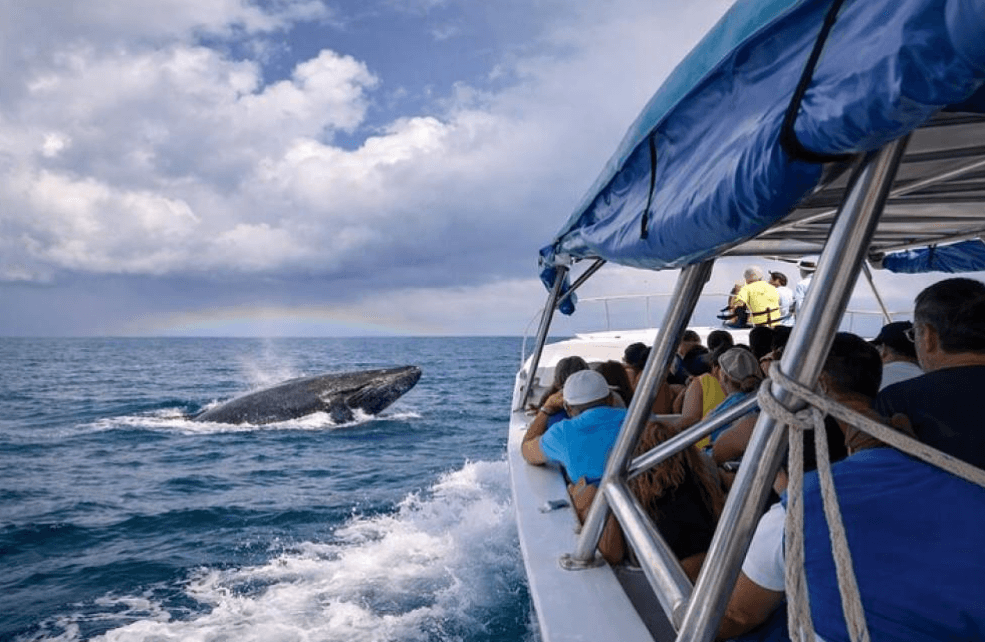
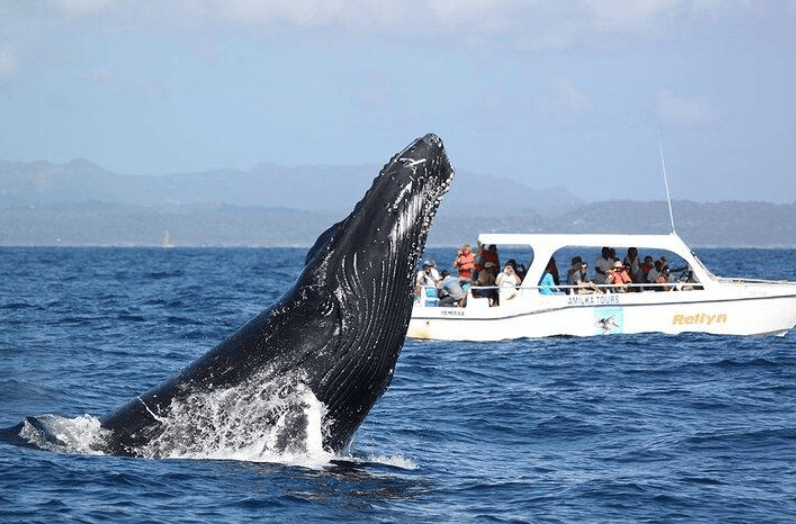
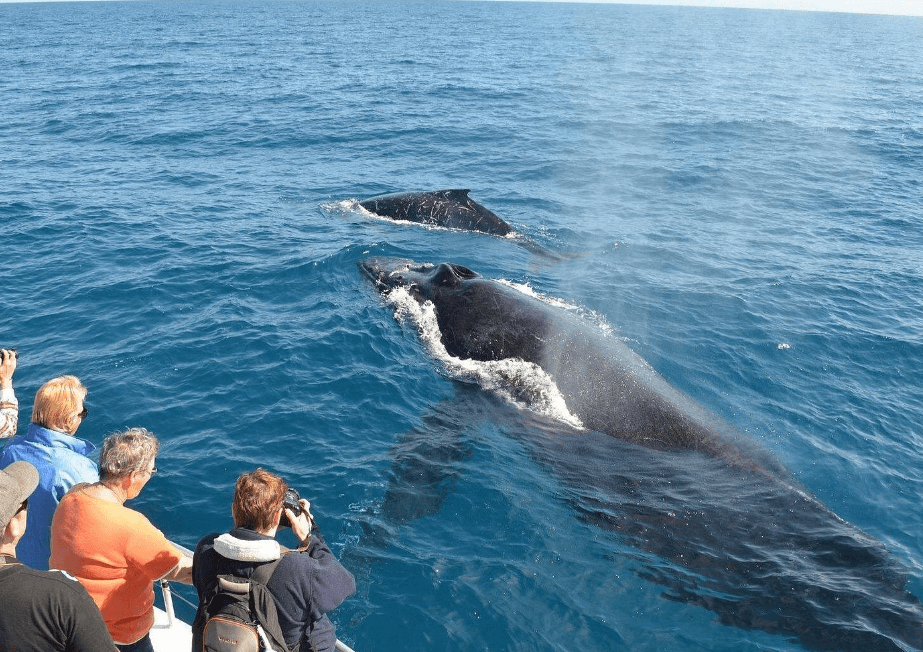
When humpback whales arrive in Samaná Bay, Dominican Republic, during their seasonal migration, visitors often notice their enormous bodies, distinctive white markings, and occasional barnacles around their heads and fins. These visible features tell part of a fascinating story about life in the ocean.
A humpback whale's skin is more than an outer covering. It is a living protective barrier that helps the whale function in a challenging marine environment. Its surface also hosts small organisms, develops distinctive markings, and can provide researchers with clues about the animal's condition.
Understanding humpback whale skin adds another dimension to whale watching in Samaná. Instead of looking only for spectacular jumps or tail slaps, visitors can learn to appreciate the details that make every whale unique.
Why Is Humpback Whale Skin Important?
Humpback whales are marine mammals, not fish. Their skin is part of a mammalian body system that protects internal tissues and helps maintain normal physiological functions.
The outer skin provides a barrier between the whale and its surroundings. It is continually renewed as old surface cells are shed and replaced. This process helps maintain the skin's protective surface.
Beneath the skin lies a thick layer of blubber, which stores energy, provides insulation, and helps whales manage heat loss in cold water. Skin and blubber perform different but complementary functions.
Humpback whales migrate between feeding areas at higher latitudes and breeding grounds in warmer tropical or subtropical waters. Their bodies must function across these changing environments, making effective skin maintenance an important part of normal health.
How Does a Humpback Whale Renew Its Skin?
Like other mammals, humpback whales continually replace cells in their outer skin. Older cells are shed as new cells develop, helping maintain the surface over time.
Researchers have studied skin shedding in cetaceans, although the details of how this process varies among individual humpback whales and across different habitats are not fully understood.
Water movement, physical contact with the environment, and interactions with other organisms may affect the whale's skin surface. However, it would be misleading to assume that every patch of rough skin or every visible mark is evidence of a shedding problem.
During whale watching in Samaná Bay, most visitors will not be able to observe skin renewal directly from a boat. It is a gradual biological process rather than a dramatic behavior such as breaching or tail slapping.
Why Do Humpback Whales Have Barnacles?
One of the most noticeable features of some humpback whales is the presence of barnacles, particularly around the head, lower jaw, and pectoral fins.
Barnacles are small crustaceans that attach themselves to hard surfaces. Certain species are adapted to live on whales, using the moving animal as a place to attach while filtering food from the surrounding water.
These organisms are often described as epibionts: organisms that live on the surface of another organism. Their presence is a normal part of the marine environment and does not automatically mean that a whale is unhealthy.
Barnacle growth differs from whale to whale. Some individuals have conspicuous clusters, while others appear to have relatively few. The distribution can depend on several factors, including the species of barnacle and the animal's history of exposure.
Barnacles should not be confused with a whale's own skin tissue. They are separate organisms attached to the surface.
What Are Whale Lice?
Despite their name, whale lice are not insects. They are small crustaceans known as cyamids.
These organisms live on the bodies of various whale species, occupying places such as skin folds, creases, and areas around wounds or barnacles. Different cyamid species are associated with different whale hosts.
Whale lice feed on material found on or near the whale's skin. Their relationship with the host is complex, and their presence does not necessarily indicate disease.
A whale with visible whale lice may still be behaving normally. Likewise, the presence or absence of these organisms cannot by itself establish whether an animal is healthy.
From a whale-watching boat, these tiny crustaceans are generally difficult to identify. Close examination is better left to trained researchers using appropriate observation methods.
What Do a Humpback Whale's Skin Colors and Marks Mean?
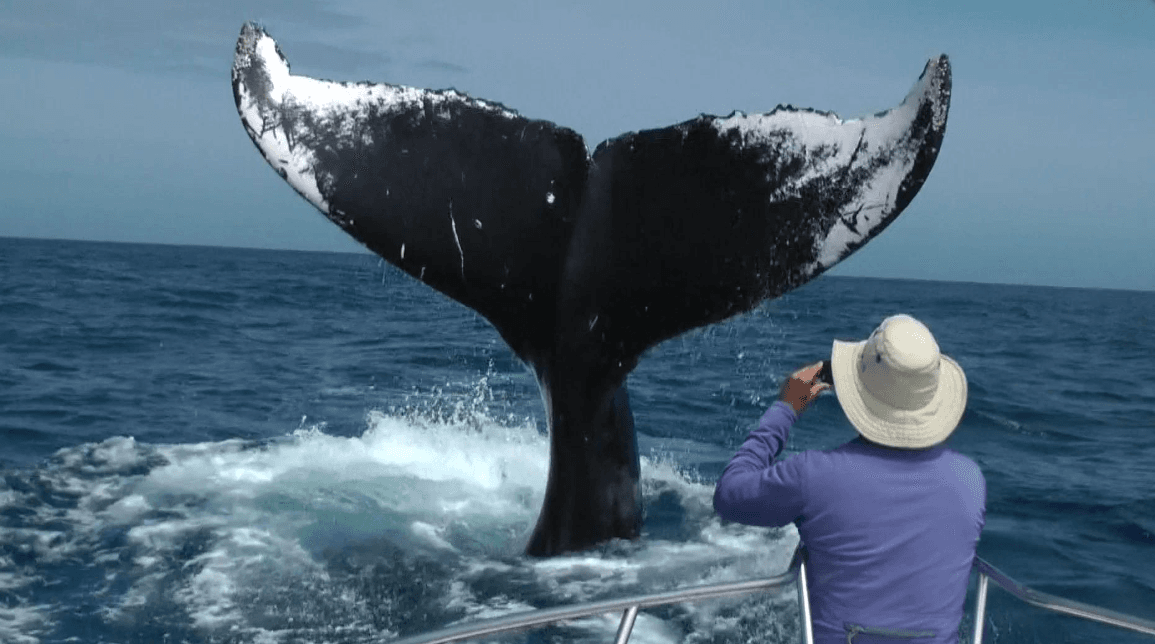
Humpback whales often have dark upper bodies and lighter areas on their undersides. Their pectoral fins and tail flukes may show striking combinations of black, white, and grey.
These patterns are natural features of the animal. Differences in pigmentation, scars, and other persistent markings can help researchers distinguish individual whales.
The underside of a humpback whale's tail fluke is particularly useful for identification. Researchers may photograph it and compare the pattern with images collected during previous encounters.
Skin marks can develop for different reasons, including interactions with other animals, physical contact with objects, and healing injuries. However, a photograph alone rarely provides enough information to determine the precise cause of a mark.
For visitors, the key lesson is that every whale has its own visible characteristics. Observing these details can make a Samaná whale-watching trip more educational, even when the animals are not performing dramatic behaviors.
Can Skin Conditions Reveal a Whale's Health?
A whale's skin can sometimes provide researchers with useful information about its condition. Lesions, unusual discoloration, or changes in the appearance of the surface may be worth documenting during scientific surveys.
However, interpreting these signs requires care. Marks can have multiple causes, and natural pigmentation should not automatically be mistaken for injury or disease.
Scientists may combine photographs with behavioral observations, environmental information, and other research methods when investigating possible health concerns.
Tourists should not attempt to diagnose a whale from a distance. Even experienced observers may need additional evidence to understand what a particular mark represents.
If a whale appears to have an unusual injury, responsible tour operators should follow applicable wildlife-reporting procedures rather than approach the animal for a closer look.
How Does the Ocean Affect Whale Skin?
The ocean is a dynamic environment. Temperature, salinity, water movement, sunlight near the surface, and interactions with other organisms all form part of a whale's surroundings.
Humpback whales experience different conditions throughout their migrations. Individuals that feed in colder waters travel to breeding areas such as Samaná Bay, where winter conditions are generally warmer.
Their skin must function across these changing environments, but scientists should not assume that every visible difference between whales is caused by water temperature or migration.
Other factors, including age, individual history, and natural variation, may also contribute to differences in skin appearance.
The ocean is also home to many microorganisms and larger organisms that interact with marine mammals. Understanding these relationships is an important part of marine biology and wildlife conservation.
What Can Visitors Look for During Whale Watching in Samaná?
Although you cannot examine a whale's skin closely from a responsible viewing distance, you can pay attention to several visible details during your trip.
1. Natural color patterns
Notice the contrast between dark skin and lighter areas on the pectoral fins or tail flukes when these features become visible.
2. Barnacles around the head
Some whales have conspicuous barnacles near the head or lower jaw. Their distribution can vary considerably between individuals.
3. Scars and other markings
If a whale surfaces close enough for safe observation, you may notice persistent marks. Avoid assuming that every mark represents a recent injury.
4. Differences between individual whales
Two humpback whales may differ in body markings, barnacle coverage, and visible scars. These differences help illustrate the diversity within the species.
5. The behavior of the whale
Look at the whole animal rather than focusing only on its skin. Surfacing, diving, resting, and moving through the water provide context for understanding its natural behavior.
Always follow your guide's instructions and the applicable whale-watching regulations. Never encourage a captain to approach a whale more closely simply to obtain a better photograph.
Why Responsible Whale Watching Matters
Whales need space to move, rest, socialize, and care for their calves. Responsible wildlife tourism reduces unnecessary disturbance and allows visitors to observe animals behaving as naturally as possible.
Choose an operator that follows local rules, maintains appropriate distances, and avoids chasing whales or obstructing their movements.
Never attempt to touch a wild whale or remove barnacles or other organisms from its body. Such actions can injure the animal, disturb its behavior, and put people at risk.
Visitors can also support conservation by following crew instructions, reducing waste, and learning about the marine ecosystems that make Samaná Bay an important seasonal habitat for humpback whales.
Frequently Asked Questions
Do humpback whales shed their skin?
Yes. Humpback whales, like other mammals, continually renew their outer skin as older cells are shed and replaced. This is a normal biological process.
Are barnacles harmful to humpback whales?
Barnacles are naturally found on many humpback whales. Their presence does not automatically indicate a health problem, although the effects of attached organisms can vary depending on the circumstances.
Are whale lice actually lice?
No. Whale lice are small crustaceans called cyamids, not insects. They live on the bodies of whales and are adapted to their marine hosts.
Can you identify a humpback whale by its skin?
Researchers can use persistent markings and pigmentation patterns to help identify individual whales. Tail-fluke photographs are particularly useful, but other visible features can provide supporting information.
Can tourists tell whether a whale is sick by looking at its skin?
Not reliably. Visible marks may have different causes, and diagnosing a health condition generally requires more information than a photograph or brief observation can provide.
When can visitors see humpback whales in Samaná Bay?
Humpback whales visit the waters around Samaná during their seasonal breeding migration, generally from January through March, with some variation in sightings across the broader season. Travelers should confirm current local conditions before booking.
Final Thoughts
Humpback whale skin offers a fascinating look at how marine mammals live in the ocean. Continuous skin renewal, natural pigmentation, barnacles, and whale lice are all parts of the broader story of life on and around these enormous animals.
During your next whale-watching trip in Samaná Bay, look beyond the spectacular jumps. The smallest visible details can inspire questions about biology, migration, and the relationship between whales and their marine environment.
By observing respectfully and supporting responsible whale-watching practices, visitors can enjoy these remarkable animals while helping protect the habitat that makes their seasonal visit possible.

Local explorer & expert guide in Whales of Samaná.