What Is Baleen How Humpback Whales Filter Their Food
When people see a humpback whale surfacing in Samaná Bay, Dominican Republic, they may notice its enormous mouth, long pectoral fins, or distinctive tail. However, one of the whale’s most remarkable adaptations is hidden inside its mouth: baleen.
Baleen allows humpback whales to collect tiny prey from large amounts of seawater without using teeth to chew their food. This specialized feeding system helps these enormous marine mammals obtain the energy they need to grow, migrate, and reproduce.
Understanding what baleen is also reveals why humpback whales are so different from toothed whales, such as sperm whales and dolphins. Here is how baleen works, what it is made of, and why it is important to humpback whales visiting Samaná Bay.
What Is Baleen?
Baleen is a flexible, comb-like material that grows in rows from the upper jaw of certain whales. Instead of having teeth for catching and biting prey, baleen whales use these plates to separate small food items from seawater.
Baleen is made primarily of keratin, the same structural protein found in human hair and fingernails. However, baleen forms a specialized structure adapted for feeding in the ocean.
Each plate is attached to the whale’s upper jaw. The inner edges have fine, hair-like fringes that form a filtering surface. When seawater containing prey passes through the baleen, the water can escape while much of the food remains inside the mouth.
Humpback whales belong to a group known as baleen whales, or mysticetes. Other members include blue whales, fin whales, and gray whales, although different species have different feeding methods and baleen structures.
How Does Baleen Work?
Baleen works like a natural filtering system. The whale takes in seawater containing prey, then uses its baleen plates to retain food as water leaves the mouth.
The basic process has several stages.
1. The whale takes in water and prey
When feeding, a humpback whale may accelerate toward a concentration of small fish or krill. It opens its mouth and takes in a large volume of water along with the prey.
The whale’s expandable throat grooves allow the lower jaw and throat region to stretch during this process. This adaptation is especially important when the whale uses lunge feeding.
2. The whale closes its mouth
After taking in water and prey, the whale closes its mouth around the captured material. The baleen plates hang from the upper jaw, creating a filtering surface along the sides of the mouth.
3. Water flows out through the baleen
The whale pushes water out of its mouth, and the baleen fringes help prevent much of the prey from escaping with it.
The exact feeding movements vary with prey type and feeding strategy. Humpbacks may use their tongues and mouth movements to help manage the water and food during filtration.
4. The whale swallows its food
Once enough water has drained away, the remaining prey can be swallowed. The whale does not need to chew each tiny fish or krill individually in the way a toothed animal might chew food.
This process allows humpbacks to gather many small prey items in a feeding event.
What Is Humpback Whale Baleen Made Of?
Humpback whale baleen is composed mainly of keratin. The plates grow continuously and wear over time, helping maintain their filtering edges.
Unlike a rigid tooth, baleen is a flexible biological material. Its structure combines strength with enough flexibility to function during repeated feeding movements.
The fringed edges are especially important because they help retain small prey while allowing seawater to pass through. Baleen plates are arranged in rows on both sides of the upper jaw, producing a broad filtering area.
Baleen color, plate dimensions, and fringe characteristics can differ among whale species. These differences are associated with each species’ feeding ecology and the types of prey it consumes.
Do Humpback Whales Have Teeth?
Adult humpback whales do not have functional teeth used for feeding. Instead, they have baleen plates that help them filter prey from water.
This makes them different from toothed whales, which generally capture prey using teeth or other specialized feeding techniques.
Toothed whales include dolphins, porpoises, orcas, and sperm whales. Baleen whales, by contrast, rely on filtering systems to obtain much of their food.
The distinction is not simply about mouth size. It represents two different evolutionary approaches to feeding in aquatic environments: capturing prey individually and filtering prey from water.
Why Do Humpback Whales Need Baleen?
Baleen helps humpback whales feed efficiently on prey that is often much smaller than the whales themselves.
Depending on the location and season, humpbacks eat krill and small schooling fish. These prey can occur in concentrated groups, making it possible for a whale to obtain a substantial meal by feeding strategically.
Baleen offers several advantages:
- Efficient prey capture: It helps retain small prey as water leaves the mouth.
- Feeding flexibility: Humpbacks can exploit different prey types in different feeding areas.
- Support for a large body: Effective feeding helps whales acquire the energy required for growth, movement, and reproduction.
- Adaptation to aquatic feeding: The whale can process prey suspended in water rather than needing to catch and chew every item separately.
Baleen does not guarantee a successful meal. Feeding success depends on prey availability, prey density, the whale’s behavior, and environmental conditions.
How Is Baleen Used During Lunge Feeding?
One well-known humpback feeding technique is lunge feeding. During this behavior, a whale accelerates toward a prey concentration and opens its mouth to engulf water and prey.
The throat grooves expand to accommodate the incoming volume. The whale then closes its mouth and expels water through its baleen, retaining much of the prey.
Some humpbacks also use coordinated behaviors, including bubble-net feeding in certain feeding areas. In this technique, whales may release bubbles that help concentrate or influence the movement of fish before feeding. The behavior varies by population and circumstances.
Lunge feeding requires energy, so the amount of food captured matters. Baleen makes the filtering stage possible, but the whale’s entire feeding system—including its jaw, expandable throat, tongue, and movement—works together.
Can You See Baleen When Whale Watching in Samaná Bay?
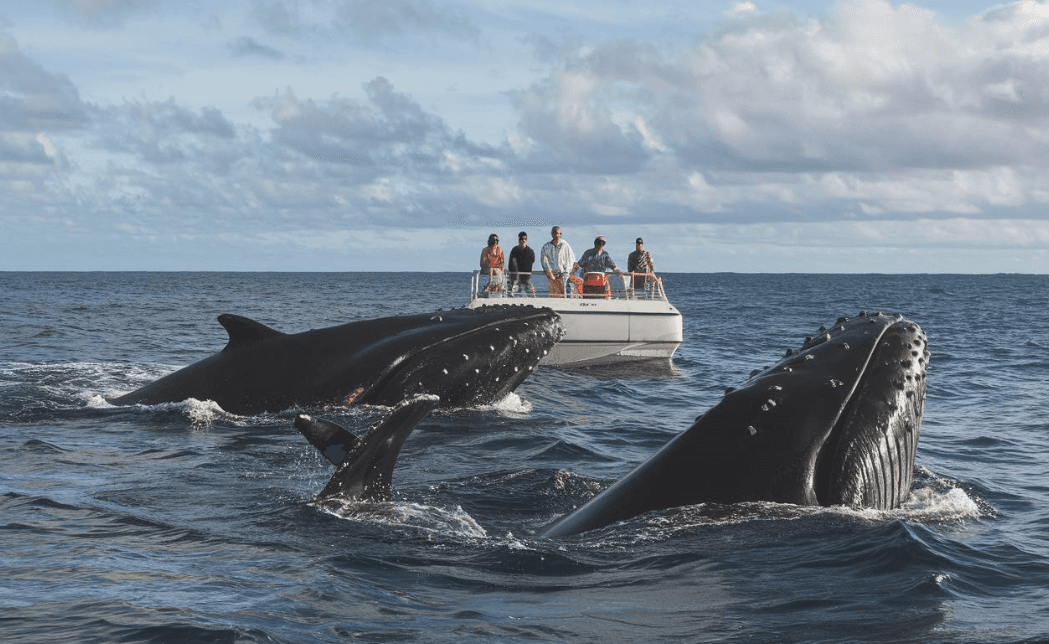
Samaná Bay in the Dominican Republic is widely known as a seasonal gathering area for North Atlantic humpback whales. Visitors often observe whales surfacing, raising their tails, or displaying other behaviors from authorized whale-watching boats.
However, baleen is normally hidden inside the whale’s mouth. A typical surface sighting will not provide a clear view of the plates.
If a whale opens its mouth near the surface, some internal features may be visible, but visitors should not expect to see baleen during an ordinary trip. Boat crews should follow applicable whale-watching regulations and avoid approaching or disturbing whales to obtain a better view.
Samaná is primarily known for humpbacks during their winter breeding season. Many whales use warm Caribbean waters for breeding and calving, while major feeding periods take place in colder waters farther north. Baleen supports their feeding strategy when prey is available in those feeding areas.
Does Baleen Need Special Care or Maintenance?
Baleen is a living biological structure that grows and experiences wear. The whale does not clean or maintain it with tools as humans might maintain a filter. Instead, the plates function as part of the whale’s normal anatomy and feeding cycle.
The condition of baleen and the success of feeding can be affected by broader environmental factors. Changes in prey distribution may make feeding more difficult, while marine debris and other human impacts can threaten whales in different ways.
For humpbacks, protecting healthy ocean ecosystems and prey populations is important. Conservation efforts that reduce human disturbance, address entanglement risks, and protect marine habitats can support whale populations.
Baleen vs. Teeth: What Is the Difference?
FeatureBaleen whalesToothed whalesFeeding structureBaleen platesTeeth in most speciesMain feeding approachFilter prey from waterCapture prey individually or with specialized techniquesExamplesHumpback, blue, and fin whalesDolphins, orcas, and sperm whalesTypical preyKrill and small fish, depending on speciesFish, squid, and other animals, depending on species
These are general differences. Feeding habits vary widely among whale species, and not every species uses the same strategy.
Frequently Asked Questions
Is baleen the same as a whale’s teeth?
No. Baleen consists mainly of keratin and forms plates that filter prey from seawater. Teeth are hard structures used by toothed whales to capture or handle prey.
Can humpback whales chew with baleen?
No. Baleen is not used for chewing. It retains prey while water drains from the mouth, after which the whale swallows the food.
Does baleen grow throughout a whale’s life?
Baleen grows and wears over time. Its growth and condition help maintain the filtering structure, although details vary among species and individuals.
Can humans see baleen on a whale-watching trip?
Usually not. Baleen is inside the mouth, so a typical surface sighting in Samaná Bay will not reveal it clearly.
Do all whales have baleen?
No. Whales are commonly divided into baleen whales and toothed whales. Humpbacks are baleen whales, while dolphins and orcas are toothed whales.
Why is baleen important to humpback whales?
Baleen allows humpbacks to retain small prey from seawater. This filtering ability supports their feeding strategy and helps them obtain the energy needed for their large bodies and seasonal migrations.
Final Thoughts
Baleen is one of the most distinctive adaptations in humpback whales. Made primarily of keratin, its fringed plates allow these marine mammals to filter prey from seawater instead of relying on teeth to chew their food.
Although visitors to Samaná Bay may not see baleen directly, understanding how it works adds another layer of appreciation to a whale-watching experience. Every surface sighting represents an animal with specialized anatomy, complex feeding needs, and an important role in the marine ecosystem.
When planning a whale-watching trip, choose a responsible operator and observe whales without disturbing their natural behavior. Learning about their biology is one way to make the experience more meaningful while supporting their long-term protection.

Local explorer & expert guide in Whales of Samaná.