How Long Can Humpback Whales Stay Underwater in Samaná Bay?
During a humpback whale-watching trip in Samaná Bay, one of the most common questions is: How long will the whale stay underwater before it comes back?
A whale may surface several times, disappear beneath the waves, and reappear farther away. For visitors, these pauses can feel unpredictable. However, diving and surfacing are normal parts of a humpback whale's life.
Humpback whales are mammals, which means they breathe air rather than extract oxygen from water like fish. They can remain underwater for extended periods, but they eventually need to return to the surface to breathe.
In this guide, you will learn how long humpback whales may dive, why their underwater time varies, what their breathing patterns look like, and how to make the most of a whale-watching encounter in Samaná Bay, Dominican Republic.
How Long Can a Humpback Whale Stay Underwater?
Humpback whales commonly make dives lasting several minutes, and some dives can last around 15 minutes or longer. Their maximum underwater time can vary considerably depending on their activity, individual condition, and circumstances.
There is no single dive duration that applies to every humpback whale. A whale swimming near the surface may make short dives, while one traveling farther underwater may remain out of sight for longer.
For whale watchers, the important point is that a whale disappearing for several minutes is not unusual. It does not automatically mean the animal has left the area.
Why Do Humpback Whales Need to Surface?
Humpback whales breathe air through blowholes on top of their heads. When a whale surfaces, it can exhale and inhale before diving again.
Unlike fish, whales cannot breathe underwater. They rely on adaptations that allow them to store and use oxygen efficiently during a dive.
Their bodies have physiological features that support underwater activity, including oxygen stored in their blood and muscles. Their bodies also regulate oxygen use during dives.
These adaptations help humpback whales remain underwater longer than humans can, but they do not eliminate the need to breathe.
What Happens When a Humpback Whale Dives?
A dive can include several stages, although not every dive looks the same from the surface.
1. The Whale Approaches the Surface
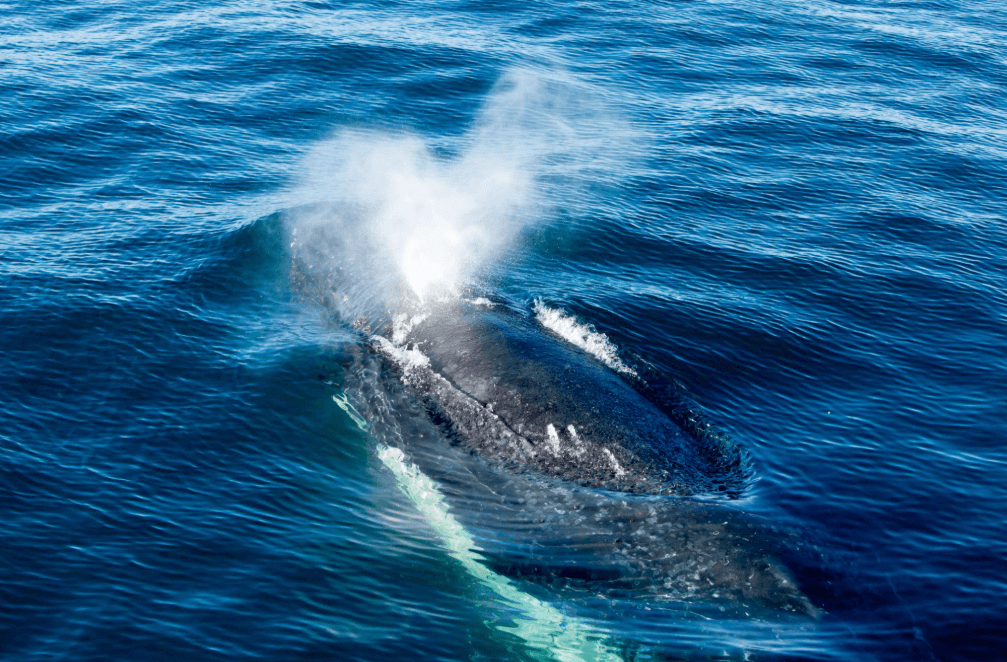
A whale may rise to breathe after spending time underwater. Visitors sometimes notice the top of the head appearing first, followed by a visible exhalation or blow.
The blow can help observers locate the animal, especially when the sea is relatively calm.
2. The Whale Breathes
The whale exhales and inhales through its blowholes. Several breaths may occur close together before it begins another dive.
The exact number and timing of breaths vary. A whale-watching passenger should not expect every whale to follow the same pattern.
3. The Whale Descends
The whale moves beneath the surface and becomes invisible to observers on the boat.
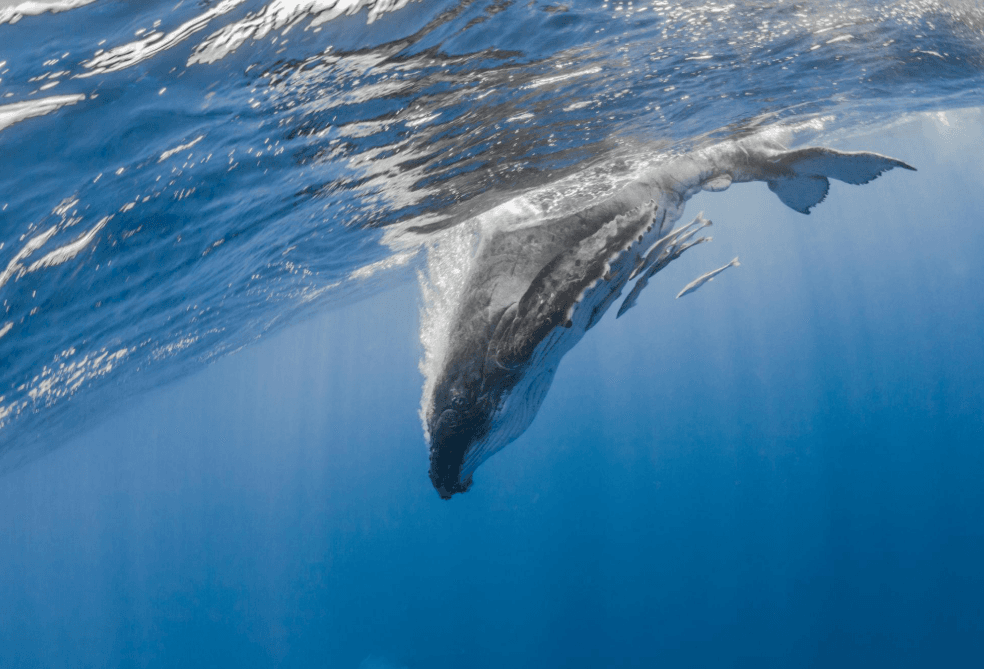
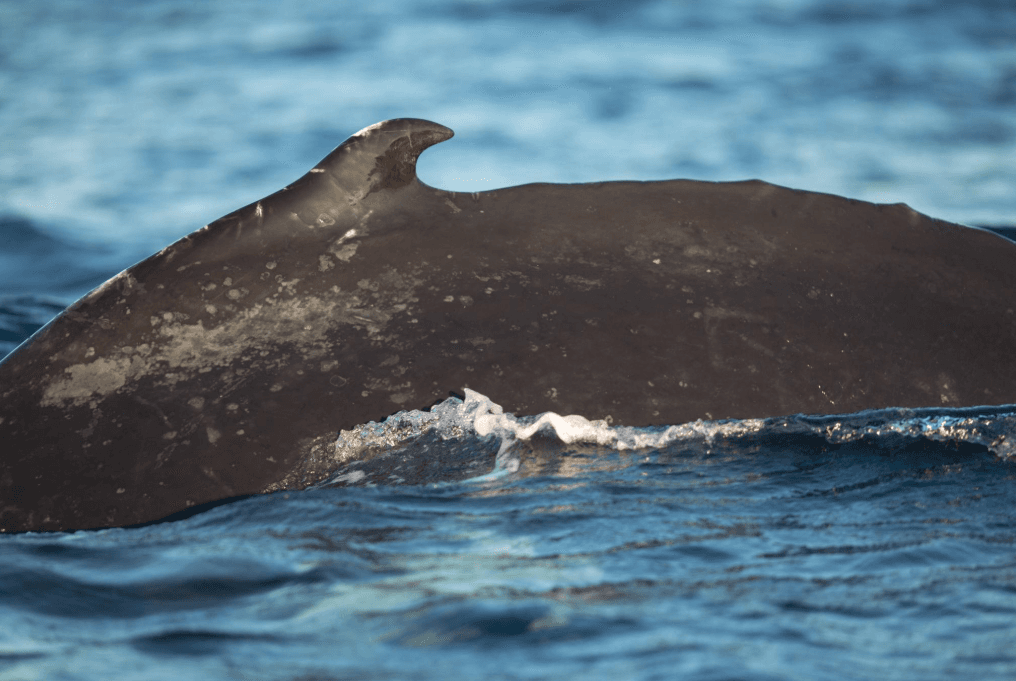
Depending on the animal's movement and the angle of observation, visitors may see its back or tail flukes as it descends. A raised tail fluke can be a useful clue that the whale is beginning a deeper dive, but not every dive includes this display.
4. The Whale Remains Underwater
While submerged, the whale may travel, change direction, or carry out other activities. Observers generally cannot know exactly what it is doing without additional information.
The whale may return to the surface nearby or emerge farther away.
Why Do Some Dives Last Longer Than Others?
Humpback whale dive duration depends on several factors.
The Whale's Activity
A whale's activity can influence its breathing and diving patterns. Swimming steadily, interacting with other whales, and engaging in other activities may be associated with different patterns of movement.
However, a long dive does not automatically reveal the whale's purpose.
The Whale's Individual Condition
Age, physical condition, and other individual differences can influence how an animal behaves. Calves and adults may show different movement patterns, but visitors should not assume that every young whale has a particular dive duration.
Environmental Conditions
Ocean conditions can affect a whale's movements and the ability of people to observe it. Waves, glare, and changing visibility may make a whale harder to relocate after it dives.
Environmental conditions do not allow a guide to predict precisely when a whale will resurface.
Natural Variation
Whales do not operate on a fixed schedule. One individual may surface again relatively quickly, while another remains submerged longer.
For this reason, dive times are best understood as observations rather than promises about what will happen during a tour.
Can You Predict When a Humpback Whale Will Resurface?
Not precisely.
A guide may use the whale's previous movements and surfacing pattern to help passengers know where to look. Nevertheless, the animal can change direction or remain underwater longer than expected.
If a whale disappears, watch the surrounding water and follow your guide's instructions. Looking for the next blow can help you spot the whale again.
Avoid assuming that the whale will emerge at the exact point where it disappeared. Underwater travel can carry it away from its previous position.
What Does a Whale's Blow Tell You?
A whale's blow is the visible cloud of air, water vapor, and droplets produced when it exhales at the surface. It can be one of the easiest ways to locate a humpback whale from a boat.
When watching in Samaná Bay, you may notice several blows in succession before the whale dives again.
The appearance of a blow can vary with wind, lighting, distance, and viewing angle. It is useful for locating the animal, but it cannot reliably tell you how long the next dive will last.
What Should You Do When a Whale Disappears During Your Tour?
A whale disappearing underwater is a normal part of whale watching. You can use the time to observe the sea and listen to your guide.
Here are a few practical tips:
- Keep watching the water: Look for a new blow or movement at the surface.
- Remember the last location: This gives you a reference point without assuming the whale will return there.
- Listen to the guide: The crew may explain the whale's previous movement and where to look next.
- Be patient: A quiet interval is part of observing a wild animal in its natural habitat.
- Keep your camera ready but secure: Avoid leaning over the edge or moving into unsafe positions to capture a photograph.
A good whale-watching trip is not measured by how continuously a whale remains visible. The opportunity to observe a wild animal respectfully is valuable in itself.
When Can You Observe Humpback Whale Dives in Samaná Bay?
Humpback whales visit the waters around Samaná during their seasonal migration to Caribbean breeding and calving grounds. The main whale-watching period is generally during winter and early spring, often from January through March, with the broader season commonly extending into April.
During a tour, a whale may surface repeatedly, remain underwater for a while, and then reappear at a different location. The exact pattern depends on the individual animal and the circumstances.
No tour operator can guarantee a specific dive length or the time of the next surfacing. Responsible operators focus on safe observation and follow applicable wildlife-viewing rules rather than trying to force a closer encounter.
Do Humpback Whales Sleep Underwater?
Humpback whales need to rest while remaining able to breathe air. Their sleep is different from human sleep, and they must maintain a way to surface when necessary.
A whale that stays submerged for a period is not necessarily sleeping. It may be traveling or carrying out another activity.
From a whale-watching boat, it is usually impossible to determine whether a whale is asleep simply by observing how long it has been underwater.
Frequently Asked Questions
1. How many minutes can a humpback whale stay underwater?
Many dives last several minutes, and some last around 15 minutes or longer. Dive duration varies, so there is no single time that applies to every whale.
2. Can a humpback whale breathe underwater?
No. Humpback whales are mammals and must surface to breathe air through their blowholes.
3. Why does a humpback whale disappear during a whale-watching trip?
It has submerged to continue its natural activity. It may return nearby or resurface farther away.
4. Does a whale raising its tail mean it will dive deeply?
A raised tail fluke can accompany a deeper dive, but it does not guarantee a particular depth or underwater duration.
5. Can a whale-watching guide predict when a whale will come back?
A guide may estimate where the whale could reappear based on observed movement, but the exact timing and location cannot be guaranteed.
6. Do humpback whales stay underwater longer when traveling?
Dive patterns can vary with activity, but the duration of one dive alone does not establish whether a whale is traveling. More observations would be needed to understand its behavior.
7. Is it normal for a whale to stay out of sight for several minutes?
Yes. Humpback whales naturally make underwater dives, and several minutes out of sight can be normal.
Final Thoughts
Humpback whales can remain underwater for several minutes, and some dives last considerably longer. Their breathing patterns and movements vary naturally, which is why visitors cannot predict exactly when a whale will resurface.
On your Samaná whale-watching tour, pay attention to the whale's blows, movement, and surfacing pattern. Be patient when it disappears and follow the crew's guidance.
Understanding the time a whale spends underwater adds another dimension to the experience. It helps you appreciate that whale watching is not simply about seeing an animal at the surface, but about observing a marine mammal whose life continues beneath the waves.

Local explorer & expert guide in Whales of Samaná.