How Do Humpback Whales Breathe While Swimming in Samaná Bay?
Humpback whales spend much of their lives moving through the ocean, yet they cannot breathe underwater. Like humans, they need oxygen from the air. The difference is that these remarkable marine mammals have specialized adaptations that allow them to swim, surface for air, and return beneath the waves.
During a whale-watching trip in Samaná Bay, Dominican Republic, visitors may see a humpback whale rise to the surface, release a powerful blow, take a breath, and continue swimming. These brief moments offer a fascinating glimpse into how whales coordinate breathing with movement.
Understanding this process can help you appreciate the animals you encounter during the Samaná whale-watching season. This guide explains how humpback whales breathe, how their blowholes work, and what to look for when a whale surfaces near your tour boat.
How Do Humpback Whales Breathe?
Humpback whales breathe air using blowholes located on top of their heads. Unlike fish, which extract oxygen from water using gills, whales must reach the surface to exchange air through their respiratory systems.
When a humpback whale surfaces, it can exhale air from its lungs and then inhale fresh air through its blowholes. It can subsequently close the openings before diving again.
This process is highly adapted to life in the ocean. The whale's blowholes are positioned so that it can breathe while keeping most of its body underwater.
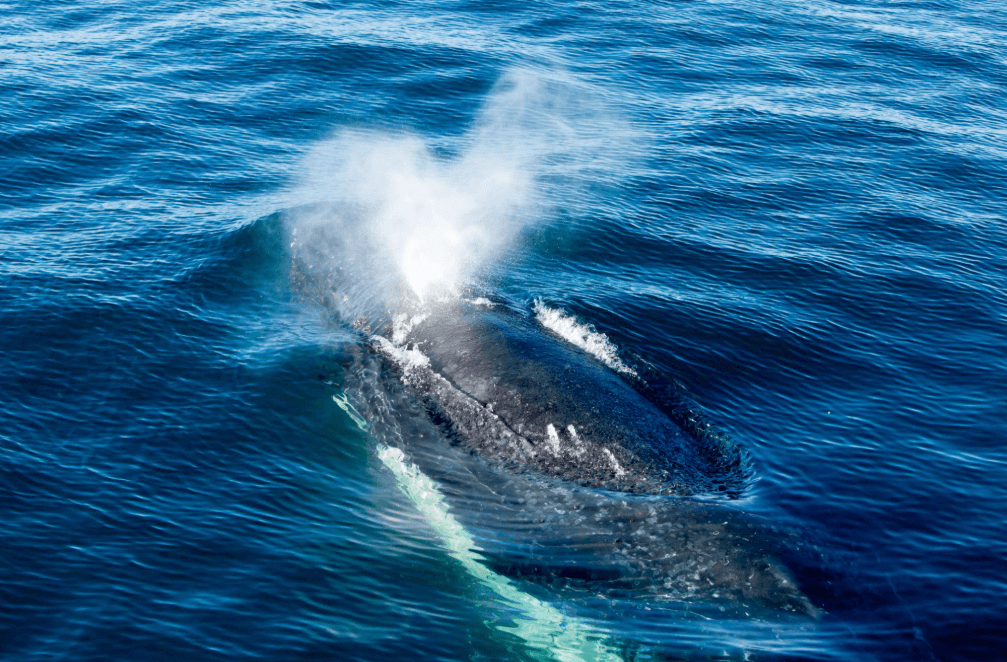
For visitors in Samaná Bay, the visible sign of this process is often a blow: a burst of air, water droplets, and condensed moisture that appears above the whale's head as it exhales.
What Are Humpback Whale Blowholes?
Blowholes are the whale's external breathing openings. In humpback whales, there are two blowholes on top of the head.
Their position helps the whale breathe efficiently at the surface. Specialized muscular control allows the openings to close when the whale submerges, helping prevent water from entering the respiratory tract.
A whale does not breathe through its mouth in the same way humans do. Its breathing system is adapted to life as a marine mammal, with separate arrangements for breathing and feeding.
Why Are Blowholes on Top of the Head?
The location of the blowholes makes it possible for a humpback whale to expose only a small portion of its head when taking a breath.
This means the whale can surface, breathe, and descend without bringing its entire body out of the water.
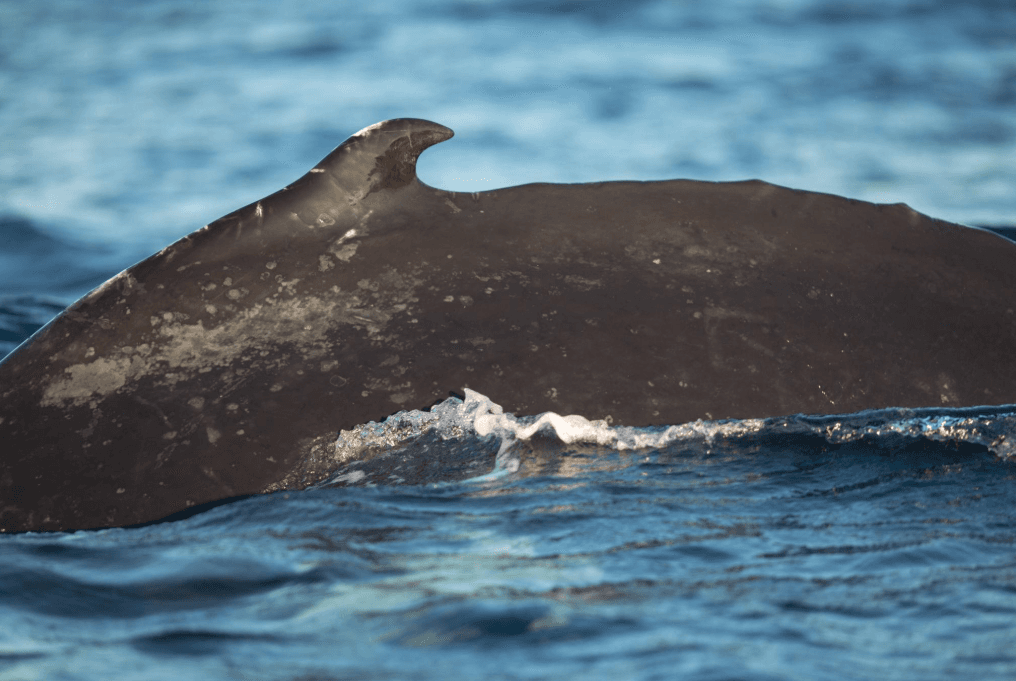
During a Samaná whale-watching excursion, you may see a whale's back appear first, followed by a visible blow. The sequence depends on its approach, body position, and the condition of the sea.
How Do Humpback Whales Breathe While They Swim?
Humpback whales can swim toward the surface and take a breath before continuing their journey. They do not need to stop swimming completely every time they breathe.
The exact movement depends on the whale's speed, direction, and activity. A whale traveling through the bay may maintain forward movement while rising to breathe, whereas another may slow down or change direction near the surface.
The process generally involves several stages:
- Approaching the surface: The whale moves upward until its blowholes can clear the water.
- Exhaling: It releases air from its lungs, producing the visible blow that observers may notice.
- Inhaling: It takes in fresh air through its blowholes.
- Returning underwater: The whale closes its blowholes and descends or continues swimming near the surface.
The sequence can happen quickly. From a boat, you may see only a few seconds of the breathing process before the animal submerges again.
Why Does a Whale Produce a Blow When It Breathes?
The visible blow is primarily associated with the whale's exhalation. Warm, moist air leaves the respiratory system and mixes with the cooler outside air. Water droplets and condensed moisture contribute to the plume that observers see.
The blow is not simply seawater being sprayed out of the whale's lungs. Its appearance depends on exhaled air, moisture, and droplets around the blowhole area.
Can You Recognize a Humpback Whale by Its Blow?
A whale's blow can help guides locate it, particularly when the water is relatively calm and visibility is good.
However, the appearance of a blow changes with wind, lighting, viewing distance, and weather. It is not a dependable way for an inexperienced observer to identify a species on its own.
During a Samaná tour, listen to your guide's explanation and look for additional features, such as the whale's body shape, movement, and any visible tail flukes.
How Does a Humpback Whale Hold Its Breath Underwater?
Humpback whales have physiological adaptations that support diving. Oxygen is stored in their blood and muscles, and their bodies regulate how oxygen is used during underwater activity.
These adaptations allow them to remain submerged much longer than humans generally can without breathing.
However, whales cannot remain underwater indefinitely. They must eventually return to the surface to replenish their air supply.
Their diving patterns vary with activity and individual circumstances. A whale that disappears during a tour may be traveling underwater or doing something else below the surface. Its exact activity cannot usually be determined from the boat alone.
Do Humpback Whales Breathe While Sleeping?
Humpback whales are mammals and need to maintain access to air even when resting. Their sleep patterns differ from human sleep, and their behavior is adapted to life in the water.
A whale may rest while maintaining the ability to surface for breathing. However, seeing a whale remain quiet near the surface does not prove that it is sleeping.
For whale watchers, the best approach is to describe what is visible rather than assume the animal's state. A slow-moving whale may be resting, swimming gently, or engaging in another activity.
How Often Do Humpback Whales Come Up for Air?
There is no single breathing interval for every humpback whale. The frequency of surfacing depends on the individual's activity and circumstances.
A whale may take several breaths during a surface period before making another dive. Another may surface, take a breath, and submerge relatively quickly.
During your whale-watching trip, you may observe a pattern of repeated blows followed by a longer interval underwater. That pattern can change during the encounter.
It is important not to interpret one breathing interval as a universal rule or use it to predict precisely when a whale will reappear.
What Can Whale Watchers Observe in Samaná Bay?
Understanding breathing can make ordinary sightings more interesting. Instead of waiting only for dramatic movements, pay attention to the smaller details.
Watch for the First Blow
Look for a burst of spray above the water. On a calm day, it may be easier to distinguish from the surrounding waves.
Notice the Surfacing Sequence
Observe whether the whale produces one blow or several before descending again. The pattern may vary between sightings.
Look at the Body Position
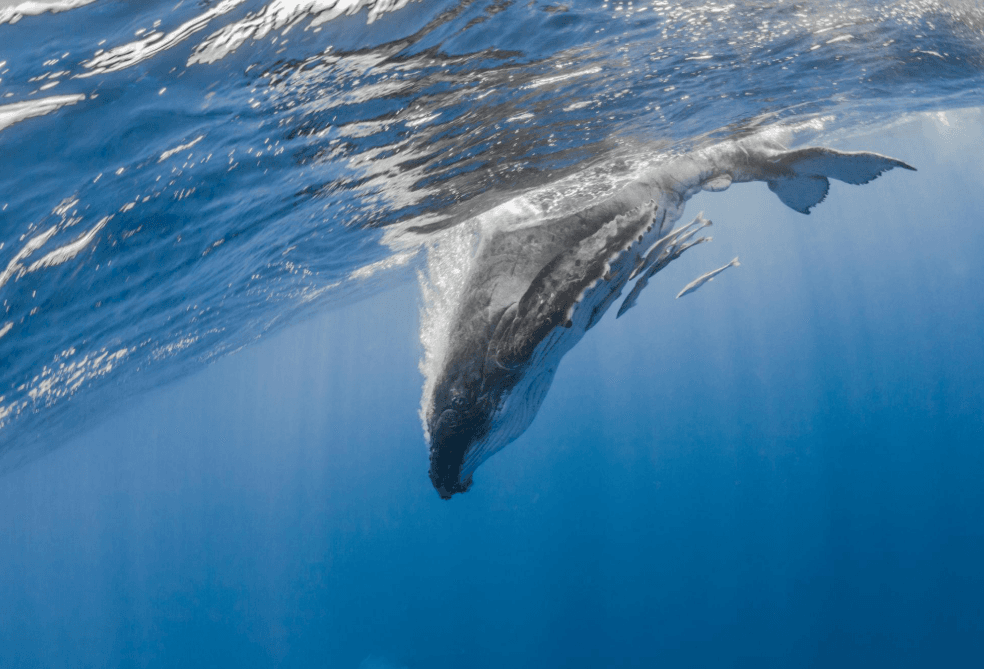
A whale may surface at an angle or continue moving forward as it breathes. Its position can offer clues about its movement, but it does not reveal every detail of what the whale is doing.
Follow Your Guide's Instructions
Guides can help passengers locate the whale and understand visible behaviors. Always remain in designated viewing areas and follow safety instructions.
How Weather Affects Whale-Breathing Observations
Sea conditions can influence how clearly you see a whale's blow. Wind may disperse the plume, while waves and glare can make the animal difficult to spot.
On a rough day, the whale may surface nearby without producing a clearly visible plume from your particular viewing angle. A missing or hard-to-see blow does not mean the whale has stopped breathing.
For better observation, keep your eyes on the water, use binoculars if suitable, and listen to the crew. Avoid standing in unsafe positions to get a closer look.
Responsible Whale Watching While Whales Surface
Breathing is essential to a whale's survival, so boats should never obstruct or deliberately crowd an animal as it approaches the surface.
Choose an operator that follows applicable wildlife-viewing regulations and maintains appropriate distances. Do not ask the crew to chase a whale or interrupt its movement for a photograph.
If a whale surfaces near the boat, remain calm and follow the crew's directions. Give the animal room to move naturally and keep cameras or phones secure.
Responsible observation helps protect the wildlife that makes Samaná Bay such a special destination.
Frequently Asked Questions
1. Do humpback whales breathe through their mouths?
No. Humpback whales breathe through their blowholes on top of their heads. Their respiratory system is adapted to life in the ocean.
2. Can humpback whales breathe underwater?
No. They must surface to take in air. Their bodies are adapted to store and use oxygen during dives, but they still need to breathe at the surface.
3. What is the spray coming from a humpback whale's blowhole?
The visible blow is mainly produced by exhaled air and moisture, including condensed water droplets. It is not simply seawater expelled from the whale's lungs.
4. Can humpback whales breathe without stopping their movement?
Yes. They can coordinate surfacing and breathing with swimming. The precise movement depends on the whale's speed and activity.
5. Why do humpback whales sometimes take several breaths at the surface?
Whales may take a series of breaths between dives. The number and timing vary, so there is no fixed pattern that applies to every encounter.
6. Can I predict when a humpback whale will surface?
Not precisely. Previous surfacing patterns can provide clues, but the whale may change its direction or remain underwater longer than expected.
7. Can I see humpback whales breathing on a Samaná whale-watching tour?
Yes, surfacing and breathing are among the common behaviors visitors may observe during a whale-watching trip. Visibility depends on sea conditions and the whales' movements, and no specific sighting can be guaranteed.
Final Thoughts
Humpback whales breathe air through blowholes on top of their heads, allowing them to surface briefly before continuing their underwater journey. Their ability to coordinate breathing with swimming is an important adaptation to life in the ocean.
When whale watching in Samaná Bay, pay attention to the blows, the whale's body position, and the sequence of surfacing and diving. These details can make even a brief encounter more educational.
Above all, remember that whales need space to move and breathe naturally. Observe patiently, follow your guide's instructions, and enjoy learning about these remarkable marine mammals in their natural habitat.

Local explorer & expert guide in Whales of Samaná.