How Humpback Whale Sightings Are Recorded and Reported
Seeing a humpback whale in the wild can be an unforgettable experience. For marine researchers, however, a sighting can also provide valuable information about whale behavior, seasonal movements, habitat use, and potential conservation concerns.
Recording whale sightings helps turn individual observations into information that can be reviewed and compared over time. Scientists, trained observers, conservation organizations, and sometimes responsible whale-watching operators contribute observations using different methods and reporting systems.
In Samaná, Dominican Republic, where humpback whales visit seasonally, understanding how sightings are documented offers visitors a new perspective on marine wildlife research.
This guide explains what goes into a whale sighting record, how observations are reported, and how accurate documentation can support whale conservation.
What Is a Humpback Whale Sighting Record?
A humpback whale sighting record is a documented observation of one or more whales at a particular time and location.
The record may be created by a marine scientist, a trained wildlife observer, a conservation team, or a whale-watching operator participating in a suitable monitoring program.
The purpose is to preserve useful information about what was observed. Instead of relying on someone's memory, researchers can review written notes, photographs, measurements, and other supporting evidence.
Depending on the project, a sighting record may include:
- Date and time of the observation
- Geographic location or approximate coordinates
- Estimated number of whales
- Visible behaviors, such as surfacing or breaching
- Whether calves were observed
- Photographs or video footage
- Sea conditions and visibility
- Observer details and the method used to collect the information
Not every record contains every detail. The information collected depends on the observer's training, equipment, research objectives, and reporting protocol.
Why Are Whale Sightings Recorded?
Individual sightings can contribute to a broader understanding of whale populations when they are collected consistently and evaluated carefully.
Understanding seasonal presence
Researchers can compare sightings from different dates and years to investigate when whales appear in a region and how their presence changes throughout a season.
For example, records from the Samaná region may help describe patterns of seasonal whale activity. However, a collection of sightings alone cannot establish the total population or prove that the same number of whales is present every year.
Studying whale movements
Photographs, location records, and observations made at different times can help researchers investigate where whales travel.
When a whale can be reliably identified from photographs or other scientific evidence, observations from different locations may be linked to the same individual. Such connections can help reveal movement patterns.
Documenting behavior
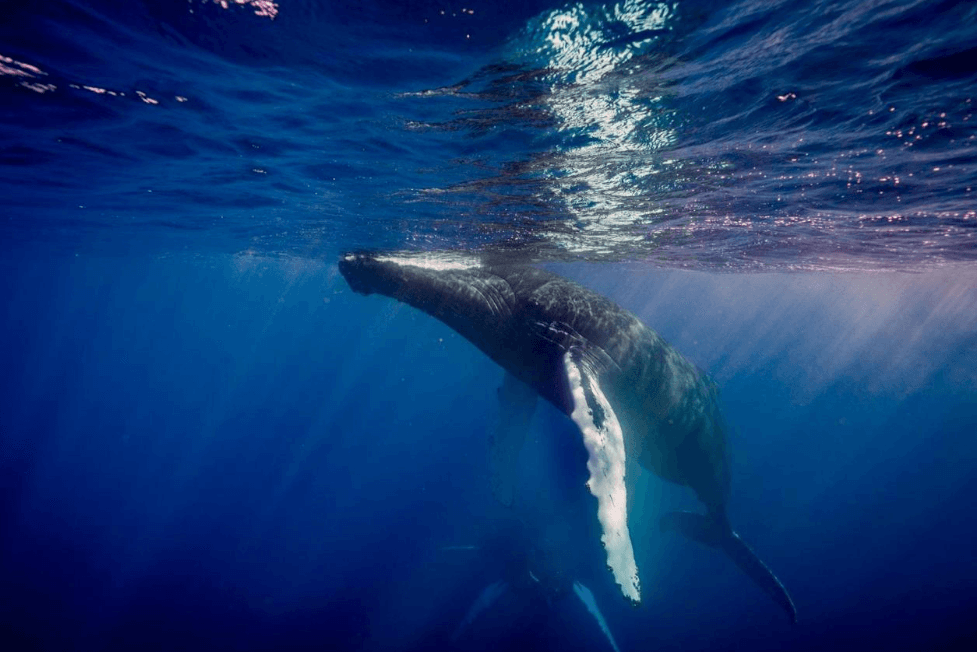
Observers may record activities such as breaching, tail slapping, surface swimming, or interactions between whales.
These observations provide useful context, particularly when the same behavior is documented systematically. A single observation, however, should not be treated as proof of a general behavioral pattern.
Supporting conservation
Sighting reports can also draw attention to possible injuries, entanglement, vessel interactions, or other unusual events.
Reports involving a potentially injured whale should be passed to the appropriate local marine wildlife authorities or qualified response organization. Observers should not approach or attempt to handle the animal themselves.
What Information Should Be Included in a Sighting Report?
A useful report is clear, specific, and honest about uncertainty.
1. Date and time
The observation date and time help researchers place a sighting within a seasonal and daily context.
Using a consistent time format and recording the time zone when relevant can prevent confusion when records are combined.
2. Location
The location may be recorded as coordinates, a named marine area, or another location format accepted by the reporting program.
Precise location information can be valuable for scientific analysis, but sensitive wildlife locations should be shared according to the relevant project's data-sharing rules.
3. Number of whales
Observers may record a minimum confirmed number, an estimated group size, or a range if animals are difficult to distinguish.
Whales can dive, overlap visually, and move in and out of view. For that reason, the report should distinguish a confident count from an estimate.
4. Visible characteristics
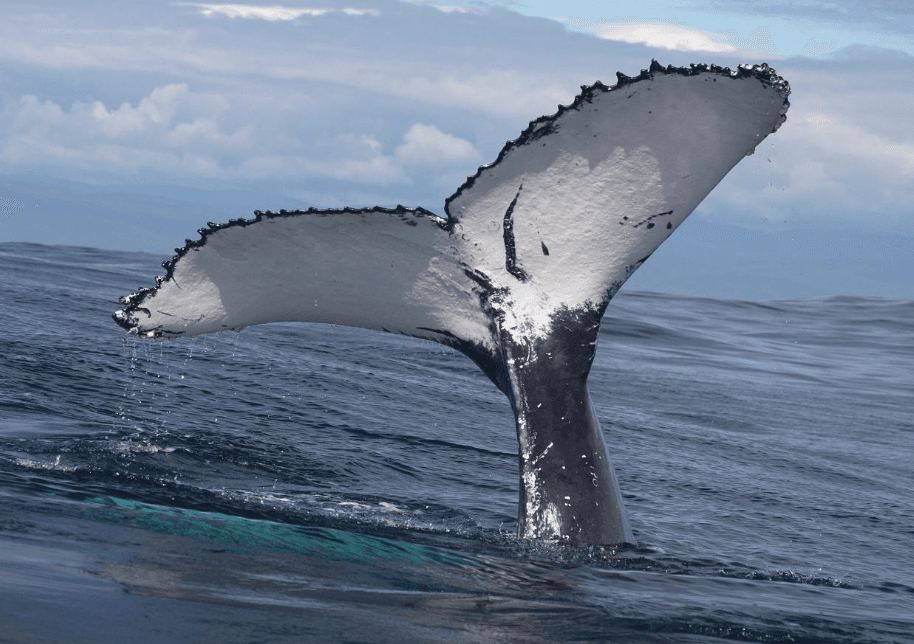
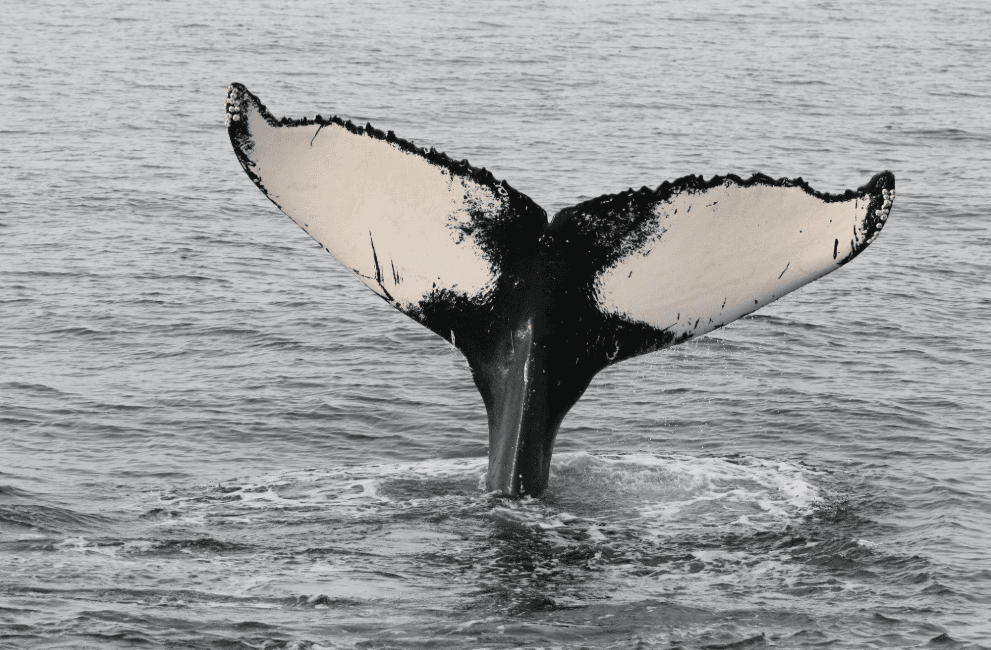
Photographs and written descriptions may document markings, coloration, scars, dorsal-fin shapes, and the appearance of a tail fluke.
These details can sometimes support individual identification. However, an observer should not claim that a whale is a known individual unless the evidence and identification method justify that conclusion.
5. Behavior
A report may describe what the whale was visibly doing. For example, the observer might record that a whale surfaced repeatedly, raised its tail before diving, or breached once during the observation.
Describing what happened is more reliable than assuming why it happened. A sighting report should separate direct observations from interpretations.
6. Observation conditions
Sea state, weather, distance, viewing angle, and visibility can affect the quality of a sighting.
Recording these conditions helps researchers understand the limitations of the observation. A whale seen briefly in rough water may be harder to identify than one observed clearly over a longer period.
How Photographs Help Document Whale Sightings
Photography is an important tool in many whale research programs.
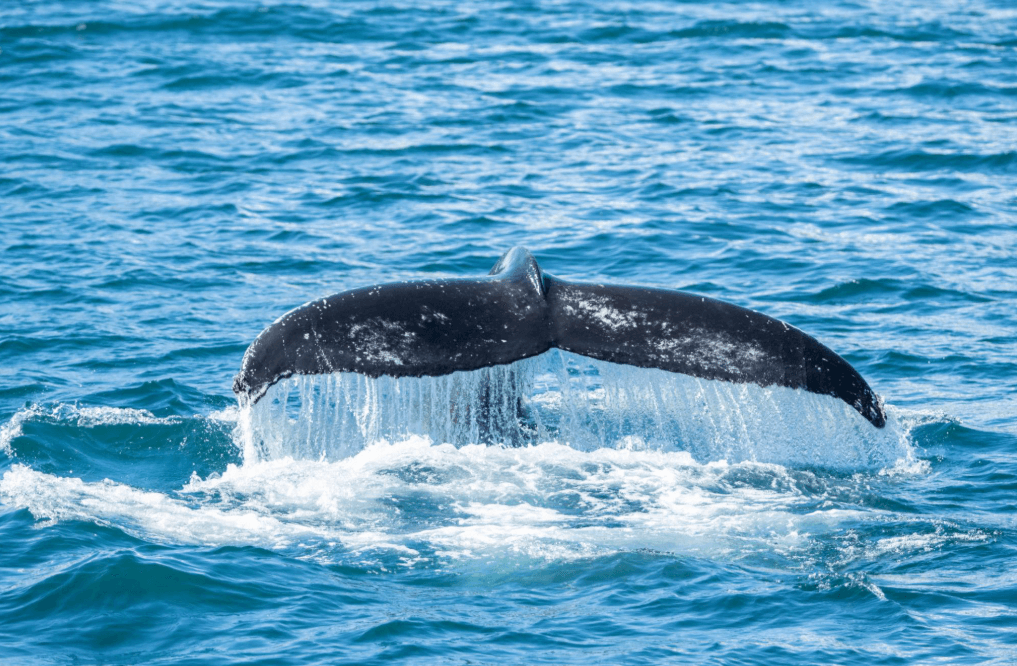
Researchers may photograph a humpback whale's tail fluke, dorsal fin, or other visible features. Depending on the program, these images can be compared with existing records to investigate whether a whale has been documented before.
Photographs can also provide a visual record of behavior or a possible injury.
However, a photograph does not automatically establish a whale's identity, sex, age, or health. Those conclusions require appropriate evidence and, in some cases, specialized analysis.
For visitors taking pictures during a Samaná whale-watching tour, the most important rule is to avoid interfering with the animals. Follow the crew's instructions, remain in designated areas, and never ask a boat operator to approach a whale too closely for a better photograph.
A good image is valuable, but responsible observation is more important than capturing a perfect shot.
How Are Whale Sightings Reported?
Reporting procedures vary by country, research project, and organization. There is no single universal reporting system used for every humpback whale sighting.
Common approaches include the following.
Scientific monitoring programs
Researchers conducting structured surveys may record sightings using standardized forms, digital databases, GPS equipment, cameras, and other scientific tools.
Standardized methods help make observations more comparable across different surveys.
Photo-identification projects
Some research programs accept photographs of whale tail flukes or other identifiable features. Specialists review the images and may compare them with a catalog of previously documented whales.
Not every photograph is suitable for identification, and submissions should follow the project's image and data requirements.
Responsible whale-watching operators
Some tour operators participate in observation or conservation initiatives. Their records may contribute useful information when observations are collected systematically and shared with an appropriate research program.
A tour operator's informal sighting log is not necessarily a scientific dataset. The collection method, quality controls, and intended use all matter.
Wildlife authorities and rescue organizations
Reports of an injured, stranded, entangled, or dead whale may need to be directed to local marine wildlife authorities or a designated response organization.
The correct reporting contact depends on the location. Observers should provide factual details and avoid approaching a distressed animal.
How Scientists Check the Quality of Sighting Records
Not every observation is equally reliable. Before using sighting data for research, scientists may assess its accuracy and completeness.
Quality checks can include:
- Reviewing the date, time, and location for inconsistencies
- Comparing photographs with established identification catalogs
- Checking whether several reports describe the same encounter
- Separating confirmed observations from uncertain estimates
- Recording the survey method and observation conditions
- Identifying possible duplicate entries
Duplicate reports are particularly important when several boats observe the same whale or group of whales. Without careful review, the same encounter could be counted multiple times.
Scientists also consider observer effort. An area visited by many boats may generate more sightings than an area that receives little observation, even if whale abundance is similar.
Consequently, the number of reports should not automatically be interpreted as the number of whales in a region.
Can Tourists Contribute to Whale Observation Records?
Yes, in some programs. Travelers may be able to contribute photographs or observations through citizen-science initiatives and established wildlife reporting projects.
Before submitting information, check the program's requirements. Some projects accept public submissions, while others only use observations collected by trained participants.
If you would like to document a whale during a trip, consider recording the following details when it is safe and practical:
- The date and approximate time
- The general area where the whale was observed
- The number of whales you could confidently see
- A brief description of visible behavior
- Any clear photographs taken without disturbing the animal
Be transparent about uncertainty. If you cannot determine the number of whales, say so rather than guessing.
Avoid publishing precise locations of sensitive wildlife encounters when doing so could encourage harmful approaches or disturbance. Follow the privacy and data-sharing guidance of the organization receiving your report.
Whale Sighting Records and Conservation in Samaná
Samaná is an important destination for observing North Atlantic humpback whales during their seasonal presence in the Caribbean.
Records collected through appropriate monitoring programs can help describe whale sightings and document observations over time. Photographs, survey notes, and other evidence may contribute to research when collected and reviewed using suitable methods.
These records are only one part of conservation. Protecting whales also requires responsible vessel operations, enforcement of wildlife regulations, attention to fishing-gear risks, and efforts to reduce pollution and harmful disturbance.
Visitors can support these goals by choosing responsible tour operators and following all crew instructions. If they encounter an injured or entangled whale, they should report the situation through the appropriate local channel instead of attempting a rescue.
The value of a sighting lies not just in seeing a whale, but in ensuring that the encounter is documented responsibly when appropriate.
Frequently Asked Questions
What is the purpose of recording humpback whale sightings?
Sighting records help researchers document where and when whales are observed, describe visible behavior, and investigate movement patterns when observations can be reliably linked.
Can a whale be identified from a single photograph?
Sometimes, if the photograph shows sufficiently distinctive features and meets the identification requirements of the relevant program. Other images may be too unclear or incomplete for reliable identification.
Do whale-watching boats report every whale they see?
No. Reporting practices vary between operators. Some participate in structured monitoring programs, while others may keep informal records or not record sightings at all.
Can sighting records tell scientists exactly how many whales are in Samaná Bay?
Not by themselves. Estimating population size requires appropriate survey methods and analysis that account for factors such as observation effort, repeated sightings, and animals that were not detected.
What should I do if I see an injured whale?
Keep a safe distance, alert the boat crew or relevant local authorities, and provide factual information about the location and visible condition if it is safe to do so. Do not attempt to touch, approach, or disentangle the whale.
Final Thoughts
Recording and reporting humpback whale sightings helps preserve information that might otherwise be lost after an encounter. When observations are collected consistently, checked carefully, and shared through appropriate channels, they can support research and conservation.
For visitors in Samaná, learning about sighting records adds meaning to the whale-watching experience. A photograph or observation may become useful evidence when it is collected responsibly and interpreted with care.
The best approach is simple: observe respectfully, record only what you can support, follow wildlife guidelines, and allow qualified researchers and authorities to determine how the information should be used.

Local explorer & expert guide in Whales of Samaná.