Why Do Humpback Whales Have Barnacles 6 Facts Explained
Have you ever noticed the rough, white patches around a humpback whale's head, jaw, or tail These unusual growths are often barnacles, small marine crustaceans that spend much of their lives attached to surfaces in the ocean.
Humpback whales can carry clusters of barnacles on parts of their bodies, giving their skin a rugged appearance. Although these organisms may look uncomfortable, their relationship with whales is more complicated than it first appears.
So, why do humpback whales have barnacles How do the barnacles attach themselves, and do they hurt the whales?
This guide explains the science behind whale barnacles, their life cycle, and what visitors might notice when watching humpback whales in Samaná Bay, Dominican Republic.
1. Why Do Humpback Whales Have Barnacles?
Humpback whales have barnacles because certain barnacle species are adapted to attach to whales and other marine surfaces. A whale provides a living surface that moves through the ocean, exposing attached barnacles to flowing water containing tiny food particles.
Whale barnacles are often described as commensal organisms: they benefit from living on a whale, while the effect on the whale may be relatively small under many circumstances. The exact relationship can vary depending on the organisms involved and the conditions.
The whale is not deliberately carrying barnacles, nor does it need them to survive. Instead, the barnacles settle on suitable surfaces during their early life stages and remain attached as they grow.
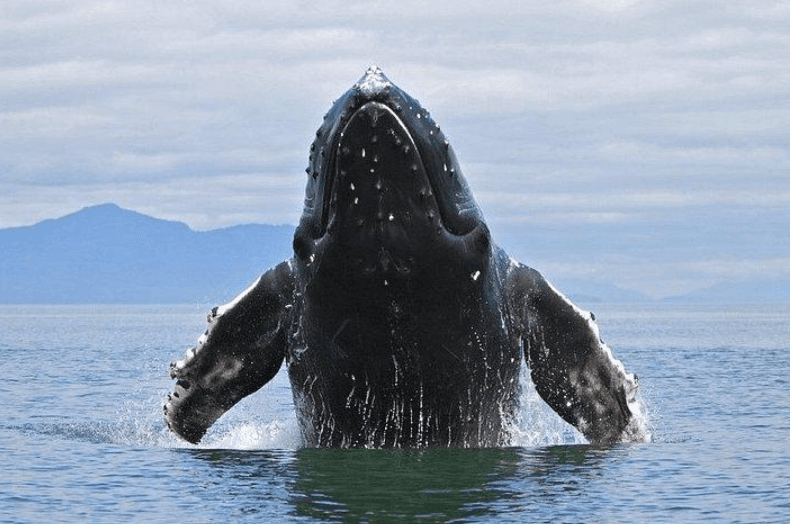
Humpback whales are particularly recognizable because barnacles may gather around the head, lower jaw, throat grooves, pectoral fins, and tail region. The distribution differs between individuals.
Barnacles are only one part of the wider community of organisms associated with whales. Some whales also carry whale lice, which are small crustaceans different from barnacles.
2. What Are Whale Barnacles?
Barnacles are marine crustaceans, which makes them relatives of crabs and shrimp rather than mollusks such as clams. Adult barnacles usually have hard outer plates that protect their bodies.
Several specialized barnacle species live on cetaceans, including whales. Whale barnacles are adapted to attach to the skin of their hosts, although different species use different host animals and attachment sites.
How do they look?
Whale barnacles may appear as pale, rough, cone-like or irregular patches on the skin. Individual barnacles can be small, but clusters may be conspicuous when viewed from a boat or in photographs.
Their hard outer coverings can make the whale's skin look bumpy. The amount and location of barnacle growth can vary substantially between individual whales.
Are all whale barnacles the same?
No. Different barnacle species have different host associations and biological characteristics. Researchers use physical features and scientific identification methods to distinguish species.
The presence of barnacles alone does not tell you a whale's exact age, health, or migration history. Those conclusions require additional evidence.
3. How Do Barnacles Attach to Humpback Whales?
Barnacles begin life as tiny larvae drifting in seawater. As they develop, they pass through stages that help them find an appropriate surface.
For barnacles adapted to whales, the process generally follows several steps:
- Larvae develop in the water. Early life stages drift with ocean currents.
- They encounter a potential host. A suitable whale surface may provide a place to settle.
- They attach and settle. The young barnacle secures itself to the surface using specialized attachment structures and secretions.
- They develop a protective covering. As they grow, their hard outer plates become more prominent.
- They feed while attached. Many barnacles extend feathery feeding structures into the water to capture suspended food particles.
The details vary among species, and not every barnacle larva that encounters a whale successfully establishes itself.
Once a barnacle is firmly attached, it does not simply swim away when the whale moves. It remains on the host until it dies, becomes detached, or the attachment site changes through skin shedding or other processes.
4. Do Barnacles Hurt Humpback Whales?
In many cases, whale barnacles are not considered major parasites because they generally use the whale as an attachment surface rather than feeding directly on its tissues. Their presence does not automatically mean that a whale is sick or injured.
However, it would be inaccurate to claim that barnacles can never cause problems. Large clusters or particular attachment conditions may affect the local skin surface, and interactions between organisms and hosts can vary.
Scientists assess whale health using several kinds of evidence, such as body condition, visible injuries, skin appearance, behavior, and other observations. Barnacle coverage alone is not a reliable health diagnosis.
It is also important to distinguish barnacles from organisms that may have a more direct relationship with the whale's skin. Whale lice, for example, are small crustaceans that live on whales and may occupy areas around wounds, folds, or other surfaces.
Should a whale be cleaned of barnacles?
Wild humpback whales should not be approached or touched by people trying to remove barnacles. Attempting to clean a whale could injure the animal, disturb its behavior, and put people in danger.
Barnacle growth is a natural part of marine life, and whale-watching visitors should leave the animals undisturbed.
5. How Do Barnacles Get Food on a Moving Whale?
Many barnacles feed by extending specialized feathery appendages, often called cirri, into the surrounding water. These structures help capture suspended food particles.
A whale moving through the ocean can expose attached barnacles to flowing water. Water movement may help bring food within reach, but the barnacles still depend on their own feeding structures and suitable environmental conditions.
Barnacles are not drinking the whale's blood or eating its blubber simply because they are attached to its skin. Their feeding biology is different from that of blood-feeding parasites.
The relationship is therefore a useful example of how marine organisms can use another animal's body as a habitat without necessarily relying on it as a direct food source.
6. Can Barnacles Tell Scientists Anything About Humpback Whales?
Barnacles are interesting to marine biologists because they form part of the ecosystem associated with large marine animals. Studying them can help researchers learn about species relationships, attachment biology, and life in the open ocean.
However, barnacle patches should not be treated as a simple record of where a whale has traveled or how long it has lived.
Scientists investigating whale populations rely on stronger combinations of evidence, such as:
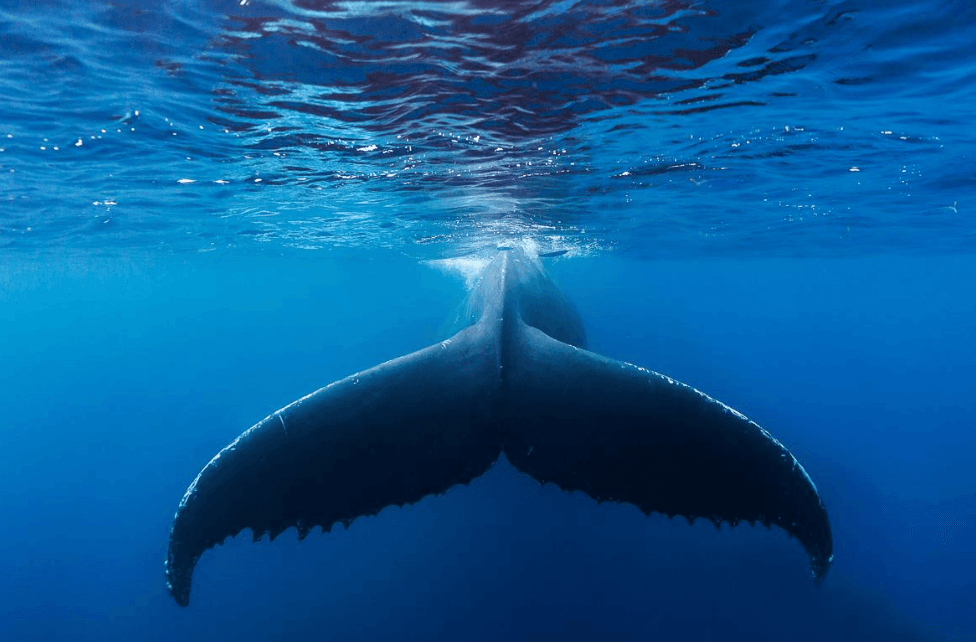
- Photo-identification using distinctive tail-fluke markings.
- Repeated observations of individual whales.
- Research on migration and seasonal distribution.
- Detailed studies of whale-associated organisms.
- Physical and genetic identification of barnacle species where appropriate.
Researchers may study barnacles to explore ecological relationships, but the number or size of visible barnacles alone cannot reliably determine a whale's age, route, or overall health.
7. Can You See Barnacles on Humpback Whales in Samaná Bay?
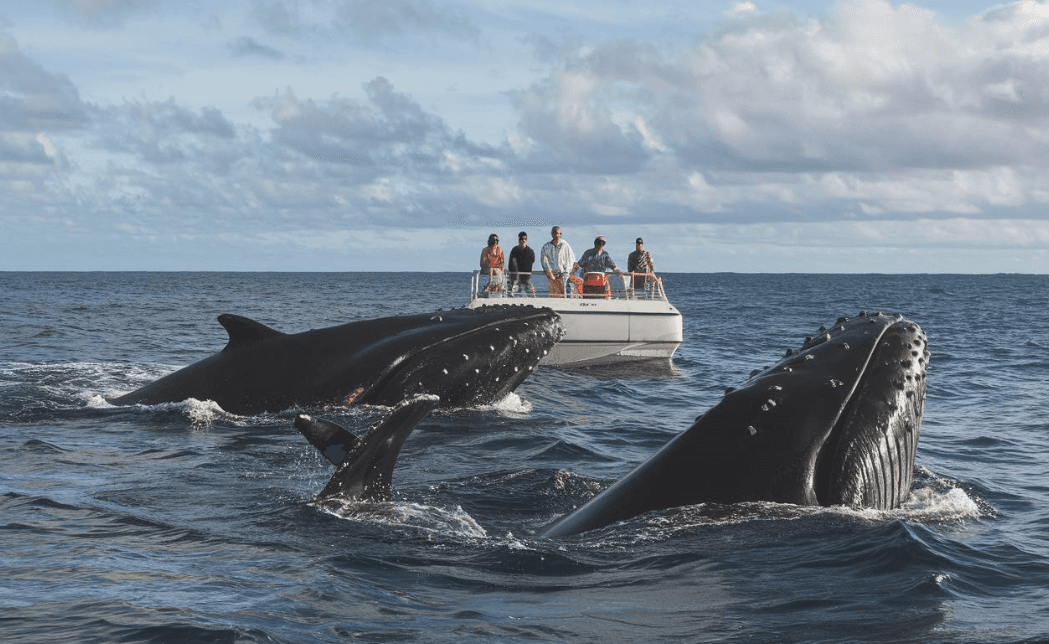
Samaná Bay in the Dominican Republic is known for seasonal visits by North Atlantic humpback whales. During the main winter viewing season, visitors may see whales surfacing, lifting their tails, or moving near one another.
Depending on the whale, the viewing conditions, and the distance from the boat, barnacles may be visible as pale or rough patches around the head and body. They are easier to notice in clear photographs or close scientific images than during a brief sighting from the water.
Not every whale has the same amount of visible barnacle growth, and the presence of barnacles should not be used to identify a whale species on its own.
If you take photographs during a trip, look for natural details without asking the captain to approach wildlife too closely. Choose an authorized whale-watching operator that follows applicable rules and respects safe viewing distances.
The goal is to observe the whales without disrupting their natural behavior.
Frequently Asked Questions
Why do humpback whales have barnacles on their heads?
Some whale barnacles attach to suitable areas of whale skin, including the head and jaw. The exact distribution depends on the barnacle species, the whale, and the attachment conditions.
Are barnacles parasites on humpback whales?
Whale barnacles are generally considered organisms that benefit from attachment to a whale without feeding directly on the whale's tissues. They are not the same as blood-feeding parasites.
Do humpback whales feel barnacles on their skin?
The degree to which a whale senses particular barnacle clusters is difficult to determine from observation alone. It is not scientifically justified to assume that every barnacle is painful or that the whale is completely unaffected.
Do barnacles make humpback whales swim more slowly?
There is no simple rule that visible barnacle growth makes a humpback whale noticeably slower. The effects depend on factors such as the amount and location of growth, and the relationship should not be inferred from appearance alone.
Can barnacles fall off humpback whales?
Barnacles can become detached or die, and their attachment may change over time. However, whales do not necessarily shed all their barnacles at once, and the timing varies.
Are barnacles a sign that a humpback whale is old?
No. Barnacle presence or abundance is not a reliable way to determine a whale's age. Researchers need other evidence to assess individual whales and their life histories.
Can tourists touch or remove barnacles from a whale?
No. Visitors should never touch or attempt to remove barnacles from wild whales. Such actions can harm or disturb the animal and are unsafe. Observe whales responsibly from an appropriate distance.
Final Thoughts
Barnacles are fascinating examples of the relationships that develop between marine organisms. Certain species have evolved to attach to whales, where they can remain while filtering food from the surrounding water.
For humpback whales, barnacles are a visible feature of life in the ocean, but their presence does not automatically mean that an animal is sick, old, or uncomfortable. Understanding these organisms requires looking beyond their rough appearance and considering their biology and ecological relationships.
When watching humpback whales in Samaná Bay, notice their natural markings and surface behavior without drawing unsupported conclusions from what you see. Respectful wildlife watching allows these remarkable animals to continue living undisturbed in their ocean habitat.

Local explorer & expert guide in Whales of Samaná.