Barnacles on Humpback Whales: What Whale Lice Do
Humpback whales are among the most recognizable marine mammals in the world, known for their enormous bodies, long pectoral fins, and spectacular surface displays. But if you look closely at a humpback whale, you may notice something unexpected: patches of small organisms attached to its skin.
These organisms include whale barnacles and whale lice. Although their names sound similar, they are very different animals with distinct ways of living on their whale hosts.
During whale-watching season in Samaná Bay, Dominican Republic, visitors may notice pale patches on a whale's head, jaw, or fins. Understanding these organisms provides a fascinating look at the relationships that exist between large marine mammals and the smaller creatures that share their bodies.
What Are Barnacles on Humpback Whales?
Barnacles are small marine crustaceans related to crabs and shrimp. Many species attach themselves permanently to hard surfaces, including rocks, boat hulls, and other underwater structures.
Certain barnacle species are specially adapted to live on whales. Rather than moving freely over the whale's body, these barnacles attach to the skin and develop hard outer plates that protect their soft bodies.
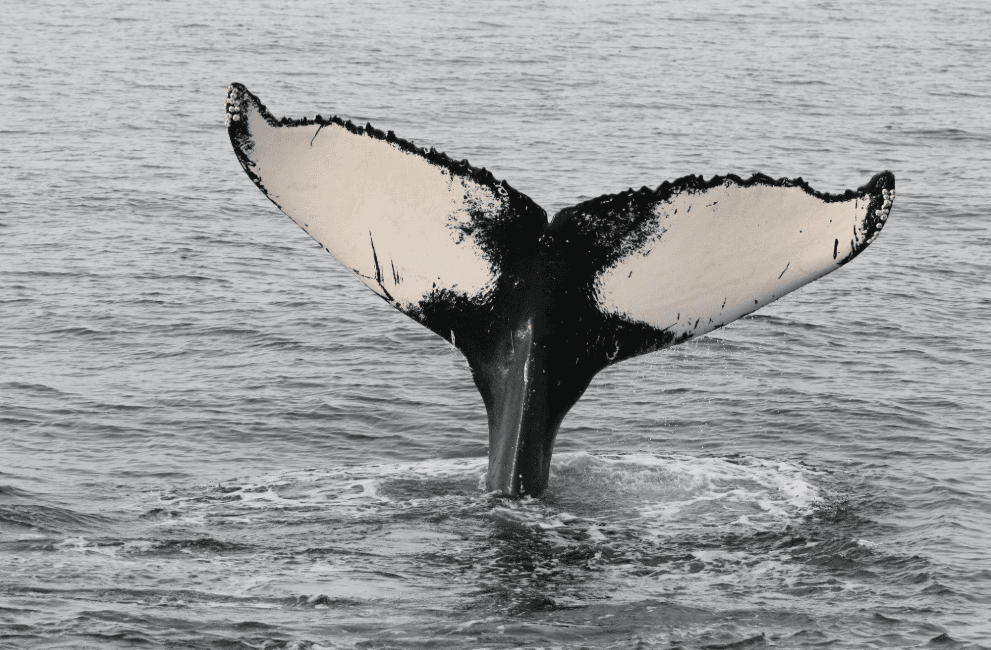
Whale barnacles are often visible as rough, pale patches. Their appearance and distribution depend on the barnacle species, the whale's body region, and the individual animal.
Barnacles do not turn a humpback whale into a permanent home in the same way a parasite might use a host for nourishment. Many whale-associated barnacles benefit primarily from the whale's movement through water, which brings suspended food particles within reach.
Why Do Barnacles Attach to Humpback Whales?
The ocean contains many surfaces where barnacles can settle, but a whale offers a particularly mobile habitat.
As a humpback whale swims, it moves through different parts of the ocean and carries attached organisms with it. The water flowing around the whale can deliver small food particles to filter-feeding barnacles.
This relationship is commonly described as a form of commensalism: the barnacle benefits, while the whale is generally not considered to receive a major direct benefit from the barnacle.
However, the relationship is not necessarily identical in every case. The effects of attached organisms can depend on their abundance, location, and the condition of the host.
Barnacles also face challenges. They must remain attached despite the whale's speed, changes in water pressure, and the constant movement of its skin.
Their attachment structures and protective shells help them survive these conditions.
Where Are Barnacles Found on Humpback Whales?
Barnacles may appear on several parts of a humpback whale's body. Their distribution can vary between individuals and species.
Commonly observed areas include:
- Head and jaw: Raised patches may be visible around parts of the head and lower jaw.
- Pectoral fins: Barnacles may attach to areas of the long fins.
- Body surface: Some individuals carry barnacles on other areas of their skin.
- Flippers and tail regions: Whale-associated barnacles may occur on appendages, depending on the species and individual whale.
The presence of barnacles does not automatically mean a whale is unhealthy. Their abundance can vary naturally, and barnacles are part of the marine environment in which many whales live.
Researchers consider multiple factors when evaluating whale health, including body condition, visible injuries, behavior, and other signs. Barnacle coverage alone is not a reliable health assessment.
What Are Whale Lice?
Whale lice are small crustaceans known as cyamids. Despite their name, they are not true lice like those that infest humans or other land mammals.
Whale lice have flattened bodies and specialized legs that help them grip the skin of whales. They live on the whale's outer surface, often gathering in particular areas such as skin folds, around wounds, or near barnacle patches.
Different cyamid species are associated with different cetacean hosts. Their distribution can also vary across a whale's body.
Whale lice are often difficult to see clearly from a whale-watching boat because they are small and may be hidden in skin creases. Close scientific photography is generally much more useful for studying them.
What Do Whale Lice Eat?
Whale lice can feed on a range of materials associated with the whale's skin. Depending on the species and circumstances, their food may include dead skin, algae, and tissue associated with damaged or injured areas.
Some whale lice may take advantage of lesions or other irregularities in the skin. This does not mean every whale louse causes significant harm or that every whale carrying them has an injury.
Their feeding habits and effects differ from those of barnacles, which typically filter food particles from the surrounding water.
Understanding these differences helps explain why barnacles and whale lice, although both associated with whales, occupy different ecological roles.
Are Barnacles and Whale Lice Harmful to Humpback Whales?
The answer depends on the organism, the number present, and the condition of the whale.
Many whale-associated barnacles live on their hosts without causing obvious serious harm. A barnacle's attachment can affect the skin locally, but ordinary barnacle coverage should not be interpreted as evidence of disease.
Whale lice also commonly occur on cetaceans. Their presence alone does not prove that an animal is sick. However, dense concentrations around damaged skin may be associated with injuries or other local conditions.
Scientists distinguish between organisms that naturally live on a host and organisms that cause clinically significant problems. The mere presence of an organism is not enough to establish the severity or cause of a health issue.
For this reason, a whale carrying visible barnacles or whale lice should not automatically be described as injured, infected, or unhealthy.
Do Barnacles Move Between Whales?
Barnacles have a life cycle that includes free-swimming larval stages. These larvae can disperse through the water before settling on a suitable surface.
For whale-associated species, successful settlement depends on conditions such as the availability of a suitable host and the ability of larvae to attach and develop.
Whale lice have a different life cycle. They live in close association with their cetacean hosts, and contact between whales may provide opportunities for transfer. The exact process and frequency can vary among species and circumstances.
It is therefore misleading to assume that every whale passes all its attached organisms to another whale simply by swimming nearby.
Can Barnacles Reveal Information About a Whale?
Barnacles can offer useful information about the relationships between whales and the marine environment.
Researchers study whale-associated barnacles to investigate their distribution, host preferences, and evolutionary history. Because different barnacle species may associate with different whale species or populations, identifying them can contribute to research on marine ecology.
Whale lice can also be useful in scientific studies. Their host associations and genetic characteristics may provide clues about cetacean relationships and the evolutionary history of their hosts.
However, attached organisms do not provide a complete record of a whale's life. Scientists combine observations with other evidence rather than relying on barnacles or whale lice alone to identify an individual or reconstruct its movements.
What Can Visitors See During Whale Watching in Samaná?
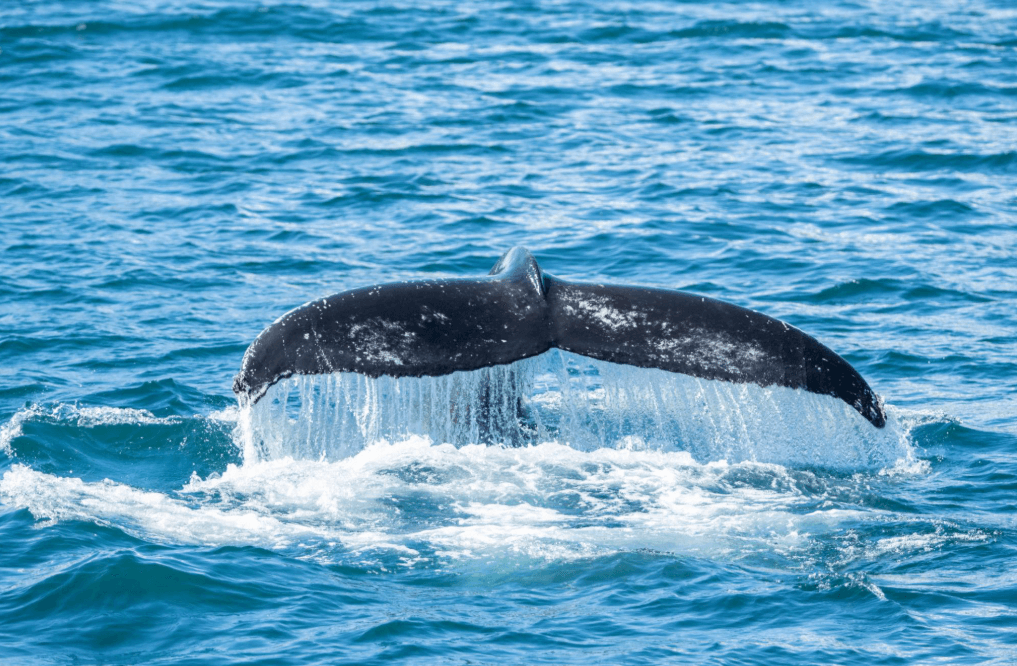
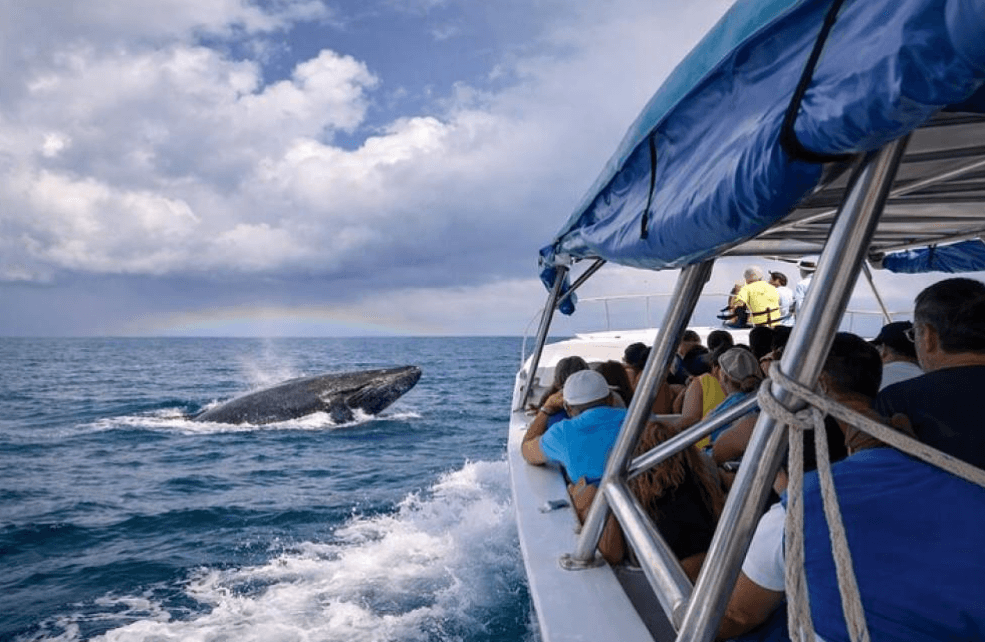
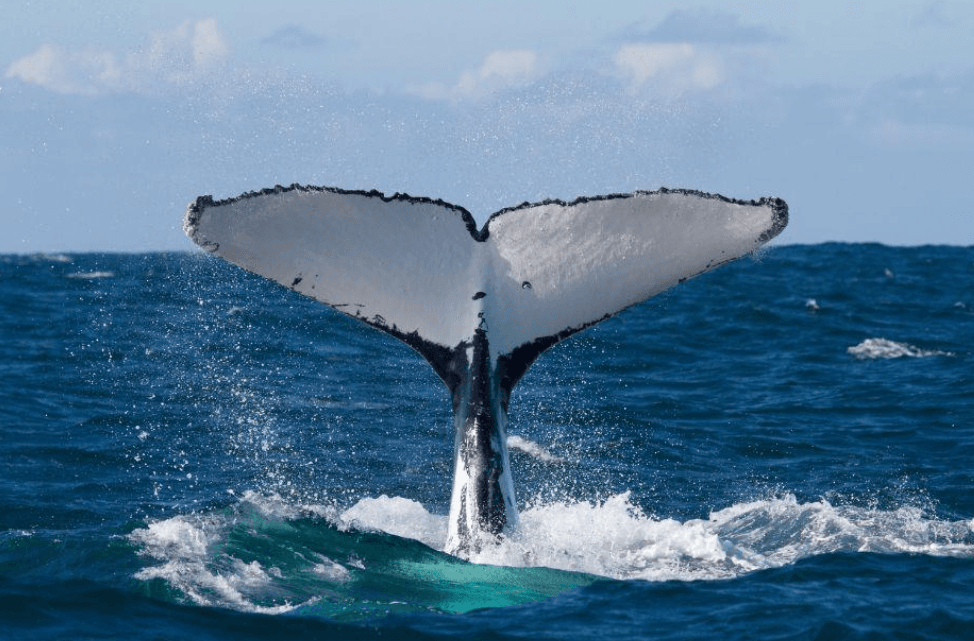
Samaná Bay is a well-known seasonal destination for observing North Atlantic humpback whales. During the breeding season, visitors may see whales surfacing, raising their tails, or swimming near the surface.
When a whale approaches the surface, its head, back, or fins may become visible long enough for passengers to notice pale patches or rough-looking areas on the skin.
These patches may be barnacles, natural pigmentation, scars, or other skin features. A photograph or brief sighting is not always sufficient to identify them confidently.
Whale lice are much smaller and are unlikely to be identifiable during an ordinary boat tour.
If your guide points out a barnacle-covered area, ask what can be confirmed from the observation and what remains uncertain. This is a useful way to learn about whale biology while avoiding assumptions about the animal's health.
How to Photograph Barnacles on a Humpback Whale
If you are hoping to capture details of a whale's skin, preparation and patience can help.
- Use optical zoom when appropriate. It can help record visible details without requiring a closer approach.
- Keep the boat at a responsible distance. Never ask a captain to approach a whale too closely just to photograph its skin.
- Choose a fast shutter speed. Whales move quickly, and surface splashes can blur photographs.
- Take several photographs. A sequence may capture a clearer view when the whale surfaces.
- Avoid overinterpreting images. White or rough patches may have several explanations, so label uncertain features cautiously.
Always follow your captain's instructions and local whale-watching rules.
Frequently Asked Questions
Are barnacles on humpback whales parasites?
Many whale-associated barnacles are not considered parasites because they generally benefit from attachment and access to food in the surrounding water rather than feeding directly on the whale. Their relationship is often described as commensal.
Are whale lice real lice?
No. Whale lice are cyamids, a group of small crustaceans. They are not true lice, although their common name reflects their habit of living on the bodies of whales and other cetaceans.
Do barnacles hurt humpback whales?
Barnacles can attach to the skin, but their presence does not automatically indicate significant harm. The effects depend on factors such as the organism, its abundance, and the condition of the host.
Why do humpback whales have white spots?
Some pale or rough-looking patches are barnacle colonies, but not every white spot is a barnacle. Natural pigmentation, scars, and other skin features can look similar from a distance.
Can I see whale lice during a Samaná whale-watching trip?
Usually, whale lice are too small to identify reliably from a boat. Barnacle patches may be more noticeable when a whale surfaces nearby, although sightings vary.
Do barnacles help identify individual humpback whales?
Barnacles alone are not a dependable method for identifying individual whales. Researchers use more established identification techniques, including photographs of tail flukes and other distinctive markings.
Final Thoughts
Barnacles and whale lice reveal that humpback whales are part of a much larger marine ecosystem. Their bodies provide a habitat for specialized organisms, while the whales' movements connect those organisms with different parts of the ocean.
Although these small creatures are easy to overlook, studying them helps scientists understand host relationships, marine biodiversity, and the biology of large whales.
For visitors to Samaná Bay, a closer look at humpback whale anatomy can make a whale-watching trip even more rewarding. The key is to observe responsibly, appreciate what can be seen, and leave scientific conclusions to evidence rather than appearances.

Local explorer & expert guide in Whales of Samaná.